
The subject of Aunt Bird, a collection of poems by Yerra Sugarman, is the last year of the life of her aunt in the Kraków ghetto during Nazi occupation of Poland (Four Way Books, 2022). The book is a collection of impassioned poems about the lost hopes of a spirited, once-vital young adult.
Read moreThe Song of Our Scars: The Untold Story of Pain by Haider Warraich

Almost everything we know about pain and how to treat it is wrong, Haider Warraich says in his insightful book The Song of Our Scars: The Untold Story of Pain, published earlier this year by Basic Books. The physician and assistant professor at Harvard Medical School claims that there are dire misunderstandings between patients who feel pain, the clinicians who address it, and the researchers who study it. Worst of all, he says, pain has transformed from a symptom into a disease.

Haider Warraich is a physician, author and researcher at the VA Boston Healthcare System, Brigham and Women’s Hospital and Harvard Medical School. He has published more than 140 research papers including in the NEJM, JAMA and BMJ. He frequently writes for the New York Times and Washington Post, and is the author of the books Modern Death, State of the Heart and the just published The Song of Our Scars – The Untold Story of Pain (Basic Books).@haiderwarraich
One in five American adults—an estimated sixty-six million in total—experience chronic pain, resulting in billions of dollars in direct medical costs and lost productivity. Lower back pain is the leading cause of disability in the United States, followed by migraine headaches, neck pain and conditions like osteo and rheumatoid arthritis. And Americans are most likely to use opioids to help alleviate their pain. Yet, as Warraich points out, opioids provide little to no benefit for chronic non-cancer pain, and can even make it worse.
Pain’s storied complexity is multifaceted and multilayered. Its treatment, in Warraich’s view, requires empathic holistic care that considers how pain is racialized, gendered and personal. Pain is subjective. You can have pain without suffering. There is no single dedicated pain center in the brain. The pain of Black people remains both under-recognized and under-treated. Women are more likely to feel pain, but their pain is also more likely to be dismissed. Simply assessing pain on a numeric scale doubles the risk of opioid overdoses in hospital. And exercise is a vital part of any multidisciplinary approach to managing chronic pain.
Warraich himself has chronic back pain due to a sports injury that happened many years ago when he was a medical student in Pakistan—around the time when he felt confirmed in his vocation to be a doctor. Just when he felt like he had fallen in love with medicine, he broke his back.
Now an insightful, wounded healer, Warraich draws from his own experience of how disruptive chronic pain can be—how it “disrupts the way a person moves through their life, the narrative they define themselves by, the arc of their stories.”
The Song of Our Scars is filled with research findings, clinical vignettes, historical details and sociopolitical commentary. Yet the story Warraich tells is so broad and at times surprisingly sequenced—jumping from the mythological Greek world, to the history of opium, to the American Civil War—that it can sound like listening to the radio while scanning the channels, catching snippets of newscasts in search of a good song. We as readers want to hear more of Warraich’s own personal self-reflections, which would help focus his narrative by giving voice to his song, and deepen its impact on readers, his listeners.
Perhaps most helpful is Warraich’s concern for the origins of the opioid addiction crisis in America. The story of the opioid crisis continues to unfold in the United States, and recently came into the headlines in the documentary “All the Beauty and the Bloodshed,”directed by award-winning director Laura Poitras about artist Nan Goldin’s life and chronicles her addiction and activism that led to major museums such as the National Portrait Gallery in Washington, DC, the Guggenheim, the Tate and others to stop taking donations from the Sackler family and removing the Sackler name from the walls of their institutions. The documentary won the prestigious Golden Lion at the Venice Film Festival in September.
In The Song of Our Scars, Warraich highlights how Cicely Saunders’s revolutionary approach to pain management in hospice care was “hijacked” into a business strategy by the pharmaceutical industry, whose goal, he says, “was to take Saunders’s approach toward total pain experienced by people at the end of life and apply it to people in every phase of life, treating routine medical conditions as if they were terminal illnesses.” Saunders, who started her clinical practice as a nurse and became a doctor, is credited with founding the first modern hospice and establishing the discipline and the culture of palliative care in the late 1950s.
In terms of narrative care, Warraich brings to mind, but does not reference, other prominent physicians and scholars who describe and advocate also for such empathic patient-centered care, including Rita Charon, Victoria Sweet, Arthur Frank and William Randall.
What are the songs of our scars? What type, form and shape do they take? There are love songs, ballads, laments and anthems, to name an obvious few. How do they help us? Do they capture our hearts and move our spirits? Warraich hopes so. As patients tell us their tales of pain, he knows how important it is to listen to them. And he wants healthcare providers to learn how to listen more fully, deeply and more compassionately in clinical practice. Empathy is what makes a good doctor, he says—empathy and kindness.
“As we look to the future and take stock of all that we know about chronic pain,” he says, “we find that the most promising treatment approaches don’t involve any chemical inebriation or procedural manipulation. They involve one human being talking to another, helping them realize that the path to relief was within them all along.”—Robert Mundle

Robert Mundle is a graduate of Yale Divinity School and a palliative care chaplain in Kingston, Ontario. He is the author of How to Be an Even Better Listener: A Practical Guide for Hospice and Palliative Care Volunteers (JKP 2018).
A History of Present Illness by Anna DeForest

The narrator of A History of Present Illness is a young doctor going through the daily initiation of learning her vocation. In the story, the narrator subverts the fabled tradition of medical education through her position as an outsider on the inside. We discover her history in increments: She grew up in an unstable home with a mother who drank too much. In her adolescence, she walks in to see her pregnant mother sitting on the kitchen floor shooting staples into her arm. Financial instability is a way of life, as is self-injury: The narrator cuts lines into the creases of her hands, to manage the suffering and hide her scars.
Read moreOrdinary Deaths: Stories From Memory by Samuel LeBaron
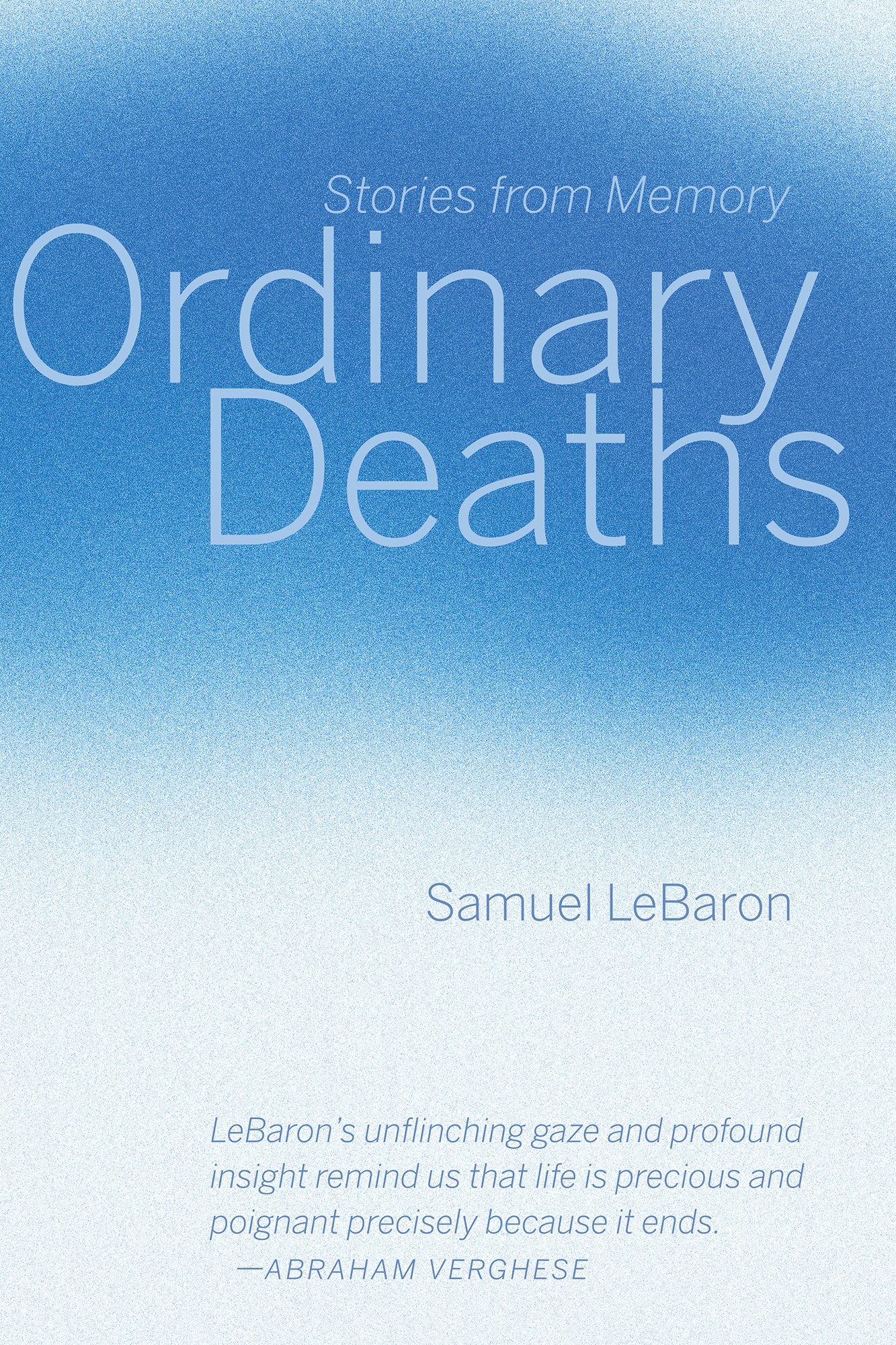
Psychologist Samuel LeBaron’s book, “Ordinary Deaths” was recently published by the University of Alberta Press and in it, he examines the following truth without the drama often accompanying such writing: Death is not a heroic journey, a metaphorical “war” against fatal illness. It is, as the title states, ordinary.
Read moreIntimacies, Received: Poetry by Taneum Bambrick

Bravery, to me, is stepping forward to confront your fears and discomforts, despite the emotions holding you back. After reading Intimacies, Received, Taneum Bambrick’s moving collection of poetry, brave is the word that most readily describes the taut, sometimes treacherous path the poet takes to reclaim her sense of self and connection to her body after a traumatic event.
Read moreMedSpeak Illuminated: The Art and Practice of Medical Illustration by François I. Luks

MedSpeak Illuminated: The Art and Practice of Medical Illustration by François I. Luks is a remarkable volume that expertly brings together humanities and science.
Read moreQ & A about Neurocinema—The Sequel! by Eelco Wijdicks

When neurointensivist Dr. Eelco Wijdicks published the original Neurocinema: When Film Meets Neurology in 2014, his collection of film essays summarizing the portrayal of major neurologic syndromes and clinical signs in cinema served to underscore the field’s existence by being its premier textbook. Therein the medically-inclined movie buff or the film-frenzied clinician could explore medicine as it appeared on the big screen and better understand what the effects of medicine on film have played in our cultural milieu over time.
Read moreThe Kissing of Kissing: Poems by Hannah Emerson

In the book—the first in Milkweed’s Multiverse literary series curated by neurodivergent poet Chris Martin—Hannah Emerson ushers us into her evocative mental universe with its unique rhythms giving voice to herself as a nonspeaking autistic artist and poet.
Read moreInterview with poet Chris Martin about Multiverse, a new poetry series from Milkweed

Earlier this year, Milkweed Editions, an independent non-profit publisher based in Minneapolis, launched Multiverse, a literary series devoted to different ways of languaging, curated by neurodivergent poet Chris Martin, whose new book May Tomorrow Be Awake: On Poetry, Autism, and Our Neurodiverse Future just came out from Harper One. The first book in the Multiverse series was Hannah Emerson’s debut poetry collection The Kissing of Kissing, which fulfills a key tenet of the imprint: To showcase editorial voices that emerge “from the practices and creativity of neurodivergent, autistic, neuroqueer, mad, nonspeaking and disabled cultures.” Creating this kind of series is a transformative act that enriches, enhances and transforms our current literary landscape. I interviewed Chris Martin about how Multiverse will open up a chorus of voices and sensibilities that our medical humanities community needs to hear and witness.
Thank you for getting together to talk about Milkweed’s Multiverse series that explores different ways of languaging. Could you explain that term and also speak about how the clinical community can learn from this core concept of your series.
‘Languaging’ is a term I got from Adam Wolfond, who is a non-speaking autistic writer from Toronto; his book “The Wanting Way” will be the series’ second title coming out in the fall. Adam likes to emphasize movement, emphasize how something is rather than what it is. One of Multiverse’s intentions is to disrupt the monolithic ways of seeing people and conditions and to bring out the wild variety of forms that language and autism and neurodivergence and disability take. When we’re speaking of non-speaking autistic writers, there is a tendency to think of them as ‘exceptions’ and have one stand in for everybody, whether it’s Tito Rajarshi Mukhopadhyay or a book like “The Reason I Jump” by Naoki Higashida. But when one or two people stand in for everyone else, we forget there’s this amazing amount of variety. By giving a range of neurodivergent writers, we give them a platform to express themselves exactly how they express themselves and show how much they diverge from each other. [It’s limiting to] think we sum up a condition or way of life with one particular set of ideas.
The Kissing of Kissing by Hannah Emerson is the first in Milkweed’s Multiverse series, curated by Chris Martin.
That’s one of the challenges for the clinical community: Learning to differentiate and do a ‘close reading’ of each patient provides a chance for clinicians to be creative and open, rather than relying just on symptoms, tests, data. Most clinicians are taught to be so by the book and what feels embedded in Multiverse as a concept, and in Hannah Emerson’s poetic universe as well, is learning to be open to a different language or point of view. The question is if clinicians can adapt to that discipline of puzzling out a new language in the hospital room or ER—poetry teaches patience and openness to a different language but will that skill be transferable when confronted by a patient’s weird blood count or cough that won’t go away?
When you say ‘by the book,’ it’s such a powerful phrase, because it is by the book! If Multiverse could be by the book writ large as a resource for different voices, that is amazing. The more nonspeaking writers I engage with the more my understanding of autism grows, and the more my understanding of myself grows, learning about what it means to be me, a human animal. The difficulty you point to is really interesting, and we often misapprehend where that difficulty arises. Primarily, it is that the language isn’t transactional, it doesn’t follow neuro-normative patterns that allow it to be instantly consumed and that arises in medicine too. We’re living in a capitalist ableist society, a neuro-normative society trying to get everyone on a conveyor belt where they will be, inevitably, crushed, at least the way I see it. But who’s to say we have to move at that pace? There are other ways to communicate, other ways to be together, and if those ways feel challenging at first, it’s because they’re pushing in the opposite direction of the conveyor belt. We have to work hard to step away and to take things on their own terms rather than follow preconceived ways of how language should work or how people should work and I think there couldn’t be anything more important than that.
One concept taught in Narrative Medicine at Columbia University by Dr. Rita Charon, is co-constructing a narrative. Along with close reading and understanding tone of voice and point of view, there’s also how the self and the other construct a shared story in the clinical encounter. There’s the doctor’s point of view and the patient’s – and the idea of coming together to create this story involves a ‘shared power’ – not just, ‘I’m the doctor, the authority figure, and I hold the power here.’ How does your series speak to this concept?
One of the things we think about at Multiverse is “can we foster and cultivate consensual futures together?” By that, we’re going back to the roots of that word to think about how we feel together in the world that emerges between us. We’re also interested in consent—a consent that is a constant process, to involve the writer on their own terms or at least in a place where we can ‘find’ each other instead of making them answer things in a neurotypical way. Like with Adam: His visual acuity doesn’t allow him to fix the words on the screen—they swim on it—so when it came to making line breaks we had to think of the accommodations to allow Adam to do this. From the beginning Adam totally questioned the authority that comes with authorship –so he also commissioned about a dozen poets, writers and thinkers to participate in this experiment of line breaking. Then he figured out which ones he preferred – his own or theirs. Also, he doesn’t see them as breaks but as windings like a river – so he would have writers unwind the poems, then rewind them and bring their own sensitivity. Other writers liked the idea and adopted the practice of commissioning others (not me, I love doing line breaks, it’s one of my favorite things). But what started out as an accommodation became this methodology that others did too.
“Unwinding” as a way of disrupting in a creative way – it’s a great metaphor that clinicians and caregivers can use when feeling out of control of a situation. The idea of looking at a clinical encounter and unwinding it in order to make the breaks (or rewind the circumstances) is useful.

May Tomorrow Be Awake: On Poetry, Autism, and Our Neurodiverse Future by Chris Martin was just published by Harper One.
It’s so important to ask ourselves what we’re trying to fix, because of the non-normative linguistic approaches these writers have. In Hannah’s book, there’s a lot of repetition, there’s no punctuation, there’s a lot of anaphora, starting lines with the same words, ending lines with the same word, those are literary devices used by many people, but I think Hannah does it in a particular way that it takes one awhile to figure out how the poems move, and once you do, it becomes really seamless. There is a way of reteaching yourself how to read and for each of these books, I hope that’s the experience on some level, the sense of ‘Oh I have to relearn how to read because I’m encountering something so true to its own patterns that I have to listen very closely and be humble and figure out how this is moving.’
That’s the experience a doctor has when meeting a new patient. That level of engagement is what NM tries to teach so clinicians feel comfortable instead of bothered by newness. Speaking of new, let’s focus on The Kissing of Kissing. How should someone new to poetry and to Hannah Emerson’s work engage with this new collection?
Read it out loud. One of the amazing paradoxes of Hannah’s work is it’s so incredibly, entrancingly lyrical it begs to be read aloud. When it’s read aloud, you’re experiencing it and that’s the best possible thing to do. Also, trust that the book will meet you in the middle. If you spend a little time with it you’ll find yourself being addressed in really direct ways. That’s what I love about Hannah’s book: while on some level it’s difficult, there’s also this incredible connectivity and directness toward the reader and those who do connect will get hit with a lightning bolt.
In an interview you did with Hannah, she voices the following remarkable passage:
“Nothing is the stillness that is the moment that is now yes yes. Please try to go to the place that is in all of our dark places that we try to run away from every moment of our great great great beautiful lives yes yes. Please try to understand that these thoughts go directly to the place that we need to go to deconstruct the freedom that we think is the way to a comfortable life that has brought us to the brink of extinction yes yes.”
Talk about how readers, especially clinicians, can be open to the ‘nothing’ Hannah speaks of when many have been trained in suppositions about normalcy.
For one thing, resist that quick grasping or groping after categories and the way we want to fill the space quickly with things we think are productive but may instead cover up and smother an authentic connection with someone that would lead to authentically learning who they are. I was just reading “How to Do Nothing,” a remarkable book by Jenny Odell who talks about the philosopher Martin Buber, and his idea of the I-it relationship – one of instrumentality where you’re treating someone like an it so you can get what you want when moving through your own experience, and I-thou relationships, where you truly behold someone on an equal plane, and are ready to learn from who they are. I feel like that’s the space of the ‘nothing’ and one thing Hannah is saying is there’s a kind of plane where we can meet each without those preconceptions and humbly slowly carefully learn about each other and what arises there will have an authenticity and realness to it that will be nourishing and hopefully, in clinical terms, will be incredibly useful.
Why is poetry such a potent tool to disrupt our ways of thinking?
One of the things I’ve tried to figure out is what is this incredible reciprocity between autism and poetry. Hannah writes a lot about freedom – it’s not a traditional idea of freedom, but rather it’s that “dreaming kissing life.” One of the things that carries that freedom is, I would almost say, a love—the pattern of love. For me, every poem is a love poem, no matter what it’s about. The patterns you infuse that poem with communicate a number of things. One is that the author cares about how the poem meets you; in prose, there are a lot of patterns but a writer is often so hemmed in by grammar, right? It’s sometimes hard to feel the care in the way language is shaped, whereas with a poem there are so many strategic choices being made you really feel like someone has made something for you—there’s such an intimacy to that. And the word poesis, the origin of poem, is ‘to build or compose, to make.’
In The Kissing of Kissing, there’s such an intimacy in the way a poem meets you, greets you, kisses you, that’s hard to find in other places. But it’s also a place where you can take off everything that’s extraneous, you can drop all the standardizations or make all your own choices— whether it’s punctuation, capitalization, the shape of the poem, there are just so many potential choices you can make. It’s analogous to moving through the world and something I’ve had to learn—how do I unmask as I move through the world as a neurodivergent person, a disabled person, how do I allow who I really am to meet other people and where do I find spaces that are safe enough. A poem I feel takes all those aspirations of unmasking and meeting people in direct and consensual spaces, and it combines with our love of song.
You’ll find that all through Hannah’s work, and one of the things clinicians might be interested in is that Hannah is echolalic – she’s nonspeaking but she’s often always singing. Song, I believe, is where language originates, language began as song, and then coalesced in other forms associated with story and then written language. But poetry returns us to the original impulse of song, which is something we use to celebrate and come together in communities, something that enjoins us.—Donna Bulseco

Donna Bulseco, MA, MS, is a graduate of the Narrative Medicine program at Columbia University. After getting her BA at UCLA in creative writing and American poetry, the L.A. native studied English literature at Brown University for a Master's degree, then moved to New York City. She has been an editor and journalist for the past 25 years at publications such as the Wall Street Journal, Women's Wear Daily, W, Self and InStyle, and has written articles for Health, More and The New York Times. She is editor-in-chief of Intima: A Journal of Narrative Medicine, a literary journal recognized as a leader in the medical humanities world.
In Love: A Memoir of Love and Loss by Amy Bloom
Amy Bloom’s moving memoir, In Love: A Memoir of Love and Loss, is a love story about an idyllic marriage shattered when Bloom’s 60-year-old husband Brian’s forgetfulness takes over their lives. His personality changes, and he becomes distant and indifferent. “Names disappearing, repetition, information turned upside down, appointments and medications scrambled. Suddenly it seemed we argued endlessly about everything,” Bloom laments.
Read moreWords We Cannot Say by Sita Romero
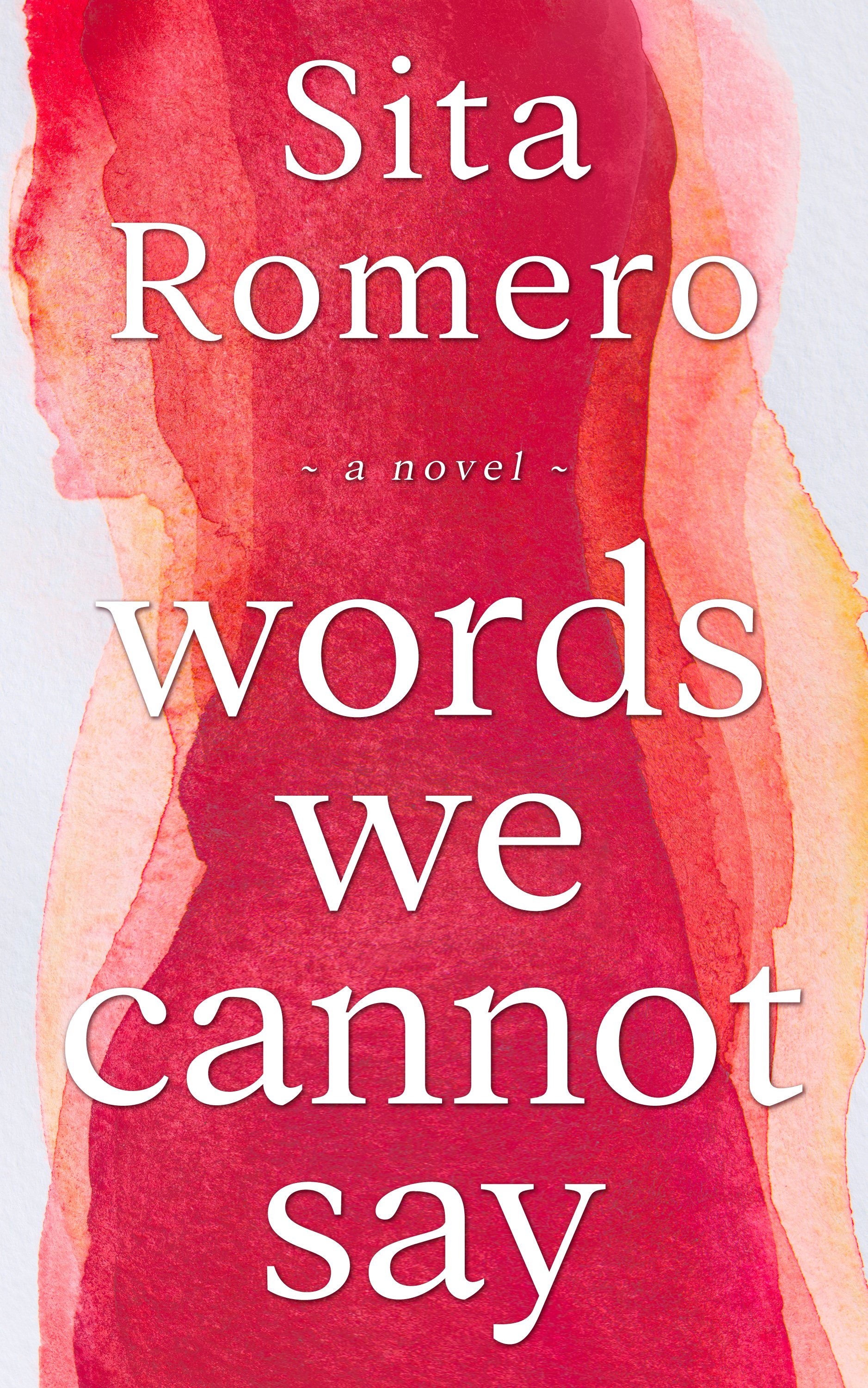
Sita Romero’s debut novel Words We Cannot Say offers a true and unflinching look at pregnancy and hardship. The story is told through the lives of three different women as they navigate the struggles of friendship, motherhood, pregnancy and loss. Though the women seem to be entirely different, their lives connect in organic and often overlooked ways.
Read moreSmile: The Story of a Face by Sarah Ruhl
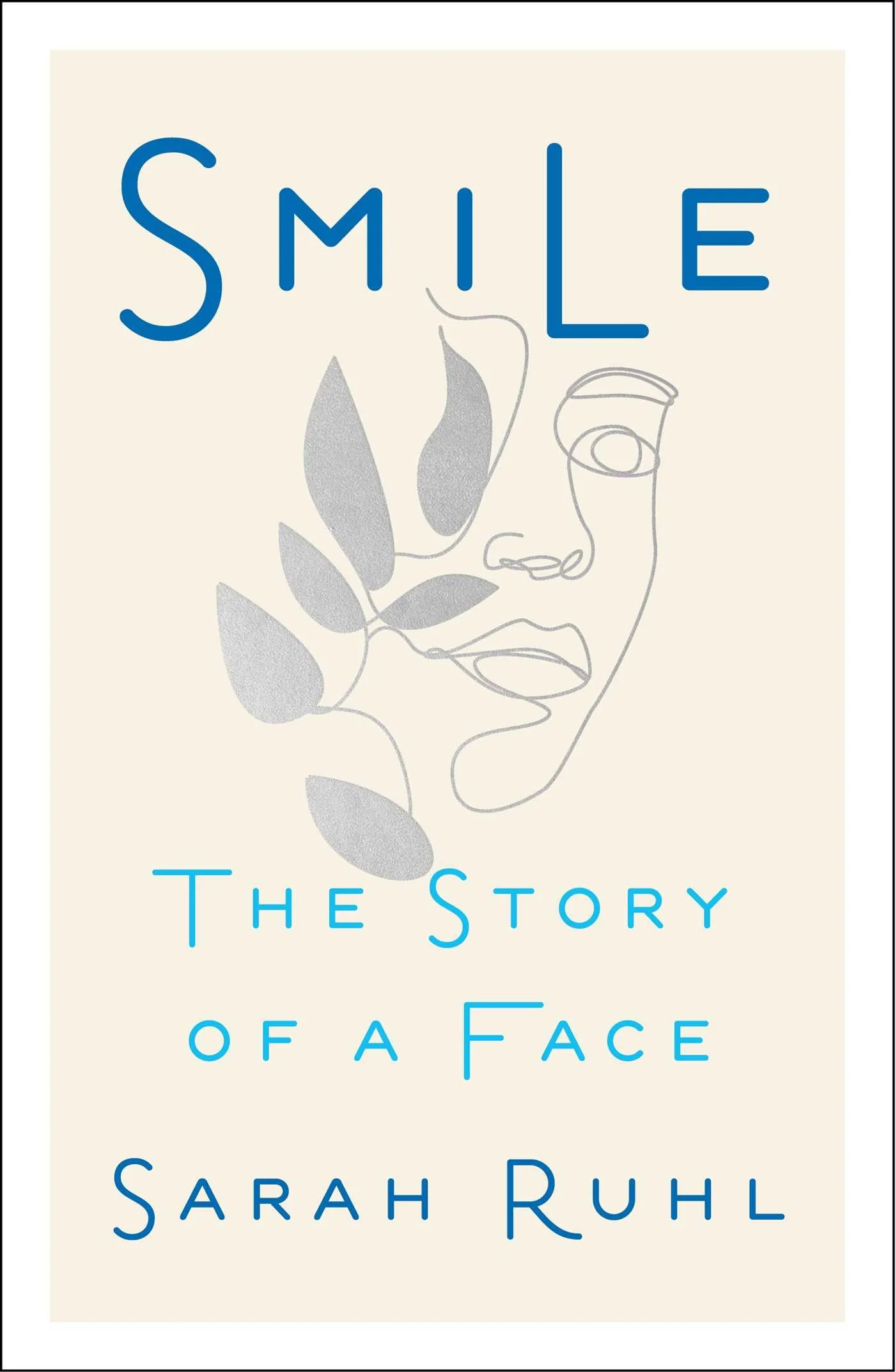
Smile: The Story of a Face by Sarah Ruhl
In her memoir Smile: The Story of a Face (Simon & Schuster), Sarah Ruhl tells the story of her ten-year struggle with Bell’s Palsy. Ruhl was (and is) a successful playwright when she and her husband discover they are having twins. That news, coupled with the fact they already have a daughter, leads Ruhl to worry she will struggle to write again because of the time and energy needed to balance a growing family and the high-stakes professional demands and drama accompanying her profession. That concern becomes even more complicated when she is diagnosed with cholestasis of the liver, where bile seeps into the bloodstream causing itchiness, but also possibly leading to the death of the children.
Read moreHEALING: When a Nurse Becomes a Patient by Theresa Brown, RN

Healing: When a Nurse Becomes a Patient by Theresa Brown was published by Algonquin Books in April 2022.
Theresa Brown’s 2015 book The Shift explored the question of what it means to care for others. In her new memoir, Healing: When a Nurse Becomes a Patient (Algonquin Books), Brown chronicles her experience with breast cancer from diagnosis through treatment and deepens that question into: How can we make the healthcare system more compassionate?
Read moreWhat Cannot Be Undone: True Stories of a Life in Medicine by Walter M. Robinson

What Cannot Be Undone: True Stories of a Life in Medicine by Walter M. Robinson was published early this year by the University of New Mexico Press.
Our training as physicians teaches us to bury our emotions, to remain objective and detached, and it has become clear that patients can perceive doctors as lacking empathy by hiding this aspect of themselves. The complexities of this dynamic are explored in Walter M. Robinson’s What Cannot Be Undone: True Stories of a Life in Medicine, a collection of essays examining the self-destructive results of detachment from the physician’s emotional responses, published recently by the University of New Mexico Press. When physicians cannot tolerate the pain and suffering of their inner life, compassion-fatigue, burnout, substance abuse and suicide are possibilities.
Read moreLetter to a Young Female Physician: Notes from a Medical Life by Suzanne Koven

Letter to a Young Female Physician: Notes from a Medical Life by Suzanne Koven, MD is both instructive and empowering for a professional audience. The “young female physician” is Koven herself 30 years ago, and the memoir’s title comes from a New England Journal of Medicine op-ed she wrote that brought to light Imposter Syndrome (a perceived and misplaced self-doubt that high-achievers are unworthy of the confidence others place in them and that soon enough they will be found-out as imposters). A primary care physician, Koven creates a narrative that addresses issues facing women in medicine such as pay iniquity, harassment and sexism. While all of the above is plenty to keep readers in the clinical world engaged, the book’s success resides in something else—the way Koven approaches universal truths by examining and honoring the specific experience of her life as a woman and as a doctor. Going beyond the halls of the hospital and the titular “young female physician,” she creates a narrative sure to resonate with many.
Read moreAt Peace: Choosing a Good Death After a Long Life by Samuel Harrington MD

At Peace: Choosing a Good Death After a Long Life by Samuel Harrington, MD
At Peace: Choosing a Good Death After a Long Life is a book that should be studied by students preparing themselves for careers in medicine, by those taking care of aging patients, by family members who don’t want their loved ones to suffer, and by everyone who desires for their life to end in peace with a good death.
Read moreThe War for Gloria by Atticus Lish

The War for Gloria by Atticus Lish
Fiction has the ability to bring a world to life, to offer other viewpoints and ways of looking at the world, and it also has the ability to put us in another body in order to give us the experience of a disease or condition. In Atticus Lish’s excellent new novel The War for Gloria (Knopf, 2021), the disease is amyotrophic lateral sclerosis, ALS or Lou Gehrig’s disease. The story is told from the perspectives of Gloria and her son Corey, who is a young teenager when Gloria is diagnosed with ALS. Lish, whose novel Preparation for the Next Life won the 2015 Pen/Faulkner Award, brings to life the world of working class Boston suburbs.
The Beauty in Breaking by Michele Harper

The Beauty in Breaking by Michele Harper
In the powerful memoir The Beauty in Breaking (Riverhead Books 2020), Michele Harper challenges us to examine the transformation of trauma and how painful experiences figure prominently in one’s past and present. In honest and contemplative language, Harper, a doctor and graduate of Harvard University and the Renaissance School of Medicine at Stony Brook University, courageously describes a challenging childhood that exposed her and other family members to ongoing outbursts of physical abuse. Dr. Harper gives insight into how this adversity informed her decision to pursue a career as an emergency room (ER) physician, one that now spans more than a decade working at various locations in Philadelphia and the South Bronx:
“Unlike in the war zone that was childhood, I would be in control of that space, providing relief or at least a reprieve to those who called out for help. I would see to it that there was shelter in the spaces of which I was the guardian.” (19)

Michele Harper has worked as an emergency room physician for more than a decade at various institutions, including as chief resident at Lincoln Hospital in the South Bronx and in the emergency department at the Veterans Affairs Medical Center in Philadelphia. She is a graduate of Harvard University and the Renaissance School of Medicine at Stony Brook University. The Beauty in Breaking is her first book.
In navigating this career of service, she regularly draws upon her resiliency to confront violence when caring for gunshot victims, responding to code blues, or de-escalating threatening patient behavior. Simultaneously, Dr. Harper impresses upon readers the extraordinary privileges of being a healer, as well as the difficulties of stewarding the distressing stories accompanying that role.
As Dr. Harper continues to meditate on her life’s milestones, including divorce, residency graduation and new leadership roles in the clinical world, she paints a sobering reality of her patients’ lives. In often invisible ways, society inflicts lasting and generational trauma that tends to be outside of individual control, especially for historically underserved populations. From the perspective of an African-American female physician, the author shares her reflections on heartbreaking interactions with young patients, like Gabriel and Jeremiah, both of whom she treats for head trauma:
“I suppose it’s a matter of faith whether or not we choose our starting ground before we’re born into this life. Some begin the journey on flat, grassy meadows and others at the base of a very steep mountain. One path, seemingly smooth, can make it nearly impossible for us to see the ditches and gullies along the way. The other, while painfully tough, can deliver what it promises: If you can navigate that path, you’ve developed the skills to scale Everest. It isn’t fair on many accounts; it simply is…All deserve the chance to speak and be heard and be touched. If we’re lucky, we’re touched at every station along the journey, and if nothing else, then at the end.” (137-138)
These carefully curated thoughts about her patient encounters challenge readers to critically think about the culture of blame and stigma towards those facing complex circumstances, an idea expressed succinctly by an ER social worker in the book: “When [people are] at war, the rules are different.” Dr. Harper highlights the continued ripple effects of systematic racial bias and other forms of discrimination in healthcare and beyond.
Still, the path to healing is complex. Dr. Harper herself claims no simple solution, knowing she has to navigate her own fraught path forward too. While contemplating reconciliation with her estranged father, she draws us in as readers interested in clinical encounters and how they may have an impact in our lives; she helps us understand the many complex ways patients offer invaluable wisdom too, if only providers choose to listen. In one interaction with a patient who is a veteran, Dr. Harper skillfully demonstrates how both she and the patient find liberation in acknowledging shared loss.
As an epidemiologist by training, I am reminded that there is always a human story behind the numbers. Narratives like Dr. Harper’s often transcend the limitations of quantitative metrics, such as incidence or rates, by offering a compassionate and instructive glimpse into the lives of those who are suffering. These stories raise important ethical questions about how we, as a medical and research community, should respond. In my professional and personal life, I hope to amplify these stories of oppression so they may be perceived at the same level of legitimacy as other forms of communication in order to spur organizational change.
The Beauty in Breaking is aptly titled, as the author/physician beautifully shows there is indeed beauty in the examination of the trauma one has experienced and struggled to overcome. Her storytelling brims with hope while contributing to a broader conversation about diversity and meaningful inclusion in medical training and beyond.—Brianna Cheng
Brianna Cheng has a MSc Epidemiology from McGill University, and completed a Narrative Medicine Fellowship at Concordia University. She now works as a consultant epidemiologist for the WHO. Her writing has appeared in Intima, Journal of General Internal Medicine, CMAJ Blogs and Families, Systems & Health. She currently serves as an Editor for the McGill Journal of Medicine. @withbrianna
The Doctor’s Dilemma by Daly Walker MD

The Doctor’s Dilemma by Daly Walker
In his new compilation of 16 short stories titled The Doctor’s Dilemma, Dr. Daly Walker provides a stark portrait of physicians facing their own and their patients’ mortality, as well as navigating the practical morality of medicine —striving to do “right” in complex circumstances. As a retired general surgeon and accomplished writer, Dr. Walker melds intimate knowledge of medicine and particularly the surgical theater with a profound insight into aging, intimacy and loss. His archetypal character is an aging surgeon facing degradation of skill and encroaching self-doubt—changes that bring a sense of insecurity, a questioning of identity and a loss of control. His protagonists project outward strength and heroic intent, but struggle to find grounding in fraught relationships and their identity as physicians. This noble effort—to be present and perfect for one’s patients and loved ones, while reckoning with one’s fallibility and insecurities—is familiar to any physician. But that inclination is also highly relatable to general readers coping with the demands of daily life.
Dr. Walker writes what he knows in vivid, engrossing detail. Most stories are set in small-town Indiana, where he was raised and worked for decades as a surgeon. A Midwestern sensibility permeates his work in the jocular traditionalism of the surgeons we meet and in the dignity and modesty of other small-town characters. Dr. Walker brings further autobiographical elements; his characters are often veterans of wartime surgery with wisdom and relationships borne from intense, chaotic environments.
The Doctor’s Dilemma is divided in three sections: Mortality, Morality and Immortality, though these themes are often intertwined. A group of stories present aging surgeons losing skill and confidence, or on the other side of that deterioration. In “One Day in the Life of Dr. Ivan Jones,” we feel the confusion and disorientation of a retired neurosurgeon with dementia, as well as his physician son’s grief and struggle with his father’s loss of self. In “Old Dogs,” an aging surgeon has shaky hands and battles through a difficult aneurysm repair with scrutiny from an audience in the OR. We are asked to consider the value of life as absolute or relative— for a hemorrhaging Jehovah’s Witness patient where transfusion might negate an eternal afterlife; for a death row inmate needing intubation in the setting of scarce resources in a pandemic ridden emergency room. In “India’s Passage,” there is a gripping account of a young woman’s death during a routine laparoscopic surgery, and the oppressive guilt felt by the surgeon as well as the extreme grief and judgment of the woman’s mother. Ultimately there is reconciliation, but no character emerges unchanged from this tragedy.
Daly Walker MD is retired from a general surgery practice in Indiana. He is a graduate of Indiana University Medical school and served his residency at the University of Wisconsin. He served as a battalion surgeon in the Vietnam War. A fiction writer, his stories have appeared in numerous literary publication including The Atlantic. “Resuscitation,” one of the stories in The Doctor’s Dilemma, appeared in the FALL 2020 Intima.
Author photo: Sally Carpenter
Stories also focus on morality with physicians trying to do the “right” thing for their patients and their loved ones and neighbors. In “Drumlins,” an older surgeon physically marred by skin cancer surgery compassionately treats a young woman losing her breast from cancer. In “Jacob’s Ladder,” a retired orthopedic surgeon who lives a solitary life in the woods, having lost his wife, pines for the companionship of a young woman and ultimately saves her from an abusive partner and her son from the consequences of retribution. The idea of responsibilities of son and father comes out in several stories: In “Crystal Apple,” a physician who recently lost his mother is startled by the discovery that his father is not who he thought and grapples with his origins. In “Nui ba Den,” a surgeon reconvenes with a lover from his time in Vietnam decades later, and contemplates how the past influenced him and how his present self views the past. Mortality and morality are intertwined in “Blood,” where a mother adamantly refused blood transfusion for her critically ill Jehovah’s Witness son who is a minor; in “Pascals Law” where a physician intubates a man on death row; and in “Resuscitation” (first published in the Fall 2020 Intima) where a man stricken by Covid is intubated though other patients may have a greater likelihood of survival.
There is an immediacy to Dr. Daly’s imagery and language; his prose style is straightforward and deceptively simple in light of the issues he addresses, as this passage about a doctor’s thoughts after a challenging day at the hospital from “Resuscitation” demonstrates:
On his way home, Slater drove through the rain. The silent, empty streets and unlit shops conveyed an aura of apocalypse. The drops that splattered his windshield reminded him of contaminated droplets spewing from Mr. Bertini’s lungs. The car’s wipers slapped side to side. Slater had read Camus’ The Plague, and he felt like Dr. Rieux traveling through his plague-stricken city, finding it hard to believe that pestilence had crashed down on its people. He came to Shoofly, a chic bar and restaurant. Through a water-speckled window, he could see young people laughing and drinking, crowded together without masks. Their gaiety and disregard for the virus angered Slater. Don’t they care about others? He blamed them for him not being able to hug his children or sleep with his wife. He blamed them for Mr. Bertini’s illness. He wished they could see his patient and know what fighting for your life is like.
A Doctor’s Dilemma brings fresh insight and reflection to enduring themes of medical and surgical care—how to be human and have immense responsibility for one’s patients; how to balance the personal and professional knowing that perfection is impossible; and how to forgive oneself for that imperfection knowing that good intentions and hard work may need to be sufficient.— Eli Hyams MD

Elias Hyams MD is an adjunct associate professor of urology and a robotic surgeon at The Warren Alpert School of Medicine at Brown University in Providence, RI. He has previously served on the faculties of Dartmouth’s Geisel School of Medicine and Columbia University School of Medicine. He completed his undergraduate studies at Yale and is a graduate of the University of Pennsylvania School of Medicine. His residency at New York University-Langone Medical Center was followed by a fellowship at John’s Hopkins. His academic interest lie diagnosis and treatment of cancer of the prostate.
Between Two Kingdoms: A Memoir of Life Interrupted by Suleika Jaouad

I had cancer in my early 30s. None of my peers had gone through that experience, and this was back in the early aughts, a few years before the birth of the social media industrial complex, so as I navigated this new space, I read cancer memoirs. A lot of them.
At first, I appreciated seeing my own experiences echoed on the pages – the time when the doctor fumbled the diagnosis, the time when locks of hair fell out, the time when a friend couldn’t cope so she disappeared. After a while, though, the stories I read started to have a sameness about them. A lot of doctors fumble diagnoses, a lot of hair falls out.
Twenty years later, I’m studying end-of-life narratives for my doctoral dissertation, and I’m still reading a lot of cancer memoirs. I grow pickier each year, but I’m happy to report that Suleika Jaouad finds fresh territory to explore with her well-crafted book Between Two Kingdoms: A Memoir of Life Interrupted.
Jaouad was 22 and working a paralegal gig in Paris when she learned she had acute myeloid leukemia, a disease usually found in people three times her age. She was living with Will, whom she had met in New York just a few months earlier, and their relationship forms the through line for the book as cancer shoves them past their meet-cute beginnings and moves them into the emotional turmoil of what ends up being years of treatment.
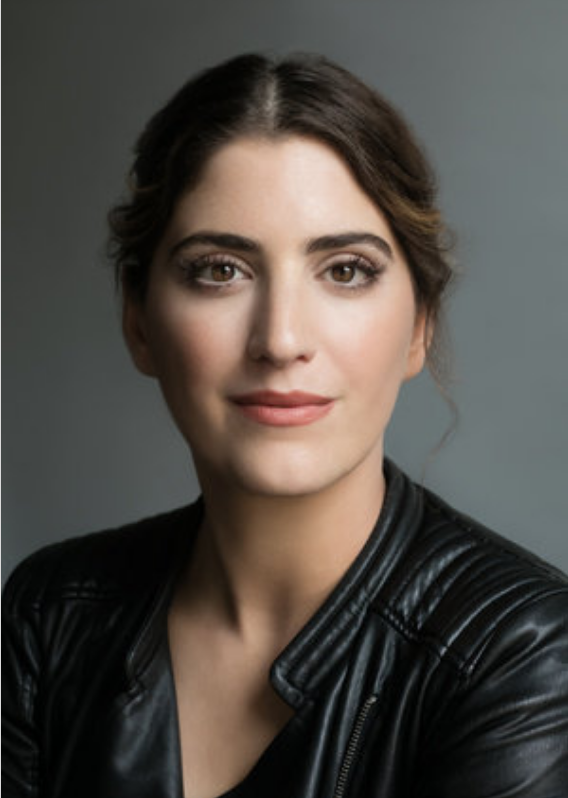
Suleika Jaouad
We get only Jaouad’s telling, of course, but she does not go easy on herself, describing her anger when he doesn’t give as much support as she wants, even as she shows us he was breaking with the effort to give what he did – especially considering he had never made any vows about sticking around “in sickness and in health.”
I squirmed under the tension around how much this provisional relationship could bear. At one point, Will, desperate for a respite from caregiving, floats the idea of joining friends for an out-of-state music festival, and we register Jaouad’s response:
“I wanted to be the graceful leukemic starlet who told him, Take as many breaks as you want, you deserve it, have a wonderful trip, my love, but there is spiritual exhaustion that comes with maintaining this kind of charade after a while. As a patient there was pressure to perform, to be someone who suffers well, to act with heroism, and to put a stoic façade all the time. But that night, I didn’t have it in me to listen to how hard my illness was on Will – how badly he needed a break when I didn’t have the option of taking a break from this body, from this disease, from this life of ours” (161).
Here is a side of cancer we never see in get-well cards.
The relationship is only one illustration of what can make cancer different for young adults; her professional life is another. Jaouad was floundering in the months after college with both yet-undiagnosed physical symptoms and with the existential questions of what do with her life.
She had fled to Paris with a vague idea of becoming a foreign correspondent in her father’s North African homeland. Suddenly, because of her illness, she was back in her childhood bedroom in upstate New York, rebalancing her fresh independence with her even newer vulnerability. There are the unexpected questions that arise that demand her to look into her future, one that’s almost impossible to foresee. Although she had barely thought about motherhood, for example, she finds herself having to remind her medical team to consider preserving her ability to have children.
Often-harrowing treatment consumes the next four years and takes us more than halfway through the book, which originated in a New York Times column. She finds a creative band of “young cancer comrades” that includes the poet Max Ritvo. Only three of the 10 were still alive by the time she writes the book.
The second section veers to another memoir device, the travelogue. She first visits India, then makes solitary sojourns to Vermont, leaving only the final quarter of the book for the 100-day, 15,000-mile U.S. road trip suggested by the book’s romantic cover photo, which shows Jaouad sitting atop a hipster-friendly 1972 Volkswagen camper van with her rescue dog, Oscar. Along the way, she visits people who responded to her newspaper columns because they connected to some part of her experience – people with serious illness, but also others, a grieving parent and a death-row inmate, who related to her narrative voice and found common ground with her illness experience.
The trip allows her physical and psychological space to reflect, leading to some of the book’s finest passages. After visiting Bret, a young filmmaker with lymphoma, she writes:
“I began to think about how porous the border is between the sick and the well. It’s not just people like Bret and me who exist in the wilderness of survivorship. As we live longer and longer, the vast majority of us will travel back and forth across these realms, spending much of our existence. The idea of striving for some beautiful, perfect state of wellness? It mires us in eternal dissatisfaction, a goal forever out of reach. To be well now is to learn to accept whatever body and mind I currently have” (274).
The meaningful interactions offset my sense that the trip has been manufactured for (or by) a book deal in the vein of memoirs like A.J. Jacobs’ My Year of Living Biblically and Elizabeth Gilbert’s Eat Pray Love; Gilbert even provides Jaouad with a book-jacket blurb. The feeling was only heightened when I realized she actually did the road trip in a borrowed old Subaru; the van was bought long afterward, as a reminder of one she saw during the trip, as she notes on the last page of the epilogue.
I wish her publisher had resisted this urge. The golden-yellow van makes a great photo, of course, but the quest it suggests plays neatly into conventional hopes for what the psychotherapist Kathlyn Conway calls the triumph narrative, where illness only makes us stronger and wiser. In fairness, Jaouad herself follows this route to close the book, declaring that she treasures her heightened awareness of her finitude even if her early adulthood was “wrenching, confusing, difficult – to the point of sometimes feeling unendurably painful … I would not reverse my diagnosis if I could. I would not take back what I suffered to gain this” (340-41).
This may be true, but the reflection comes together in less than two pages, suggesting her feeling during an NPR appearance when she was “determined to end the interview on a strong note” (135).
And then there’s the book’s subtitle phrase “life interrupted,” no doubt meant to remind readers of her newspaper column of that same name. The allusion to Girl, Interrupted, Susanna Kaysen’s 1993 memoir of mental illness is especially clumsy coupled with the reference to Susan Sontag in the main title – if not as profound as Sontag, Jaouad’s writing certainly stands on its own. More significantly, however, the phrase implies that her illness was not part of her life. Her book tells a different story.—Cherie Henderson
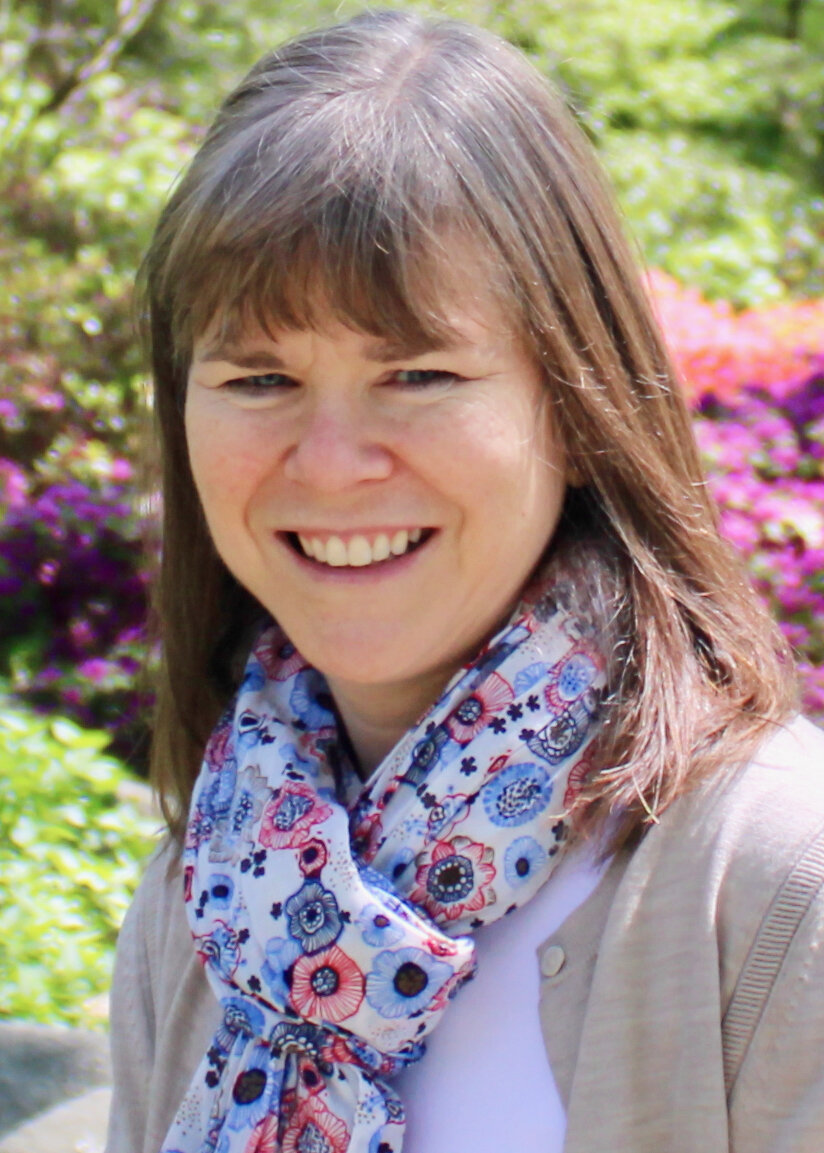
Cherie Henderson
Cherie Henderson is a doctoral candidate in communications at Columbia University. Her dissertation explores stories told by younger adults with terminal illness, and what we can learn from them about the cultural models of behavior for the ill and dying. She has also worked at the intersection of death and humor. Henderson, who has initiated and led writing workshops for patients at Memorial Sloan Kettering cancer center, holds a master’s degree from Columbia in narrative medicine and was a faculty associate, fieldwork supervisor and post-graduate fellow in that program. Earlier, she was a staff editor and reporter at The Miami Herald and The Associated Press. She graduated from The University of Texas at Austin in journalism.
Quisque iaculis facilisis lacinia. Mauris euismod pellentesque tellus sit amet mollis.