• Mission and Vision
    • The Editors
    • Advisory Board
    • Contact
    • Contributors
    • Fiction
    • Field Notes
    • Non-Fiction
    • Poetry
    • Studio Art Fall 2025
    • Audio and Videos
    • Academic
    • CONTRIBUTORS | FALL-WINTER 2025
  • CROSSROADS
    • WHERE IT HURTS TALKS
    • BOOK REVIEWS
    • Submit a Book Review
    • ARCHIVES UPDATE
    • Academic - A-L
    • Academic - M-Z
    • Fiction - A-L
    • Fiction - M-Z
    • Field Notes - A-L
    • Field Notes - M-Z
    • Multimedia
    • Multimedia Fall 2015
    • Multimedia Fall 2016
    • Non-fiction A-L
    • Non-Fiction M-Z
    • Poetry - A-F
    • Poetry G-L
    • Poetry - M-Z
    • Studio Art Spring 2025
    • Studio Art Fall 2024
    • Studio Art Spring 2024 Fall 2023
    • Studio Art Spring 2023
    • Studio Art Fall 2022
    • Studio Art Spring 2022
    • Studio Art Spring 2021
    • Studio Art Fall 2020
    • Studio Art to 2013
    • Studio Art Spring 2015
    • Studio Art - Fall 2015
    • Studio Art Spring 2016
    • Studio Art Fall 2016
    • Studio Art Spring 2017
    • Studio Art Fall 2017
    • Studio Art + Multimedia Spring 2018
    • Studio Art Fall 2018
    • Studio Art Spring 2019
    • Studio Art -Fall 2019
    • Studio Art Spring 2020
    • Contributors
    • Contributors SPRING 2015
    • Contributors FALL 2015
    • Contributors Fall 2016
    • Contributors Fall 2017
    • Contributors Fall 2018
    • Contributors Fall 2019 Intima
    • Contributors Spring 2020 Intima
    • Contributors Fall 2020 Intima
    • THE ESSAY CONTEST
    • Submission Guidelines
Menu

Intima

Street Address
City, State, Zip
Phone Number
A Journal of Narrative Medicine

Your Custom Text Here

Intima

  • About
    • Mission and Vision
    • The Editors
    • Advisory Board
    • Contact
    • Contributors
  • OUR CURRENT ISSUE
    • Fiction
    • Field Notes
    • Non-Fiction
    • Poetry
    • Studio Art Fall 2025
    • Audio and Videos
    • Academic
    • CONTRIBUTORS | FALL-WINTER 2025
  • CROSSROADS
  • EVENTS
    • WHERE IT HURTS TALKS
  • BOOK REVIEWS
    • BOOK REVIEWS
    • Submit a Book Review
  • Archives
    • ARCHIVES UPDATE
    • Academic - A-L
    • Academic - M-Z
    • Fiction - A-L
    • Fiction - M-Z
    • Field Notes - A-L
    • Field Notes - M-Z
    • Multimedia
    • Multimedia Fall 2015
    • Multimedia Fall 2016
    • Non-fiction A-L
    • Non-Fiction M-Z
    • Poetry - A-F
    • Poetry G-L
    • Poetry - M-Z
    • Studio Art Spring 2025
    • Studio Art Fall 2024
    • Studio Art Spring 2024 Fall 2023
    • Studio Art Spring 2023
    • Studio Art Fall 2022
    • Studio Art Spring 2022
    • Studio Art Spring 2021
    • Studio Art Fall 2020
    • Studio Art to 2013
    • Studio Art Spring 2015
    • Studio Art - Fall 2015
    • Studio Art Spring 2016
    • Studio Art Fall 2016
    • Studio Art Spring 2017
    • Studio Art Fall 2017
    • Studio Art + Multimedia Spring 2018
    • Studio Art Fall 2018
    • Studio Art Spring 2019
    • Studio Art -Fall 2019
    • Studio Art Spring 2020
    • Contributors
    • Contributors SPRING 2015
    • Contributors FALL 2015
    • Contributors Fall 2016
    • Contributors Fall 2017
    • Contributors Fall 2018
    • Contributors Fall 2019 Intima
    • Contributors Spring 2020 Intima
    • Contributors Fall 2020 Intima
    • THE ESSAY CONTEST
  • Submissions
    • Submission Guidelines

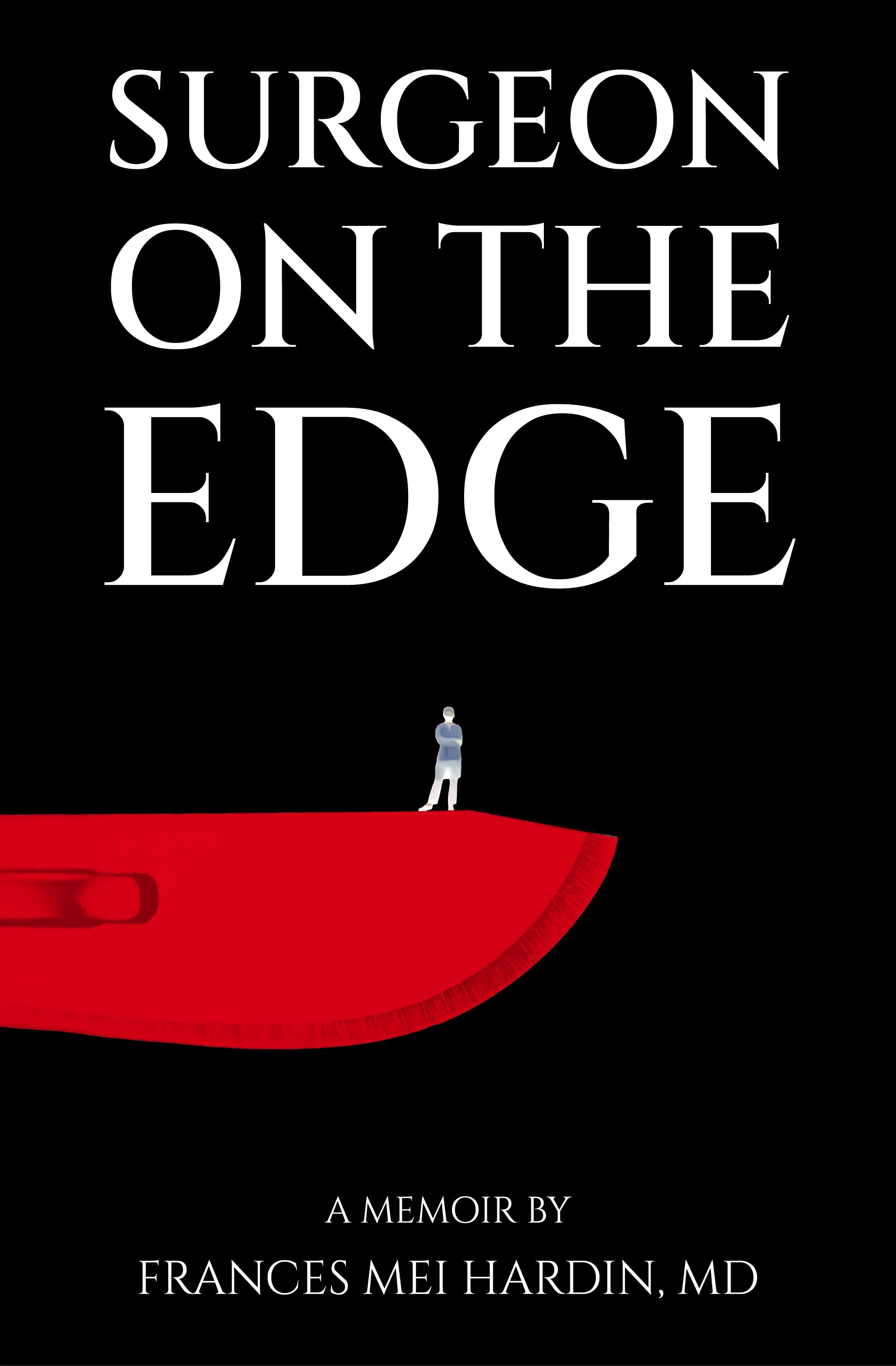
Surgeon on the Edge by Frances Mei Hardin, MD

March 20, 2026 Intima: A Journal of Narrative Medicine

Surgeon on the Edge (Hippocratic Press, 2026), a memoir by physician Frances Mei Hardin,

As a physician who went through medical school and residency training in the 1990’s, I’m always on the lookout for books by fellow female physicians that shed the tough outer skin we were taught to wear and dig beneath into the painful underbelly of what it took to get us where we are.

So I was eager to read Surgeon on the Edge (Hippocratic Press, 2026), a new medical memoir by physician Frances Mei Hardin, who recently co-founded the Hippocratic Collective to highlight the voices and experiences of physicians. I was interested to see how Hardin’s experience lined up with mine and my peers: As is the case with other female physicians, I too experienced sexism and harassment throughout training and practice, but I also had inspiring attending physicians and patient experiences that remain precious moments during that time.

Read more
In Book Reviews, Health, Hospitals, Medical Training, Memoir, Narrative Medicine Tags medical school, women doctors, memoir, surgery, surgeons, burnout, misogyny

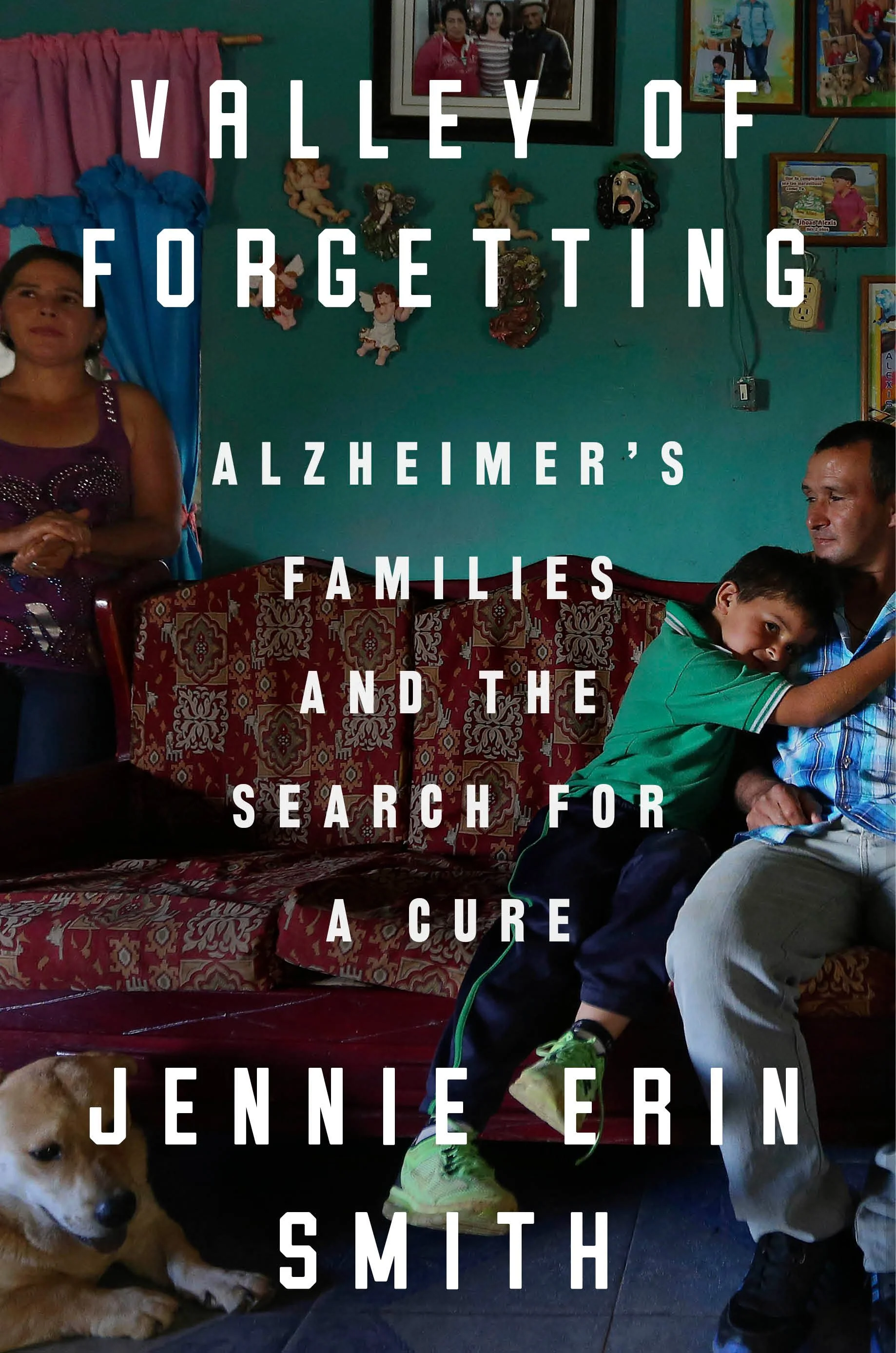
The Clinical Gaze—Dignity, Data and the Cost of a Cure. A review of "Valley of Forgetting: Alzheimer's Families & the Search for a Cure" by Jennie Erin Smith

February 2, 2026 Intima: A Journal of Narrative Medicine

Jennie Erin Smith's Valley of Forgetting: Alzheimer’s Families and the Search for a Cure (Riverhead)

Jennie Erin Smith's Valley of Forgetting: Alzheimer’s Families and the Search for a Cure …follows the largest known kindred with a genetic form of early-onset Alzheimer's. Smith traces not only a medical mystery but a slow remaking of a community into a research site. The families she accompanies do not merely "participate" in trials; their lives are increasingly organized around the needs of clinicians, pharmaceutical companies, and global neurologists. The book asks, with unusual patience, whose reasons continue to matter when the cure becomes the overriding narrative.

Read more
In Book Reviews, Caregiving, Co-Constructing Narrative, Global Health, Health, Medical Research, Narrative Medicine Tags alzhe, medical research, grandmothers
Comment

The Invisible Kingdom: Reimagining Chronic Illness by Meghan O’Rourke

May 7, 2025 Intima: A Journal of Narrative Medicine

The Invisible Kingdom: Reimagining Chronic Illness was published by Riverhead Books, an imprint of Penguin Random House, 2022.

What does it mean to be sick when medicine refuses to believe you are ill? In The Invisible Kingdom: Reimagining Chronic Illness, poet, journalist and memoirist Meghan O’Rourke invites readers into the haunting, liminal world of unvalidated illness—a place all too familiar to millions suffering from autoimmune and complex chronic conditions. O’Rourke’s work is both a personal chronicle and a searing cultural critique, combining lyricism with investigative rigor. For readers of Intima, especially those who straddle the spaces of caregiving, patienthood, and medicine, this book is not merely relevant—it is essential.

Read more
In Book Reviews, Health, Memoir, Medical Training Tags chronic illness, narrative medicine, doctors, patients, doctor stories
Comment

Becoming a Better Physician: Insightful and Inspirational Stories from Attending Physicians, Residents, and Medical Students, edited by Mark Allan Goldstein and Kathy May Tran

February 23, 2025 Intima: A Journal of Narrative Medicine

Every obstacle in the life of a medical student or physician leaves a mark. No one can truly know how they will cope with a spouse’s death, academic failure, a parent’s dementia, work-life upheaval, sudden trauma, or chronic debility. If left unexamined, the scars accumulate since, of course, the work of medicine and healthcare must continue unabated.

Read more
In Book Reviews, Caregiving, Creative non-fiction, Essays, Health, Narrative Medicine Tags doctors, medical school, empathy
Comment

Shattered, a memoir by novelist, screenwriter and playwright Hanif Kureishi

February 4, 2025 Intima: A Journal of Narrative Medicine

Ecco

Hanif Kureishi is a novelist, screenwriter, and playwright. He is the author of nine novels, including The Buddha of Suburbia (winner of the Whitbread Award for Best First Novel), The Black Album, Intimacy, and The Nothing. His screenplay of My Beautiful Laundrette was nominated for an Oscar, and he is the recipient of the PEN Pinter Prize and the Chevalier de l’Ordre des Arts et des Lettres. He was made a Commander of the Order of the British Empire. He lives in London.
Author hoto by Kier Kureishi

In December 2022, novelist, screenwriter (My Beautiful Launderette) and playwright Hanif Kureishi was at his girlfriend Isabella’s apartment in Rome when he had a fall after fainting due to a change in blood pressure. Because of how he landed, he ended up hyperextending his neck resulting in immediate tetraplegia. His memoir Shattered (Ecco, 2025) is his account of the following year he spent in various hospitals and rehabilitation centers as he tried to understand how he would live moving forward, as the accident reshaped his view of himself and his body, especially what that means for him as a writer.

 Throughout the book, Kureishi has the reactions one would expect from a life-changing event such as his. He cycles through Kübler-Ross’s stages of grief, though he never reaches acceptance (he has moments of hope, though), and he spends most of his time in anger and depression. Kureishi shares moments of disbelief—how waking up (when he’s able to get a few hours of sleep) can be the worst moment of the day, when he realizes all over again what has happened to him. It’s like “re-entering a horror movie that I had thought, for a moment, I could turn off.” He sometimes suffers from envy, especially when friends who visit him talk about going on vacation and he recalls what it’s like to travel with such ease.

He doesn’t say much about the care he receives, but that’s mainly because of the boring routines of a long hospital stay. Early in the book, he does provide details, even interjecting humor to his description of receiving an enema, but once he’s established that routine, he shifts his focus away from the medical descriptions. Similarly, given that he moves through five different hospitals/rehabilitation centers, he doesn’t truly get to know the people who care for him. Not only that, he notices the turnover in the staff, which prevents him from knowing them more fully. That’s a frustration for him, as he seeks to build relationships in a place where he’s spending several months of his life.

Empathy plays a part in how he sees his caregivers, as he reflects on all they do for him and how they see their job as a calling, despite the long hours and low pay. The experience is as humbling as it is existentially exasperating: He learns how to ask for help, as he has lost the ability to do anything for himself. Kureishi makes a clear contrast between the hospital in Italy, where he spends the first five months, and the various locations in England, which range from grim to adequate. There’s an implied criticism of the British National Health Service, but he never comes out and skewers it directly. As an American reader, I couldn’t help but wonder how much all of his care would have cost in the U.S. system and how somebody who makes their living as a writer would be able to afford it, even with insurance.

The main strength of Shattered consists of reflections on his identity after the accident. Early on, he writes: “I am a stranger to myself. I don’t know who I am any more. Someone new is emerging.” After ten months, he reflects, “I can feel my identity slipping, as if I am forgetting who I am and becoming someone else, or almost nothing. I never thought my identity would be scrubbed out or superseded by something else.”

Part of that change revolves around the idea of disability. He has gone from being a person who could function in a society built for those who are physically able to move around without assistance to somebody who requires help for every action they want to do. Daily activity becomes heightened for him: For example, Kureishi describes how those helping him eat either give him food too quickly or not quickly enough, a distinction most readers wouldn’t have thought about but one that makes perfect sense once one stops to consider it. For his return home to his house in London, a number of accommodations are needed, including adding a bathroom and bed to the main floor. The most mundane activities must be navigated with care. Kureishi chronicles, for example, the amount of attention he has to pay to the uneven quality of the sidewalks when he and one of his sons go to a pub.

He devotes a small amount of time to thinking about sex, as well as a discussion of psychoanalysis (which he has been in for decades), but not how he and Isabella will continue to have any type of intimacy. Instead, he talks about the sex he had in the past and his lack of interest in it now. He’s frank about it, even making Isabella uncomfortable in relating a story about a supposed orgy he was a part of (the story does not live up to that description), but he doesn’t seem concerned with it moving forward.

A Writer’s Life, Interrupted
Given how much of Kureishi’s life consists of writing, that part of his identity comes in for the most scrutiny. He wonders what life is like as a writer who is unable to pick up a pen and physically write. The only way he was able to compose Shattered, for example, was through dictation and the help of his family. It is telling that Kureishi begins writing this book within a couple of weeks after his accident, as his way of processing the world. In his first entry, dated 6 January 2023, he ends by saying, “I am speaking these words through Isabella, who is slowly typing them into her iPad. I am determined to keep writing, it has never mattered to me more.” One of the reasons his identity as a writer is so important is because it has provided him with an identity of his choosing, unlike the racial identity British society, especially his peers, put upon him when he was younger. After providing a list of words other people called him, he “found [his] own word, [he] stuck to it, and never let it go. It is still [his] word.” Some of the strongest sections of the book, certainly some of the best quotes, come from his thoughts about writing and being a writer.

Occasionally, he forgets the privilege he does still have as a male writer. He tells the story of one of his students who is working on a novel. Before giving a draft to an editor or agent, she asks a sensitivity reader to evaluate it to see if it contains anything that is offensive. Kureishi is appalled by such an idea and spends several pages talking about how writers of the 20th century would not have taken such an approach, that the point of literature is to transgress, especially writers such as Dostoevsky, Sylvia Plath, Jean Rhys, Céline, William Burroughs, Henry Miller, James Baldwin, Franz Kafka, and D.H. Lawrence, all of whom pushed boundaries and forced readers to see a wider world. He fails to notice that most of them are male—Rhys and Plath are the exceptions— and while there have been female writers who were literary disrupters, it has been (and continues to be) much more difficult for them to do so.

 One other aspect of his identity that he explores is the nature of his body. He admits he hasn’t thought about his body much during his life, as he’s not an athlete and hasn’t suffered from any other significant ailments or injuries, but this accident has brought him more in touch with that body, even as it has become more of an object. At times, he talks about parts of his body as if they don’t belong to him, given his lack of control over them, but he’s also fascinated with what his body can and can’t do. His hands are of particular interest, given they are the conduit for his writing. He regularly mentions how he has given up any kind of embarrassment about his body, given how often people undress and wash and handle him, which causes him to see his body as more of an object, but also to appreciate the lack of judgment from those who do such work.

 His list of acknowledgements is longer than for most books, given how many people have taken care of him. He spends some of the time in the book talking about the effects such care has taken on his family. His now-fiancée Isabella (they get engaged during the course of the book) has effectively given up her work as a PR agent for writers and festivals to be there for him, and his three sons work out a rotation of visits to help her. He describes the change that happened:

“Two weeks ago a bomb went off in my life which has also shattered the lives of those around me. My partner, my children, my friends. All my relationships are being renegotiated. It makes everybody a little crazy, it changes everything. There is guilt and rage, and people resent their dependence on one another and the fact they can’t do everything for themselves. My accident was a physical tragedy, but the emotional outcomes for all of us are going to be significant.”

He also talks about the wide variety of friends and even acquaintances who come to see him, with Isabella even joking about how busy his room often is. There are days where several people end up there at the same time, having lengthy intellectual conversations, much like they would have had in the past. On most of those days, he’s suffering too much to truly enjoy them, but it’s clear he noticed them, given that they show up in his account. He realizes that such an accident has taught him who his true friends are, and he reflects on when he might not have been as good of a friend as he should have. Like most of us, he resolves to be different moving forward.

I would be remiss if I neglected to mention the humor he works throughout the book, given the lack of jollity in his situation. He tells the story of a time before his accident when a nurse mistook him for Salman Rushdie—the author of Midnight’s Children and one of Kureishi’s friends—while a nurse was flipping him over, preparing to put a finger in his “backside.” Kureishi jokes that if he had written Midnight’s Children, he would have “gone private,” implying that he would be able to afford private care and wouldn’t be in such a public setting, given the threat on Rushdie’s life. When he relates a story about having a long conversation with a doctor in Italy about raising children, translations of Russian novels, the doctor’s performing surgery on a Mafia don, among other subjects, Kureishi ends by saying, “I have to say that becoming paralyzed is a great way to meet new people.”

The book ends with his going home to a different life, but one where he can still find some joy in the world. His book is not treacly or saccharine, as he doesn’t try to deliver any life lessons he’s learned along the way, nor does he end with any implication that moving forward will be easy. However, he has begun to try to see the small parts of life that will continue to provide happiness. In fact, he reflects on the collaboration of editing this book with his son Carlo and how much he has enjoyed that. Even if he doesn’t pick up a pen again, it’s clear Kureishi will find a way to communicate with the world around him.—Kevin Brown

Kevin Brown (he/him) teaches high school English in Nashville. He has published three books of poetry: Liturgical Calendar: Poems (Wipf and Stock); A Lexicon of Lost Words (winner of the Violet Reed Haas Prize for Poetry, Snake Nation Press); and Exit Lines (Plain View Press). He also has a memoir, Another Way: Finding Faith, Then Finding It Again, and a book of scholarship, They Love to Tell the Stories: Five Contemporary Novelists Take on the Gospels. Find out more about him and his work on social media sites at @kevinbrownwrites or at http://kevinbrownwrites.weebly.com/.

In Creative non-fiction, Essays, Health, Hospitals, Memoir, Narrative Medicine Tags book review, memoir, medical memoir
Comment

Moving Along: A graphic medicine novel about Parkinson’s Dance by Lisbeth Frølunde, Maria Bee Christensen-Strynø and Louise Phillips

December 14, 2024 Intima: A Journal of Narrative Medicine

Parkinson’s disease (PD) is a progressive neurodegenerative condition clinically identified by the hallmark features of shaking, stiffness and slowness. PD is also marked by a multitude of non-motor symptoms like constipation, cognitive changes and sleep disorders. Any number of symptoms and intensities can exist in each patient, leading to a remarkably heterogenous patient population. While effective symptomatic treatments exist, the only known means of quantitatively slowing progression to date is exercise, specifically cardiovascular exercise that increases heart rate (1).

Read more
In Book Reviews, Caregiving, Health, Medical Research, Narrative Medicine Tags parkinson's disease, dance therapy, graphic comics, graphic medicine, caregivers
Comment

But I Still Have My Fingerprints, a book of poetry and healing by Dianne Silvestri, MD

November 13, 2024 Intima: A Journal of Narrative Medicine

Dianne Silvestri’s second book of poetry But I Still Have My Fingerprints (CavanKerry Press, 2022) artfully documents her shattering experience as a doctor diagnosed with acute myeloid leukemia. Raw, real and unique poems give acute insight into a life-altering trauma through the double lens of a physician who has become the patient.

Read more
In Caregiving, Health, Hospitals, Poetry Tags acute myeloid leukemia, poetry, narrative medicine
Comment

The Occasional Human Sacrifice: Medical Experimentation and the Price of Saying No by bioethicist Carl Elliot

October 2, 2024 Intima: A Journal of Narrative Medicine

In The Occasional Human Sacrifice: Medical Experimentation and the Price of Saying No (W.W. Norton, 2024), bioethicist Carl Elliot begins his ethical exploration into whistleblowing in medical practice and research, surprisingly, with a personal account. Working within a discipline that has historically sought to separate subjective insights from detached analyses of putatively objective principles and systems of thought, Elliot details his experiences, calling attention to a psychiatric research study at his home institution that appeared to contribute to the suicide of one its participants. He recounts the painstaking process of bringing the injustice to light and holding his institution to account, only to find himself progressively ostracized, denigrated and ultimately thoroughly disillusioned.

Read more
In Medical Research, Medical Training, Hospitals, Health, Narrative Medicine Tags medical research, medical school, medical ethics, whistleblowers
Comment

Reckoning: Ten Seasons in Fire Island Pines by Miles Cigolle

September 18, 2024 Intima: A Journal of Narrative Medicine

"Reckoning: Ten Seasons in Fire Island Pines" by Miles Cigolle

In Reckoning: Ten Seasons in Fire Island Pines (Sunstone Press), the reader follows an extended period in the life of a gay man, Miles Cigolle. The book, written and narrated by Cigolle as its central character, covers the years from 1988 to 2000. Reckoning is thus an individual, personal story, but one that also reveals a critical moment of social history, highlighting how the supportive communal structure that was engaged in the early responses to AIDS had many roots in a place synonymous with sybaritic hedonism.

Read more
In Book Reviews, Co-Constructing Narrative, Health, Medical Research, Memoir, Narrative Medicine, pandemic Tags Fire Island Pines, medical memoir, memoir, AIDS, HIV, gay life
Comment

A Body Made of Glass: A Cultural History of Hypochondria by Caroline Crampton

August 29, 2024 Intima: A Journal of Narrative Medicine

In A Body Made of Glass: A Cultural History of Hypochondria (Ecco, Harper Collins, 2024), author Caroline Crampton combines what she refers to as a cultural history of hypochondria with a memoir of her experiences with anxiety disorder, allowing the history of it to inform her life and vice versa. Lest readers think they have nothing to learn about their own lives from a study of hypochondria, especially if they’ve never experienced it before, Crampton, a writer and critic who lives in England, reminds them that hypochondria has much to teach them about health. She goes even further by connecting the disease to gender and the mind-body divide.

Read more
In Book Reviews, Co-Constructing Narrative, Creative non-fiction, Health Tags book review, hypochondria, illness narratives
Comment

Scivias Choreomaniae, a poetry collection about madness and mystics, psychosis and prisons by Lake Angela

August 14, 2024 Intima: A Journal of Narrative Medicine

Scivias Choreomaniae (Spuyten Duyvil, 2024), a poetry collection by Lake Angela, a poet, translator and dancer-choreographer from Lake Erie, transports readers to an outdated prison for schizophrenics and psychiatric inmates from medieval times to the time-space of the contemporary United States.

All who pass through the “mad-houses” are held behind wrought-iron words, including the author as dance therapist, whose great failure culminates when her augmenting madness fells her into a similar psychiatric ward. But her unusual success is that before her downfall, the poet uses dance therapy to rot the iron words of prison cells and chains, exposing the core of the institution where doctors and medical staff treat the patients with brutality.

Read more
In Book Reviews, Caregiving, Health, Hospitals, Poetry, psychiatric biography, schizophrenia Tags poetry, poems, bipolar disease, prisons, psychosis, madness, medical humanities
Comment

Rearranged: An Opera Singer’s Facial Cancer And Life Transposed by Kathleen Watt

January 28, 2024 Guest User

From the author: Bone cancer in my cheek ended my career as an opera singer and brought me face to face with mortality, disfigurement, the meaning and uses of beauty—and a lot of left over pieces.

Read more
In Book Reviews, Cancer, Caregiving, Co-Constructing Narrative, Creative non-fiction, Health, Medical Research, Hospitals Tags cancer, opera, book review
Comment

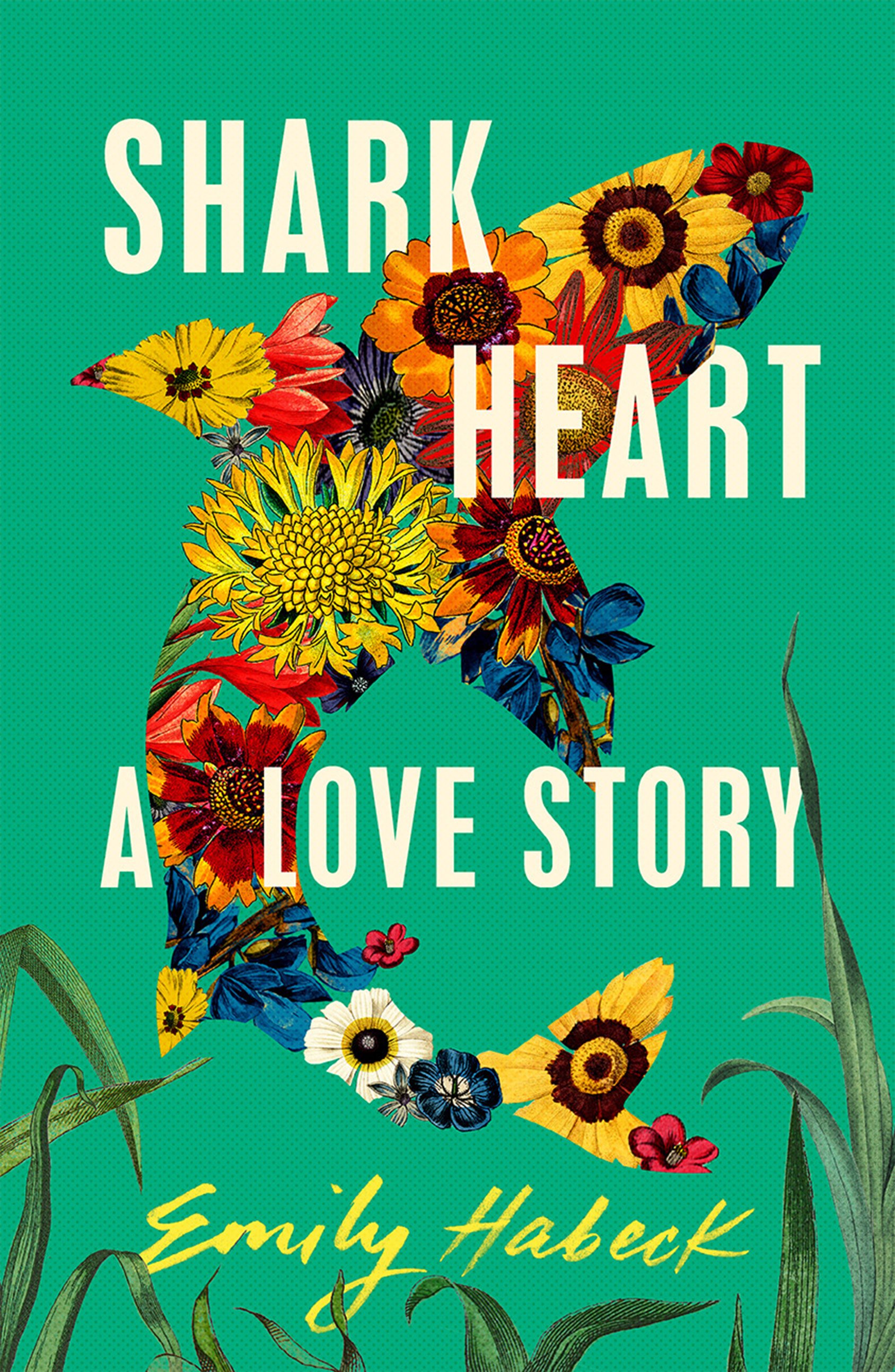
Shark Heart: A Love Story by Emily Habeck

December 21, 2023 Intima: A Journal of Narrative Medicine

When I learned of an upcoming book about a man who turns into a great white shark, I thought this was another example of our need to tame a dangerous wild animal into something suitable for a child’s tee shirt. Shark Heart, A Love Story, Emily Habeck’s first novel (Simon & Schuster, 2023) is not that at all, but much more:  a love story about newlyweds Lewis and Wren, a meditation on our relationship with the animal world, and an exploration of illness and caregiving.  Shark Heart explores the characteristics we share with other species and the question of what makes humans unique, while it also considers how health and illness affect our relationships with other people.

Read more
In Book Reviews, Caregiving, Health Tags novels, narrative medicine, sharks
Comment

What We Bring to the Practice of Medicine: Perspectives from Women Physicians. Editors: Kimberly Greene-Liebowitz and Dana Corriel

July 2, 2023 Guest User

In 1960, women comprised 6.7% of practicing physicians; today, that number is 37%. Women often face different difficulties from their male counterparts; even today, misogyny, discrimination and societal expectations affect training, health, specialty selection and academic progress.

In What We Bring to the Practice of Medicine, a collection of essays published by Kent State University Press, women share stories from their careers that altered how they saw themselves and their patients. These authors have no fear of vulnerability; they recognize their emotional responses as not only acceptable, but necessary for them to be the physician they want to be.

Read more
In Biography, Caregiving, Essays, Health Tags Women in Science, #womeninstem, doctor stories, narrative medicine

Zig-Zag Boy: A Memoir of Madness and Motherhood by Tanya Frank

April 9, 2023 Intima: A Journal of Narrative Medicine

Tanya Frank, a Londoner living in Los Angeles, wrote an essay in The New York Times titled “Unmoored by a Psychotic Break” about her son’s diagnosis with schizoaffective disorder in 2009. Her book about the next decade of her and her son’s life, Zig-Zag Boy: A Memoir of Madness and Motherhood (W.W. Norton), chronicles how psychiatric illness can redefine the relationships in and beyond a family.

Read more
In psychiatric biography, Memoir, Narrative Medicine, Health, Creative non-fiction Tags schizoaffective disorder, schizophrenia, self-discovery
Comment

Uncaring: How The Culture of Medicine Kills Doctors and Patients by Robert Pearl

February 26, 2023 Intima: A Journal of Narrative Medicine

In Uncaring: How the Culture of Medicine Kills Doctors & Patients (published by Public Affairs), Dr. Robert Pearl, a Stanford professor, plastic surgeon, and former chief operating officer of Kaiser Permanente, writes a well-documented panoramic narrative and insider view that demystifies the complicated healthcare system. His book offers a disturbing look at healthcare system that has lost its purpose. Pearl relates inefficiencies and slow changes, as patient centric views held by physicians and systems that have failed to adapt, both to cultural and individual principles, held so dearly for decades.

Read more
In Book Reviews, Caregiving, Co-Constructing Narrative, Cancer, Death, Health, Hospitals, Medical Research, Medical Training, Narrative Medicine Tags doctors, patients, healthcare, medicare, emergency room

The Song of Our Scars: The Untold Story of Pain by Haider Warraich

December 11, 2022 Intima: A Journal of Narrative Medicine

Almost everything we know about pain and how to treat it is wrong, Haider Warraich says in his insightful book The Song of Our Scars: The Untold Story of Pain, published earlier this year by Basic Books. The physician and assistant professor at Harvard Medical School claims that there are dire misunderstandings between patients who feel pain, the clinicians who address it, and the researchers who study it. Worst of all, he says, pain has transformed from a symptom into a disease.

Haider Warraich is a physician, author and researcher at the VA Boston Healthcare System, Brigham and Women’s Hospital and Harvard Medical School. He has published more than 140 research papers including in the NEJM, JAMA and BMJ. He frequently writes for the New York Times and Washington Post, and is the author of the books Modern Death, State of the Heart and the just published The Song of Our Scars – The Untold Story of Pain (Basic Books).@haiderwarraich

One in five American adults—an estimated sixty-six million in total—experience chronic pain, resulting in billions of dollars in direct medical costs and lost productivity. Lower back pain is the leading cause of disability in the United States, followed by migraine headaches, neck pain and conditions like osteo and rheumatoid arthritis. And Americans are most likely to use opioids to help alleviate their pain. Yet, as Warraich points out, opioids provide little to no benefit for chronic non-cancer pain, and can even make it worse.

Pain’s storied complexity is multifaceted and multilayered. Its treatment, in Warraich’s view, requires empathic holistic care that considers how pain is racialized, gendered and personal. Pain is subjective. You can have pain without suffering. There is no single dedicated pain center in the brain. The pain of Black people remains both under-recognized and under-treated. Women are more likely to feel pain, but their pain is also more likely to be dismissed. Simply assessing pain on a numeric scale doubles the risk of opioid overdoses in hospital. And exercise is a vital part of any multidisciplinary approach to managing chronic pain.

Warraich himself has chronic back pain due to a sports injury that happened many years ago when he was a medical student in Pakistan—around the time when he felt confirmed in his vocation to be a doctor. Just when he felt like he had fallen in love with medicine, he broke his back.

Now an insightful, wounded healer, Warraich draws from his own experience of how disruptive chronic pain can be—how it “disrupts the way a person moves through their life, the narrative they define themselves by, the arc of their stories.”

The Song of Our Scars is filled with research findings, clinical vignettes, historical details and sociopolitical commentary. Yet the story Warraich tells is so broad and at times surprisingly sequenced—jumping from the mythological Greek world, to the history of opium, to the American Civil War—that it can sound like listening to the radio while scanning the channels, catching snippets of newscasts in search of a good song. We as readers want to hear more of Warraich’s own personal self-reflections, which would help focus his narrative by giving voice to his song, and deepen its impact on readers, his listeners.

Perhaps most helpful is Warraich’s concern for the origins of the opioid addiction crisis in America. The story of the opioid crisis continues to unfold in the United States, and recently came into the headlines in the documentary “All the Beauty and the Bloodshed,”directed by award-winning director Laura Poitras about artist Nan Goldin’s life and chronicles her addiction and activism that led to major museums such as the National Portrait Gallery in Washington, DC, the Guggenheim, the Tate and others to stop taking donations from the Sackler family and removing the Sackler name from the walls of their institutions. The documentary won the prestigious Golden Lion at the Venice Film Festival in September.

In The Song of Our Scars, Warraich highlights how Cicely Saunders’s revolutionary approach to pain management in hospice care was “hijacked” into a business strategy by the pharmaceutical industry, whose goal, he says, “was to take Saunders’s approach toward total pain experienced by people at the end of life and apply it to people in every phase of life, treating routine medical conditions as if they were terminal illnesses.” Saunders, who started her clinical practice as a nurse and became a doctor, is credited with founding the first modern hospice and establishing the discipline and the culture of palliative care in the late 1950s.

In terms of narrative care, Warraich brings to mind, but does not reference, other prominent physicians and scholars who describe and advocate also for such empathic patient-centered care, including Rita Charon, Victoria Sweet, Arthur Frank and William Randall.

What are the songs of our scars? What type, form and shape do they take? There are love songs, ballads, laments and anthems, to name an obvious few. How do they help us? Do they capture our hearts and move our spirits? Warraich hopes so. As patients tell us their tales of pain, he knows how important it is to listen to them. And he wants healthcare providers to learn how to listen more fully, deeply and more compassionately in clinical practice. Empathy is what makes a good doctor, he says—empathy and kindness.

“As we look to the future and take stock of all that we know about chronic pain,” he says, “we find that the most promising treatment approaches don’t involve any chemical inebriation or procedural manipulation. They involve one human being talking to another, helping them realize that the path to relief was within them all along.”—Robert Mundle


Robert Mundle is a graduate of Yale Divinity School and a palliative care chaplain in Kingston, Ontario. He is the author of How to Be an Even Better Listener: A Practical Guide for Hospice and Palliative Care Volunteers (JKP 2018).

In Caregiving, Death, Health, Essays, Medical Research, Medical Training, Narrative Medicine Tags pain, chronic pain, narrative medicine, patients and doctors

Intimacies, Received: Poetry by Taneum Bambrick

September 27, 2022 Intima: A Journal of Narrative Medicine

Bravery, to me, is stepping forward to confront your fears and discomforts, despite the emotions holding you back. After reading Intimacies, Received, Taneum Bambrick’s moving collection of poetry, brave is the word that most readily describes the taut, sometimes treacherous path the poet takes to reclaim her sense of self and connection to her body after a traumatic event.

Read more
In Book Reviews, Co-Constructing Narrative, Health, Memoir, Narrative Medicine, Poetry, Scars Tags poetry, sexual assault, gender, love, self-discovery

MedSpeak Illuminated: The Art and Practice of Medical Illustration by François I. Luks

September 12, 2022 Intima: A Journal of Narrative Medicine

MedSpeak Illuminated: The Art and Practice of Medical Illustration by François I. Luks is a remarkable volume that expertly brings together humanities and science.

Read more
In Book Reviews, Health, Medical Research, Narrative Medicine, Scars, Medical Training Tags medical illustration, surgery, surgeons, anatomy, doctors
Comment

Q & A about Neurocinema—The Sequel! by Eelco Wijdicks

August 29, 2022 Intima: A Journal of Narrative Medicine

When neurointensivist Dr. Eelco Wijdicks published the original Neurocinema: When Film Meets Neurology in 2014, his collection of film essays summarizing the portrayal of major neurologic syndromes and clinical signs in cinema served to underscore the field’s existence by being its premier textbook. Therein the medically-inclined movie buff or the film-frenzied clinician could explore medicine as it appeared on the big screen and better understand what the effects of medicine on film have played in our cultural milieu over time.

Read more
In Book Reviews, Co-Constructing Narrative, Comedy, Death, Essays, Health, Medical Research, Narrative Medicine Tags brain, neurocinema, films, movie buff, psychiatry, neurosurgery
Comment
Older Posts →

Intima: A Journal of Narrative Medicine
Copyright ©2026
ISSN 2766-628X