• Mission and Vision
    • The Editors
    • Advisory Board
    • Contact
    • Contributors
    • Fiction
    • Field Notes
    • Non-Fiction
    • Poetry
    • Studio Art Fall 2025
    • Audio and Videos
    • Academic
    • CONTRIBUTORS | FALL-WINTER 2025
  • CROSSROADS
    • WHERE IT HURTS TALKS
    • WHERE IT HURTS: DISPATCHES FROM THE EMOTIONAL FRONTLINES OF MEDICINE
    • BOOK REVIEWS
    • Submit a Book Review
    • ARCHIVES UPDATE
    • Academic - A-L
    • Academic - M-Z
    • Fiction - A-L
    • Fiction - M-Z
    • Field Notes - A-L
    • Field Notes - M-Z
    • Multimedia
    • Multimedia Fall 2015
    • Multimedia Fall 2016
    • Non-fiction A-L
    • Non-Fiction M-Z
    • Poetry - A-F
    • Poetry G-L
    • Poetry - M-Z
    • Studio Art Spring 2025
    • Studio Art Fall 2024
    • Studio Art Spring 2024 Fall 2023
    • Studio Art Spring 2023
    • Studio Art Fall 2022
    • Studio Art Spring 2022
    • Studio Art Spring 2021
    • Studio Art Fall 2020
    • Studio Art to 2013
    • Studio Art Spring 2015
    • Studio Art - Fall 2015
    • Studio Art Spring 2016
    • Studio Art Fall 2016
    • Studio Art Spring 2017
    • Studio Art Fall 2017
    • Studio Art + Multimedia Spring 2018
    • Studio Art Fall 2018
    • Studio Art Spring 2019
    • Studio Art -Fall 2019
    • Studio Art Spring 2020
    • Contributors
    • Contributors SPRING 2015
    • Contributors FALL 2015
    • Contributors Fall 2016
    • Contributors Fall 2017
    • Contributors Fall 2018
    • Contributors Fall 2019 Intima
    • Contributors Spring 2020 Intima
    • Contributors Fall 2020 Intima
    • THE ESSAY CONTEST
    • Submission Guidelines
Menu

Intima

Street Address
City, State, Zip
Phone Number
A Journal of Narrative Medicine

Your Custom Text Here

Intima

  • About
    • Mission and Vision
    • The Editors
    • Advisory Board
    • Contact
    • Contributors
  • OUR CURRENT ISSUE
    • Fiction
    • Field Notes
    • Non-Fiction
    • Poetry
    • Studio Art Fall 2025
    • Audio and Videos
    • Academic
    • CONTRIBUTORS | FALL-WINTER 2025
  • CROSSROADS
  • EVENTS
    • WHERE IT HURTS TALKS
  • BOOKS
    • WHERE IT HURTS: DISPATCHES FROM THE EMOTIONAL FRONTLINES OF MEDICINE
    • BOOK REVIEWS
    • Submit a Book Review
  • Archives
    • ARCHIVES UPDATE
    • Academic - A-L
    • Academic - M-Z
    • Fiction - A-L
    • Fiction - M-Z
    • Field Notes - A-L
    • Field Notes - M-Z
    • Multimedia
    • Multimedia Fall 2015
    • Multimedia Fall 2016
    • Non-fiction A-L
    • Non-Fiction M-Z
    • Poetry - A-F
    • Poetry G-L
    • Poetry - M-Z
    • Studio Art Spring 2025
    • Studio Art Fall 2024
    • Studio Art Spring 2024 Fall 2023
    • Studio Art Spring 2023
    • Studio Art Fall 2022
    • Studio Art Spring 2022
    • Studio Art Spring 2021
    • Studio Art Fall 2020
    • Studio Art to 2013
    • Studio Art Spring 2015
    • Studio Art - Fall 2015
    • Studio Art Spring 2016
    • Studio Art Fall 2016
    • Studio Art Spring 2017
    • Studio Art Fall 2017
    • Studio Art + Multimedia Spring 2018
    • Studio Art Fall 2018
    • Studio Art Spring 2019
    • Studio Art -Fall 2019
    • Studio Art Spring 2020
    • Contributors
    • Contributors SPRING 2015
    • Contributors FALL 2015
    • Contributors Fall 2016
    • Contributors Fall 2017
    • Contributors Fall 2018
    • Contributors Fall 2019 Intima
    • Contributors Spring 2020 Intima
    • Contributors Fall 2020 Intima
    • THE ESSAY CONTEST
  • Submissions
    • Submission Guidelines

What Remains When the Body Is Taken Apart: A reflection on the educational ritual of anatomy class by Elli Lee

April 6, 2026 Intima: A Journal of Narrative Medicine

© Seeds of Life by Elli Youngeun Lee. Oil and colored pencil on canvas

“The first time I saw a dead body was in the cadaver lab. Behind fogged glasses, I felt my chest tighten as I faced my willed donor. But soon after, I found myself dissecting layers of skin and rifling through organs with the detachment of studying pages of a textbook. Anatomy lab is a pivotal step in our medical education. In fragmenting the human body as deidentified pieces of knowledge, it guides our hands through the otherwise unseen subjects of disease and reinforces our interconnectedness. In ‘Seeds of Life,’ the flowers honor these physical bodies as vessels of the donors’ time on earth—reminders that, through their gift, our growth and our future patients’ healing take root.”

In “Seeds of Life,” I reflected on the first time I encountered death—not as a moment of mourning, but as an educational threshold. In the anatomy lab, my donor’s body became a site of learning: layers to be dissected away, structures to be identified, systems to be mastered. Standing before the body, I dreaded the day we would come face-to-face with our donor and dissect his facial structures. Yet when that day arrived, the emotions I anticipated were absent. Without my noticing, a transition had occurred: this encounter with death was no longer about loss, but about participation in an educational ritual. Though this shift felt necessary and even expected, it left behind a quiet unease. In learning to see the body clearly, I wondered if I was learning to stop seeing.

Anna Dovre’s essay “Body of Work” (Fall 2023 Intima) in Where It Hurts: Dispatches from the Emotional Frontlines of Medicine captures this tension with striking clarity. Dovre, a family medicine resident in Saint Paul, Minnesota, reflects on the role of anatomy in medical education and how it reshapes the way we relate to human bodies, including our own. Her piece resonates deeply with my experience of fragmenting the body in the name of understanding it. Both works exist in the space between reverence and removal, between gratitude for the donor and abstraction of the body into material for study.

What draws me most to “Body of Work” is Dovre’s unflinching self-reflection on clinical detachment. She writes, “And then I wonder at myself: the way my nausea has ebbed, my body looser, at ease. If anything, the scene on the table has become more gruesome, but perhaps that has rendered her less real, less human to me.” In naming this shift, Dovre observes it with honesty rather than shame. Her reflection illuminates how emotional distancing can arise not from indifference, but from immersion—how repeated exposure transforms discomfort into familiarity.

Together, these pieces ask a shared question: How do we hold onto humanity while learning to dissect it?

In bringing these works into dialogue with each other, I am reminded of the importance of self-reflection and collectivity in times of unease. Familiarity can engender distance, but clinical training does not have to come at the expense of meaning. Through noticing and highlighting this shift, the stories we tell through art can ensure that what remains is not only knowledge, but also gratitude, humility, and care.
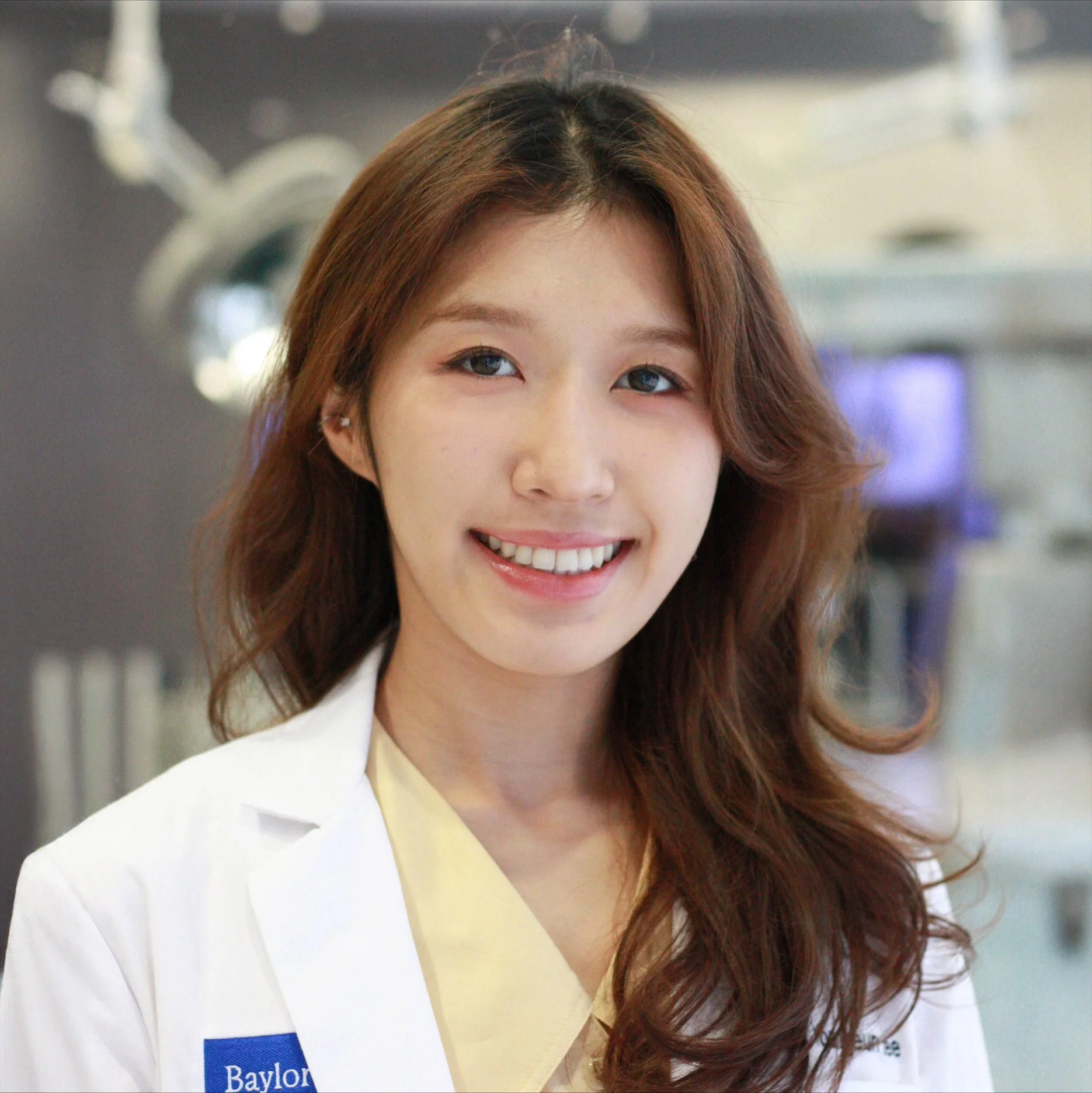

Elli Lee

Elli Youngeun Lee is a painter and third-year medical student at the Baylor College of Medicine in Houston. She graduated from Brown University with a degree in visual arts in 2022. Lee gleans inspiration from her daily life and on her clinical rotations, hoping to put onto canvas the fleeting but poignant moments of the mundane. Learn more at elli-lee.

In anatomy lab, doctors, graphic medicine, medical school, medical students, medical training Tags anatomy lab, donor body, rituals, medical school
Baselines, Self-Exams and Thoughts about Mammograms: A reflection by Rebecca A. Efroymson →

Intima: A Journal of Narrative Medicine
Copyright ©2026
ISSN 2766-628X