
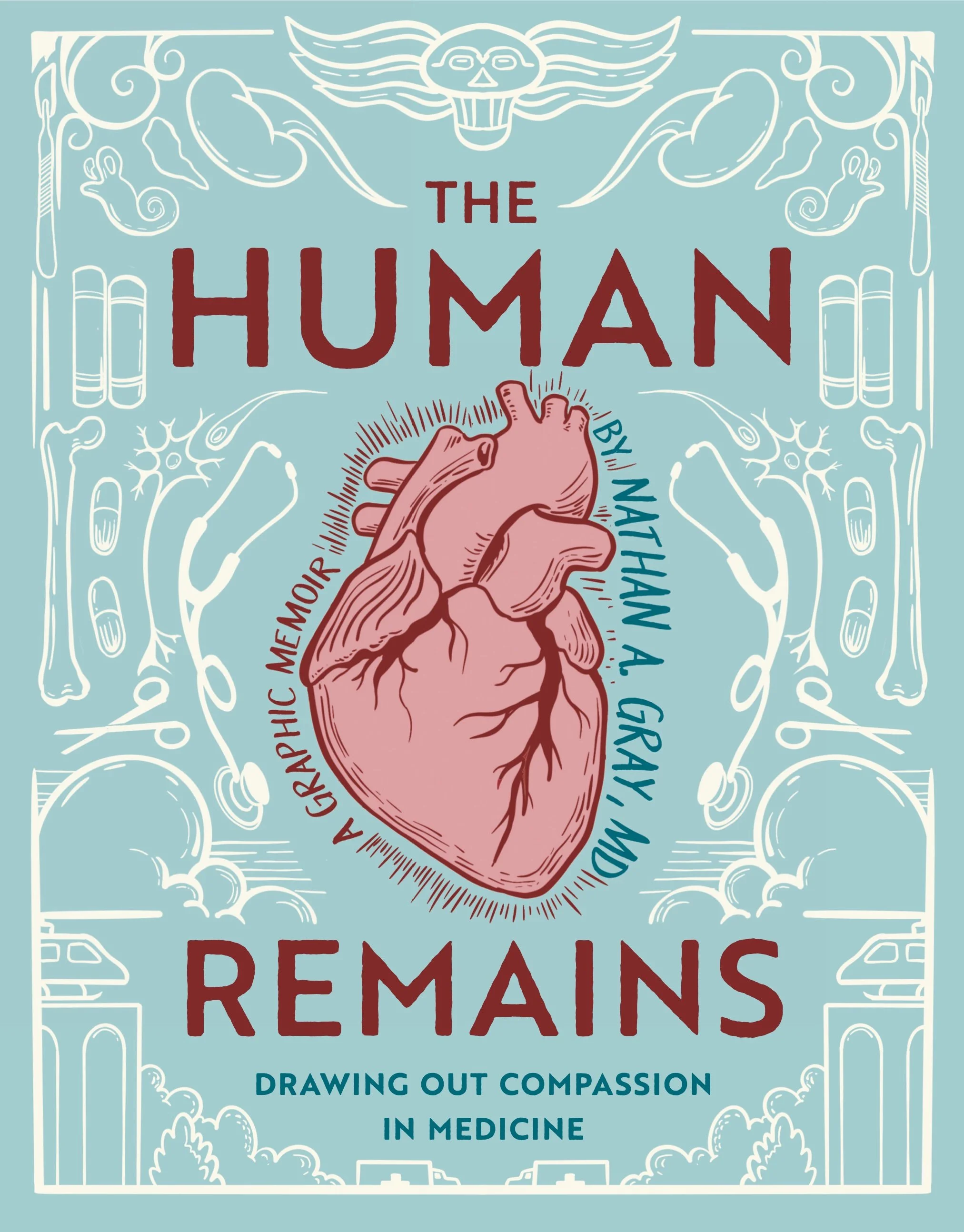
The Human Remains: Drawing out Compassion in Medicine by Nathan A. Gray is a stunning graphic medicine memoir that details the arduous path to becoming a palliative care doctor. The cover drawing of a heart, as well as the title of the book itself, telegraph that this is a story about recentering the emotional core of medicine. The double entendre of the words and the anatomical authenticity of the image also reflect how this author will not mask the truth with a Hallmark version. As an internal medicine and palliative care physician myself and one with doctors in the family who presented one version of life in medicine, I knew Gray’s narrative would resonate with me.
Nothing prepared me for the visceral impact of experiencing this familiar story through the medium of graphic medicine.
As editors Erin La Cour and Anna Poletti explain in their book Graphic Medicine, the beauty of this narrative form lies in “the communicative potential of the juxtaposition of incongruent texts and images, verbal and visual metaphor, color, line and paging through page layout, paneling, and guttering…to explore and expose the subjective experiences of health and healthcare systems that may be difficult for both practitioners and patients to understand or explain in either verbal of visual language alone.” While many medical memoirs have been written, Gray’s book literally fleshes out the developmental path of a physician in the United States, inviting readers of all backgrounds into an in-depth exploration of events and feelings that so many of us have struggled to adequately describe.
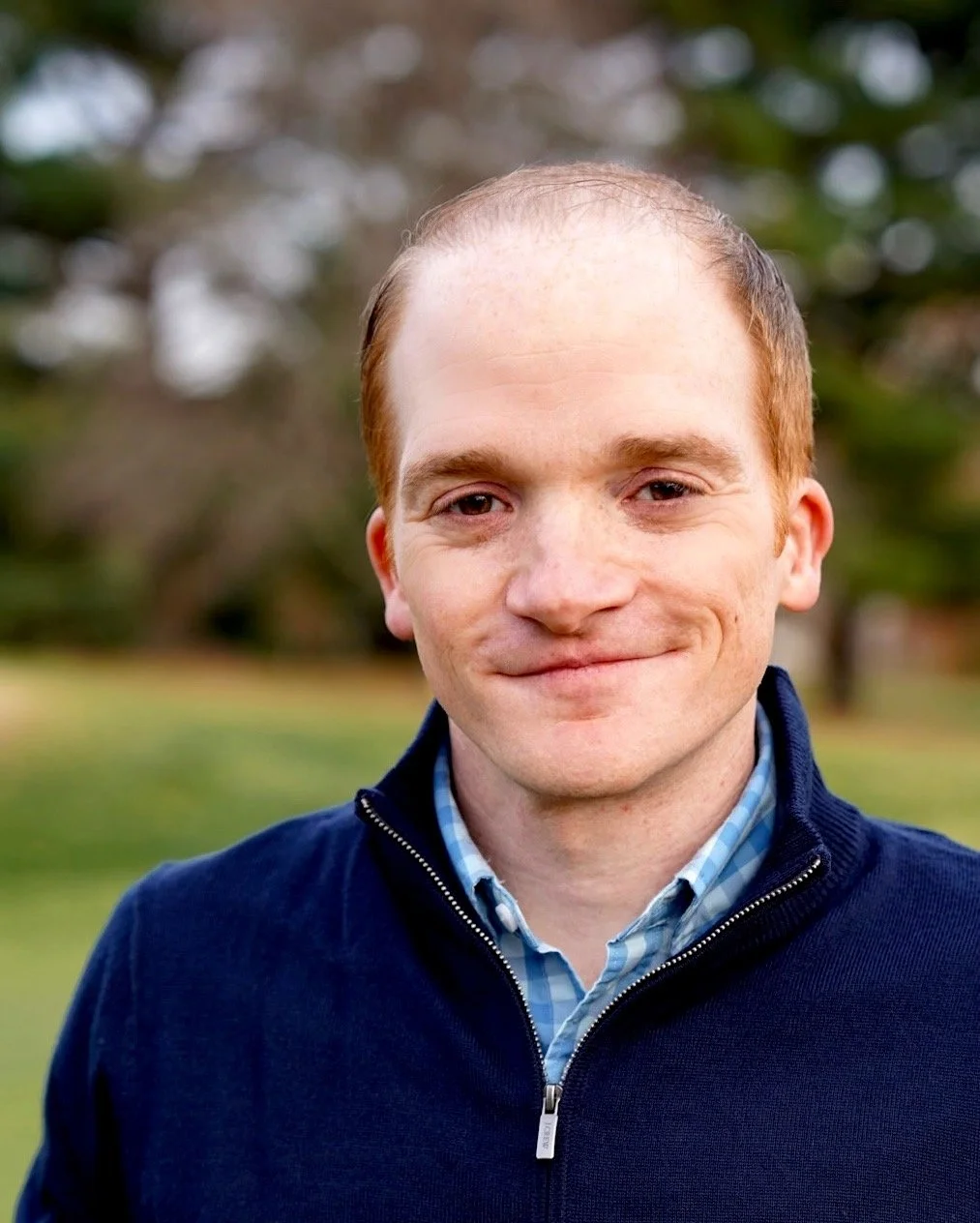
Nathan A. Gray
Nathan Gray is a palliative care physician and associate professor of medicine at Johns Hopkins University. His writing and comics have appeared in The Washington Post, USA Today, The Los Angeles Times, the British Medical Journal and the American Medical Association Journal of Ethics. The Human Remains is his debut graphic novel.
For non-physicians, this book may be a revelation, both disturbing and enlightening. For physicians, Gray has managed to capture with uncanny veracity the moments that define our initiation into medicine spanning years of training. Right away in the prologue, the reader enters into the shock and awe tactics of medical education by introducing us to his cadaver. Anatomy lab, where medical students spend tireless hours inside of a corpse, universally represents the most formative event to occur in every doctor’s life. Gray uses this initiation rite as the motif that structures the book.
As the story opens, we see a man in a cowboy hat dancing with a woman with razor-stubble hair and wearing what looks like a towel. Gray writes: “I’ve never been good at dancing, in the conservative circles I grew up in, it bordered on taboo. And even if I had been encouraged, my clumsy feet would have slowed me down.” The setting is festive, with lights strewn across a dance floor, but the dancers are formal – keeping their distance. I wondered if the woman was a cancer patient, finally home with her love after treatment, awkwardly reconnecting.
But soon we learn something very different is happening. The aperture is pulled back and the two dancers, black outlines against an expansive vista, are watched by a lonely hovering figure. The dialogue from the prior page continues: “So it seemed odd that dances with a cadaver found their way into my dreams again and again during my first semester of medical school. The dreams about dancing were one of many types of dreams that crept into my sleep in the months of the Human Anatomy course. Some of these dreams recurred for years to come.”
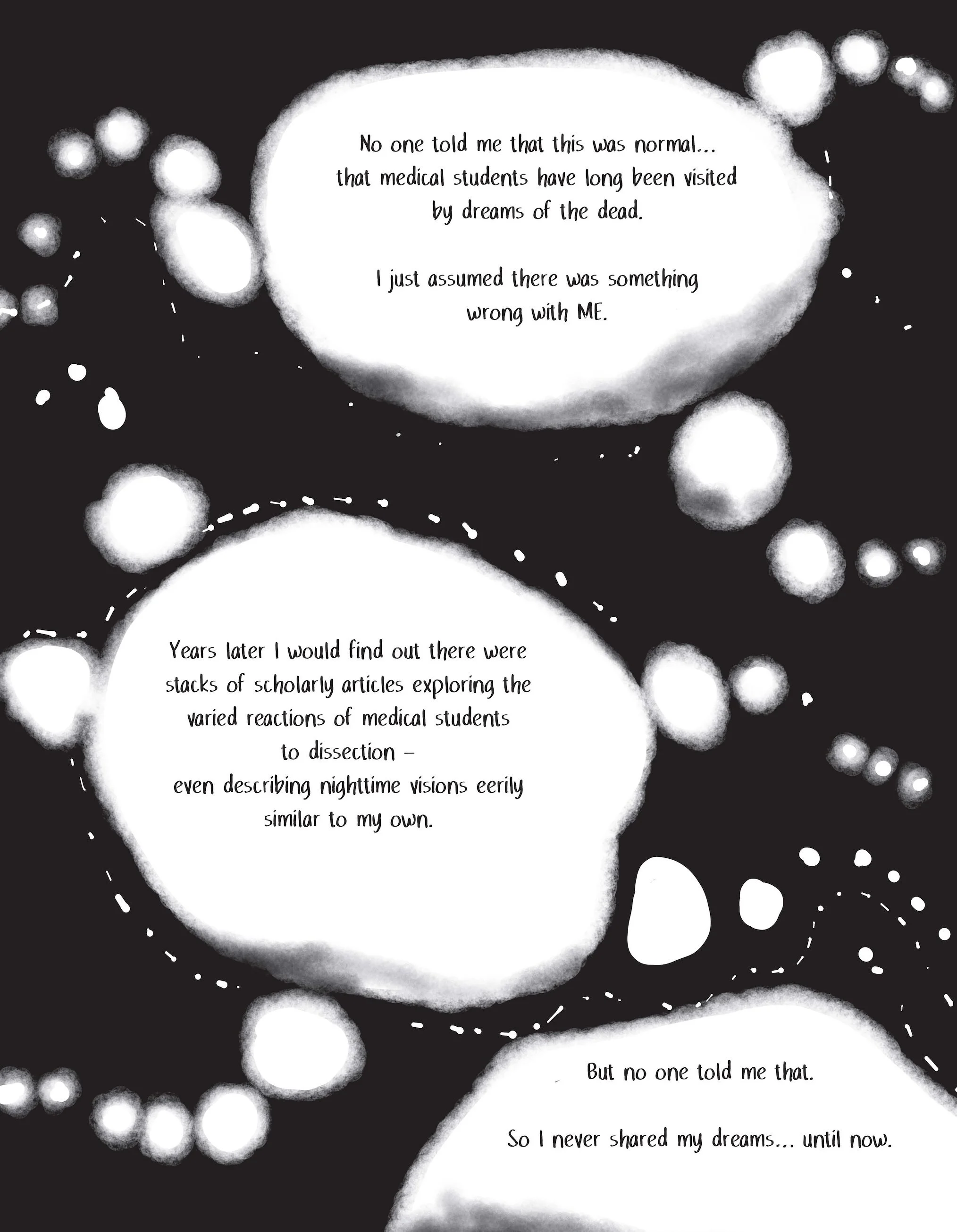
We are immediately struck by the indelible imprint that exposure to the most fraught elements of being human leaves on a physician in the making. These dreams will appear throughout the book, always in sepia tones. But next, in black and white (unlike most of the book), Gray conveys how many traumatic elements of medical education remain unspoken and unexplored: “No one told me that this was normal…that medical students have long been visited by dreams of the dead. I just assumed there was something wrong with ME…But no one told me that. So I never shared my dreams…until now.” Gray is not only expressing his experiences but opening the door for others to similarly find healing by using their voice and their pen.
© THE HUMAN REMAINS. Nathan Gray
The first chapter titled “Drawn” (meaning ‘attracted’ and perhaps ‘exhausted’ or literally, ‘sketched’) presents the pre-med experience; the meetings with mentors, the application, the expectation of extracurriculars that make one believe being a well-rounded human is appreciated by Medicine. It also reveals the idealism that imbues most students who make it through the doors into the early days of medical school. Of note, the images reveal mostly older white men lecturing and leading. The hues are industrial blues and greens, often as shadows on otherwise colorless faces. This tone, of tension but also excitement and moments of joy – images of the open road and falling in love - continues through the early pages of chapter two titled “Joined.” But there’s an underlying thrum created by the addition of dark swirling lines that presage the vicissitudes that lie ahead.
Anatomy lab is “where medicine starts to feel real” and “It’s the secret handshake that tells folks you’re in the club.” The sacred and exclusive feeling this rite of passage evokes for doctors is made clear in the words and images on the page, from references to ancient healers, anatomy scholars and painters, to images of the vast and impressive amphitheater-like classrooms. But the disturbing aspects of anatomy lab emerge, starting with the introduction of gallows humor on the very first day. An exaggerated image of a broken hip is projected and used to introduce “Throckmorton’s sign,” which means the genitalia on the film points towards the fracture, a useless fact with which to “impress your non-medical friends.”
The jokes continue, as the subtle indoctrination into the “hidden curriculum” of medical school begins in anatomy lab. This code values objectivity, requiring learners to distance themselves from patients (starting with their cadavers) so they don’t get too attached or emotional in the course of their education and work. By the end of his first anatomy lecture, the narrator senses he has already strayed from his idealistic values: “I’m sure that, in a class of 200, there must’ve been some students reflecting on the miracle of the human form or the mysteries of mortality. But that wasn’t me.” His transformation has begun; his focus now is wholly on his own survival.
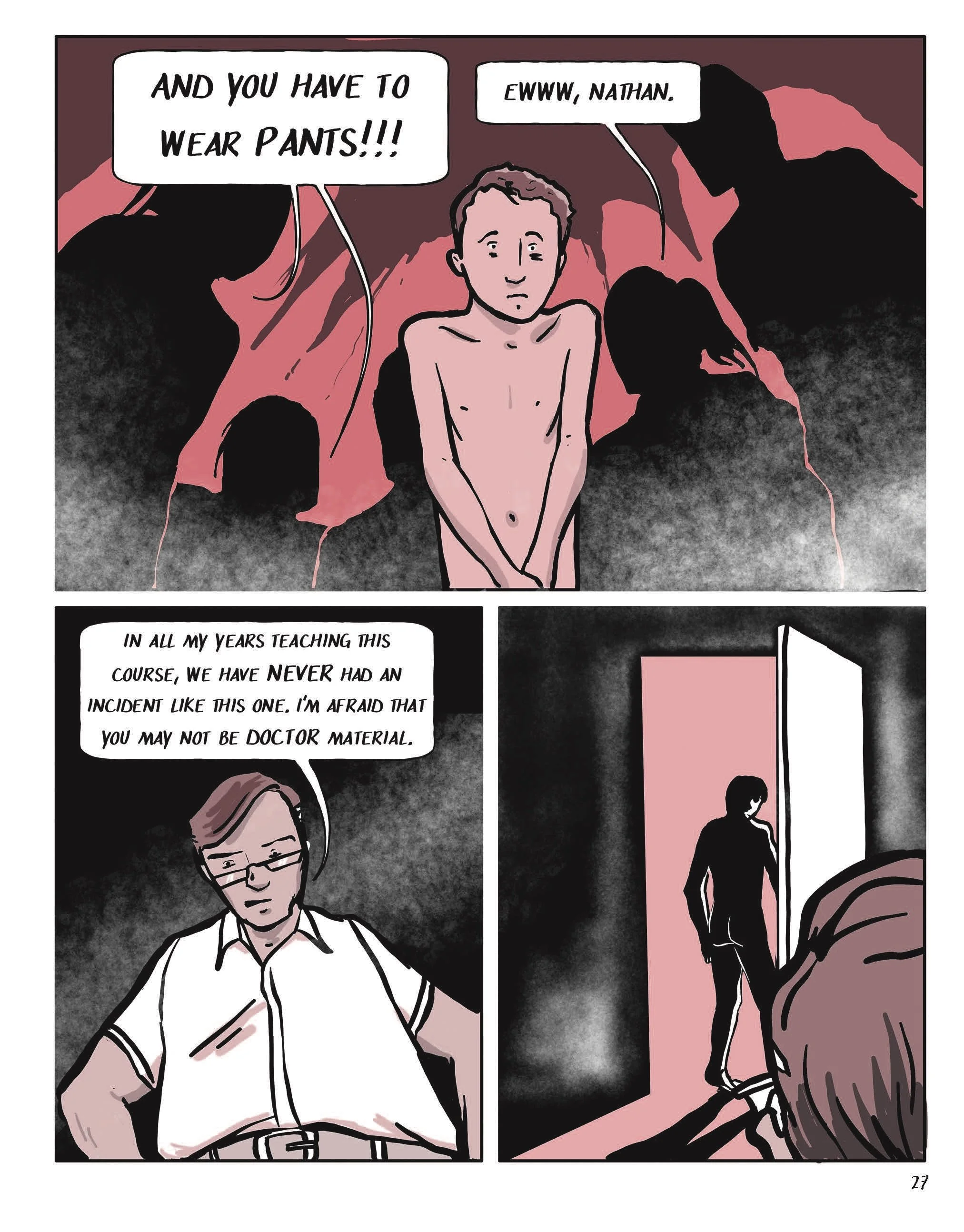
The use of shame in medical education to ensure the tacit rules are followed is also revealed. The narrator is particularly vulnerable to this tool since he is already heavily burdened with self-doubt and fears being exposed as a fraud who doesn’t belong there. The night before his first time working on a cadaver, he dreams he shows up to the lab barefoot, wearing no pants.
© THE HUMAN REMAINS. Nathan Gray
With these painful frames, Gray literally embodies the experience of shame for the reader. Who has not had an anxiety dream before a big day? The image of the naked figure, the looming professor, the sweaty brow and the wide-open insomniac eyes, make visceral those feelings that words might not fully convey.
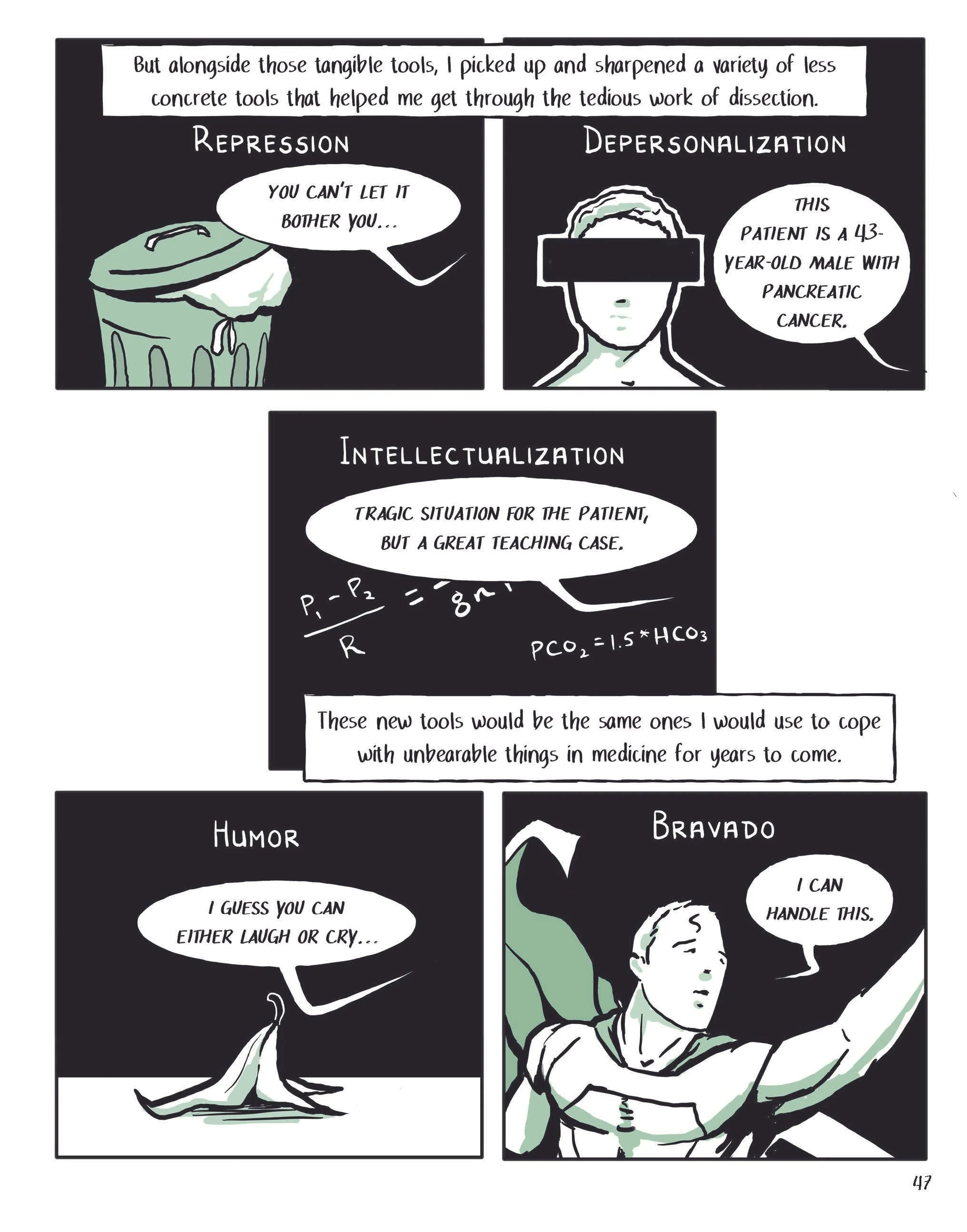
In the chapter titled “Stained,” Gray continues to reveal how anatomy lab is a central force shaping future doctors to be distanced and cool. On page 41, each frame shows a single body part, evoking how the students start to see the cadavers as less than whole humans: Phrases such as “Her skin is like rubber” and “She almost seems alien” underscore the idea. When the narrator first cuts into the cadaver’s skin, he remarks: “Not a drop of blood, not a cry. It feels…numb.” It becomes clear that becoming numb is the point for everyone involved; the stage is set for doctors to emerge from school less, rather than more, attuned to the human experience.
By the end of the chapter, the narrator lays out how this is done in ‘concrete tools’ that helped him ‘get through the tedious work of dissection” illustrated in the panel from the book (below):
© THE HUMAN REMAINS. Nathan Gray
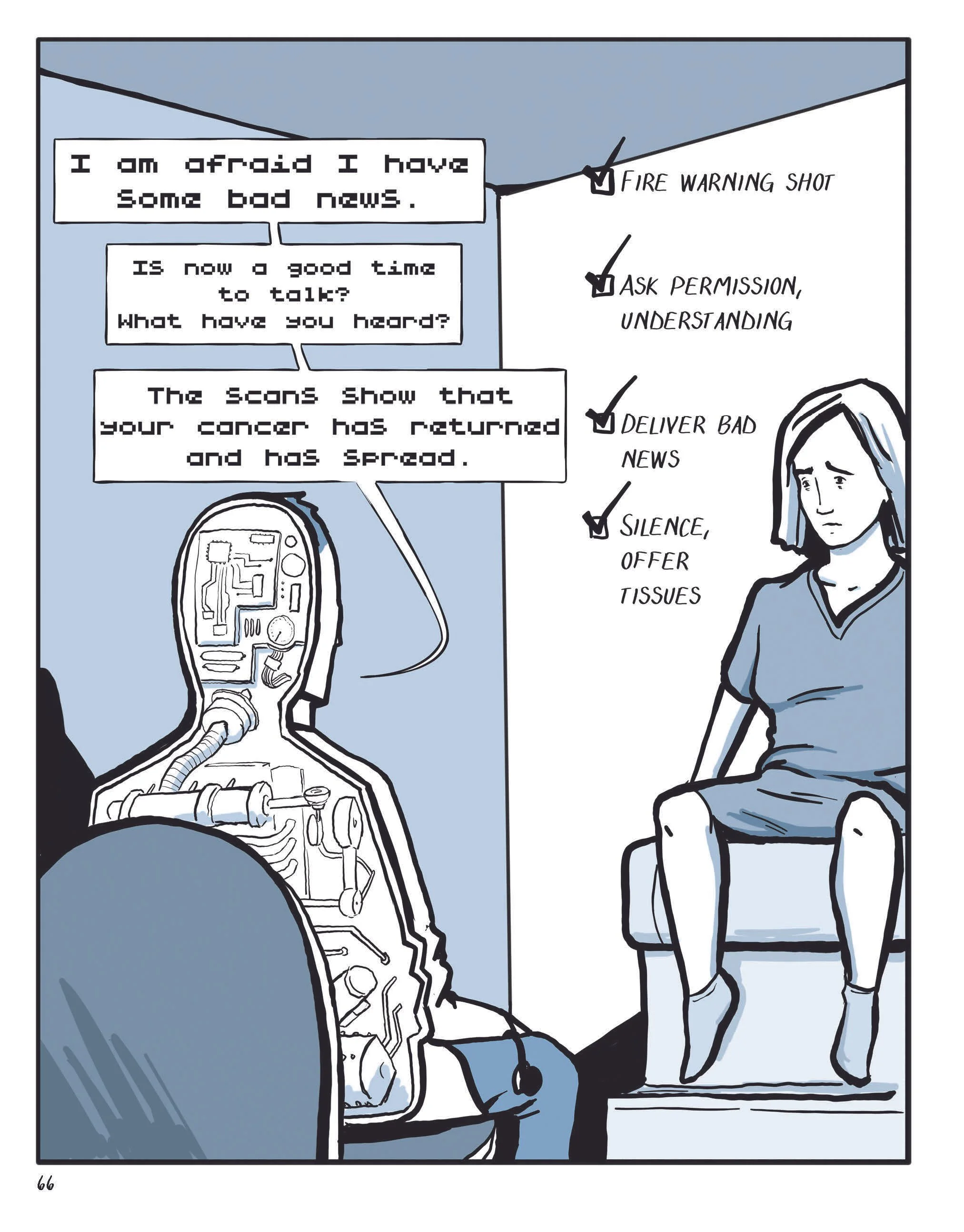
The narrator has acquired tools, ones that helped him “(learn) how to keep my distance, how to hold my lunch despite the macabre, and how to focus on the tangible amid the surreal.” By chapter four titled “Transformed,” he morphs into, at best – an actor, at worst – a machine. Through the depiction of working with standardized patients, Gray shows how the reliance on checklists and scripts can make students robotic, rather than compassionate, when learning to “communicate” with patients.
© THE HUMAN REMAINS. Nathan Gray
The transformation seems complete; he is part robot. He has even lost perspective on what constitutes normal human interaction. He’s getting used to this way of being. By the end of the chapter the narrator is shown in free fall – disappearing into a void. He has truly lost himself.
When he finally reaches the clinical years of medical school where students are hands-on with patients (in chapter five “Arrived”), the shaming and the self-flagellation are re-ignited at the hands of cruel attending physicians and residents. Gray visually depicts the constant push to reach the top of the medical hierarchy in the hopes the abuse will stop. The mantra appears to be optimistic — “Each step is full of quiet promises to yourself that you’ll be different when you’re the one above”— but unlikely if one were to continue on the prescribed path. His feelings of being lost resurface in the chapter titled “Swallowed,” which uses the anatomy lab gut dissection as a metaphor for his emotions.
The narrator’s nightmares become more disturbing at this point. Rose petals that look uncannily like feces rain down on him in bed. Internship and residency are similarly grueling, but what stands out is Gray’s depiction of the singular horror of being on call, available for hours and days at a time. A remarkable set of panels shows the trainee entering a monster that is internally siphoned into separate rooms, each depicting a crush of taxing circumstances occurring every hour on the hour. We witness an exhausting whirlwind and the cumulative cost of the physical, psychological and spiritual crush of medical training becomes clear: The narrator is “swallowed” (the title of chapter six) into a black hole and “split” (the title of chapter seven) into two. Students feel disconnected from themselves, and who they had imagined they would become: “In my more self-aware moments, I could see that medicine had become a string of forgotten promises to myself.”
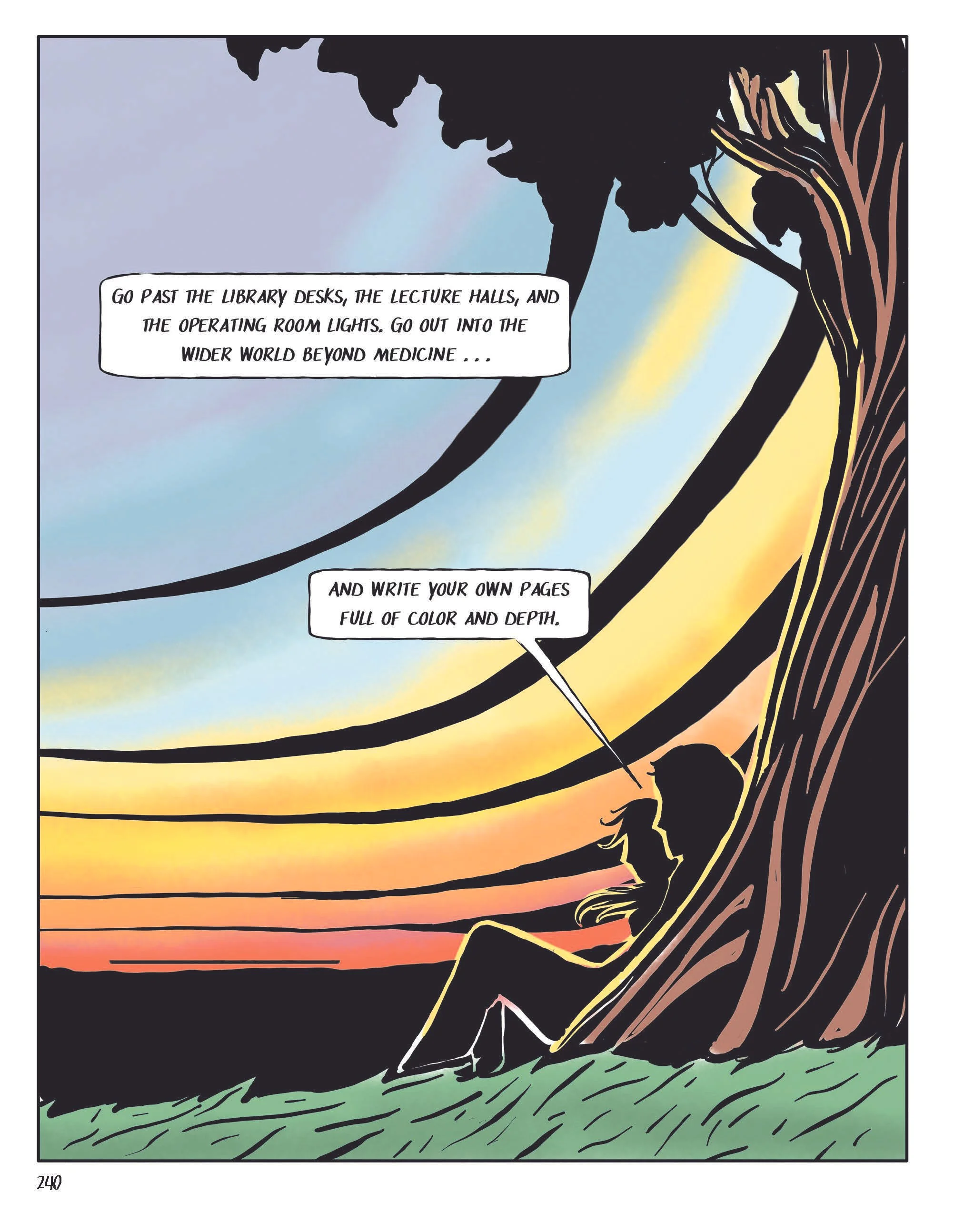
In seeking to heal this rent, the narrator considers leaving medicine. It isn’t until he discovers palliative care, a kind of medicine focusing on emotional and spiritual well-being as well as physical comfort, that the narrator starts to see a way back to himself. The final chapters (Retrained. Oriented. Tested) hint at a metamorphosis of sorts. As this healing transformation evolves, the visual elements mirror the rush of positive emotions, becoming lush and colorful. The fall leaves stun, the stones on the hospital patio where a patient gets married make colorful orbs. The reader exhales. There is hope for this doctor, for doctors, to evolve into the caring healers we hope they can be.
© THE HUMAN REMAINS. Nathan Gray
For me, Gray’s experiences touched close to home. Having made a similar transition from being a burned-out doctor to seek more time and meaning through the practice of palliative care, I found the story deeply compelling. The visual elements in The Human Remains have real impact combined with Gray’s insightful language, which describes the painful trajectory from idealistic medical student to ashamed and confused trainee to evolved and grateful attending physician. It’s an evolution that’s relatable for anyone wanting to find meaning and balance in their lives. Readers will feel changed by the universal story in The Human Remains, a graphic medicine novel that delivers on its sub-title: Drawing Out Compassion in Medicine. —Eve Makoff

Eve Makoff
Eve Makoff graduated from Columbia University with a masters degree in English in 1989. She received her MD from Brown University in 1995 and completed post-graduate training in internal medicine and nephrology at Cedars-Sinai. She took her hospice and palliative boards in 2012 and since then has served as a palliative care physician and medical director. Makoff is currently the medical director for Vitas Hospice in Los Angeles. She is co-editor of Narrative Medicine: A Guidebook for Transforming Hearts and Minds (CRC Press, Taylor & Francis 2025). Makoff, who joined the Intima editorial board in 2024, received her MS in narrative medicine from USC-Keck in May 2024
