
Today I’m learning
a new lesson —how
plants can look just
like organs, the part
of our bodies we know
and don’t know
So begins the poem “Anatomy in Nature” (Spring 2018 Intima) by writer Jesse Holth. In her stunning poem, the writer draws parallels between human organs and the surprising ways in which these forms are repeated in ecology:
How frond and fern
can be phalanges, just as
reaching, branching out.
The architecture of the liver is like a flower, while the sulci and gyri of the brain resemble a nut. Reading these words, I reflect upon how the beauty of the human form is echoed, again and again, in the rich diversity of the natural world. “Anatomy in Nature” reminds us that we have our place in a vast and interconnected ecosystem.
Late one night, analyzing photos of mouse neurons in my neuroscience laboratory, I was struck by a similar intuition. When my eyes were blurred with exhaustion, each group of cells became a thicket of dendrites that mirrored the fractal patterns of lichen, or the shining spiderweb that city streets become when seen from an airplane at night. As neurotoxins were titrated into the medium in which the neurons were grown, I watched this network fragment as each cell contracted. One by one, the connections between neurons stretched to the point of breaking before coming undone. I could not help but be reminded of all the ways in which I have retreated into myself and away from those around me in response to the mounting pressures of working in medicine. Perhaps Jesse Holth said it best: “All this to say, we / hold a mirror to nature, / and see ourselves.”
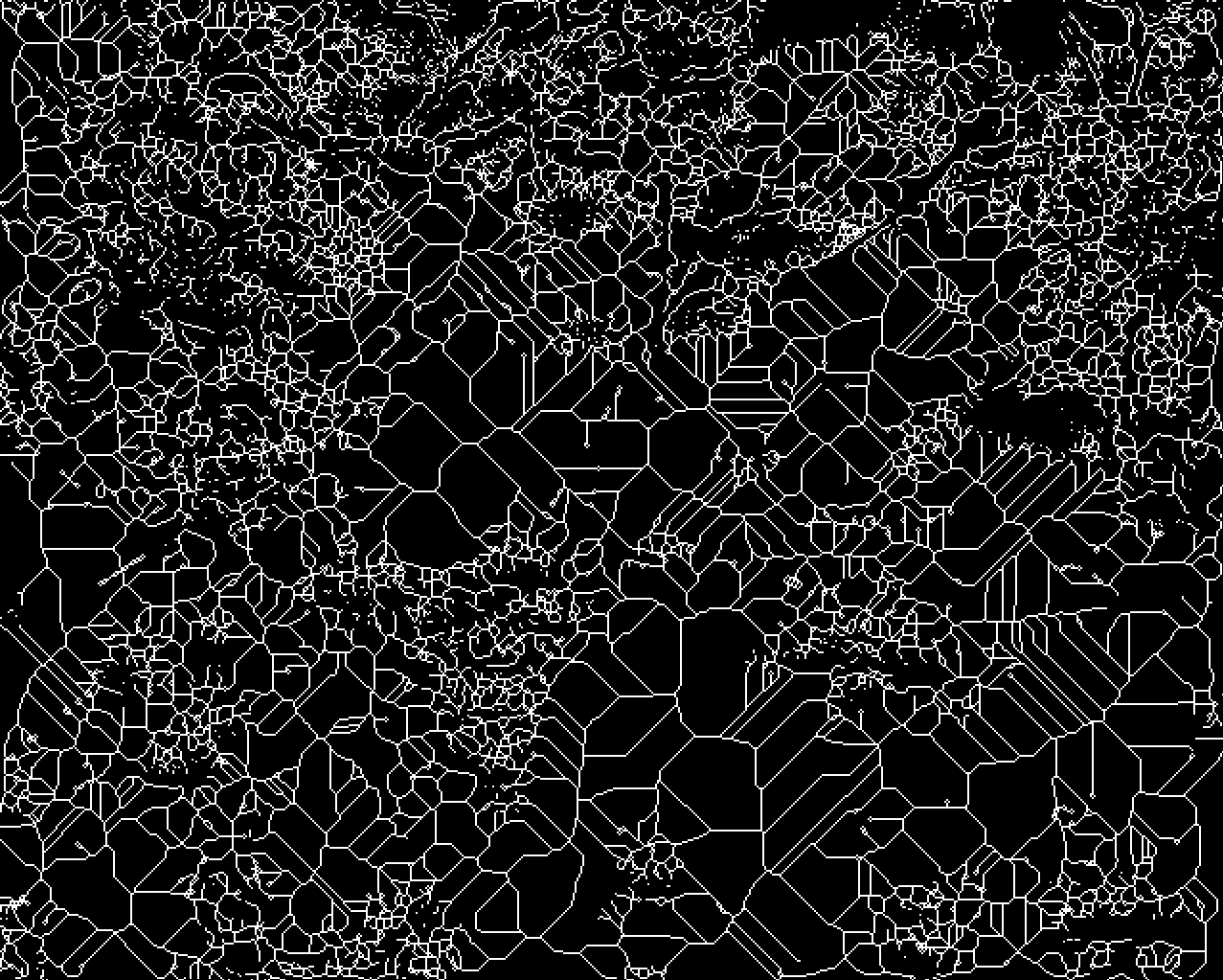
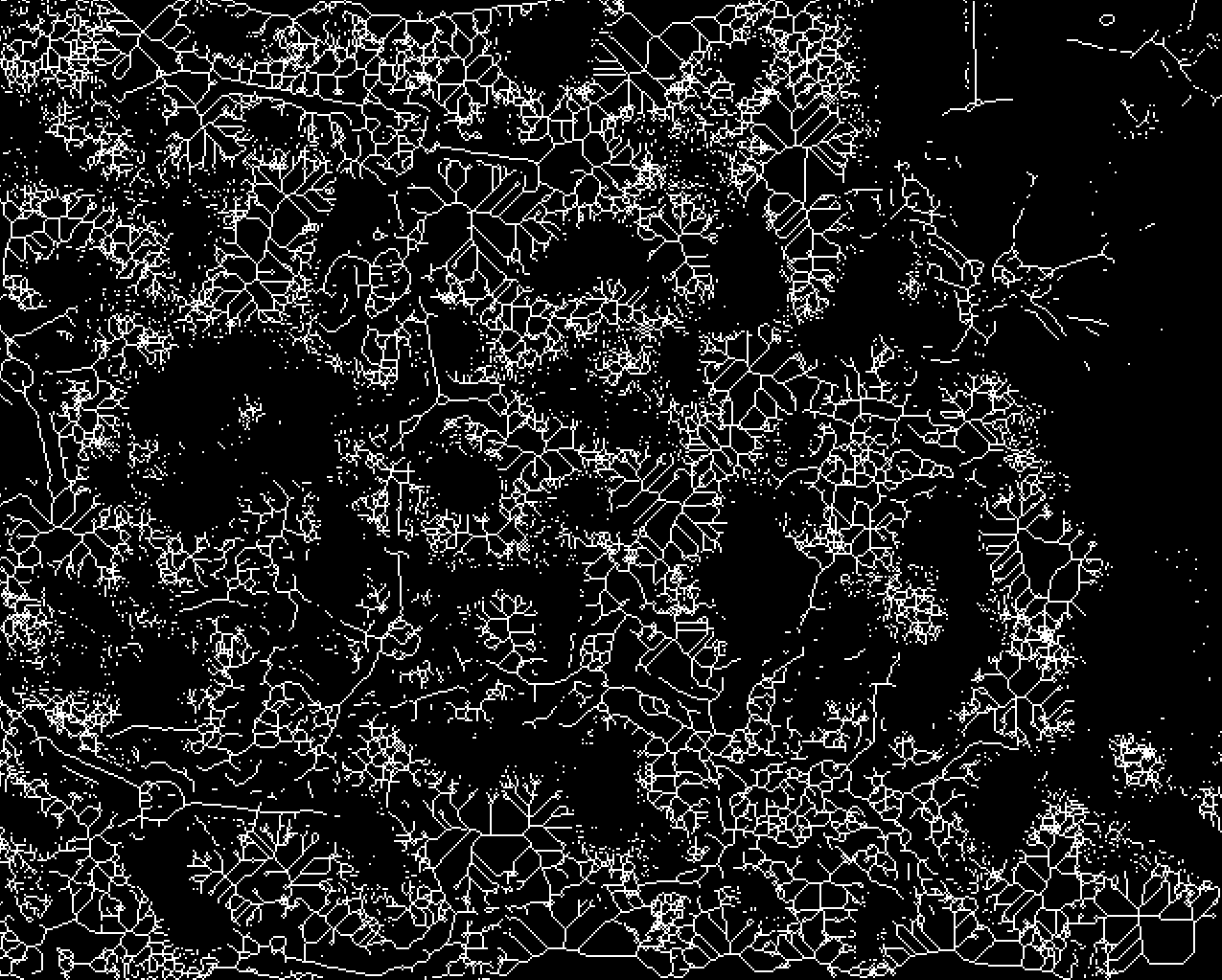
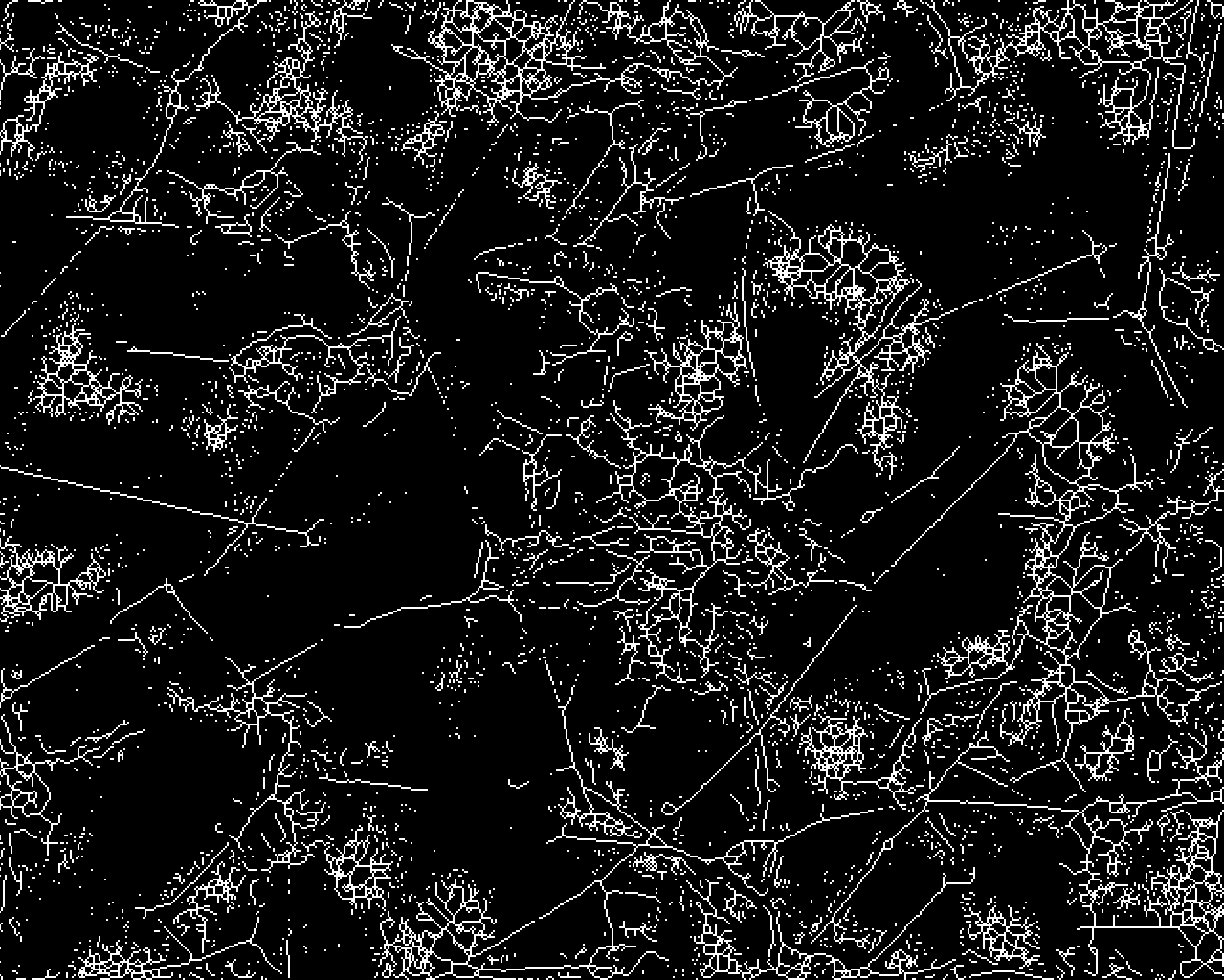
© Dissolution in Three Acts. Angela Tang-Tan. ImageJ
“The neuroscience lab yields moments of surprising beauty. I created these images using skeletonization in ImageJ, which strips photographs of cultured brain cells down into their barest binary features to illustrate connections between cells. The first panel shows the dense architecture of healthy brain cells grown in my lab, while the subsequent panels show the decay of these connections as environmental toxins are introduced. These striking organic forms tell a story of fracture. As toxicity rises and the network erodes, the neurites retract into themselves: a metaphor for the decay of connection within modern medicine and our social structures. These images remind us that, whether at a microscopic or macroscopic level, the integrity of the collective depends on our ability to remain connected.”

Angela Tang-Tan
Angela Tang-Tan is an avid artist and writer as well as a neurosurgery resident at Oregon Health and Science University. She completed medical school at Keck School of Medicine of USC and double-majored in neurobiology and psychology at UC Berkeley. She served as an ambulance EMT during the COVID-19 pandemic. Tang-Tan’s short stories, poetry, nonfiction pieces, and visual art have appeared in Intima Journal of Narrative Medicine, Bellevue Literary Review, and the Examined Life Journal. Her piece “Top Surgery” was included in Where It Hurts: Dispatches from the Emotional Frontlines of Medicine and nominated for inclusion in the anthology The Best American Essays 2025. In 2026, her essay “Two Thoracotomies” published in Bellevue Literary Review (Issue 49, themed “Animalia”) won a Pushcart Prize.
