
In physician Chloe Nazra Lee’s essay “’I Love You’ in Cantonese,” a psychiatry trainee worries she has failed at interviewing. Instead of correcting her technique, her attending offers unexpected advice: Stop worrying about the checklist and just talk to the patient. Clinical interviews, he suggests, are not only about completion but about making room for connection. In that space, conversation itself can become therapeutic, not only for the patient but also for the clinician.
That idea stayed with me because “Preparing,” one of the stories in my essay "Response Time" begins in the place Lee’s attending asks her to move beyond. Sitting across from a patient, I focus on asking the right questions in the right order. My pen moves. I nod. I document. On the surface, I am doing exactly what I have been trained to do, but the encounter is already asking for more than procedure.
Then, when the patient is informed that she is HIV positive, the encounter rearranges itself in my memory. The quiet I had accepted as ordinary becomes charged with meaning. Her tightly folded hands, the pauses between answers, and the stillness in the room all seem to carry something I had not yet learned to recognize.
Both Lee’s essay and my own return to the question of preparation. In medical training, preparation is often framed as mastery: know the history, organize the interview, gather the information. These skills matter, but there is another kind of preparation that is harder to teach—preparing to notice when another person’s humanity interrupts the script.
In her essay, Lee, who is a resident physician in the department of psychiatry at the University of Rochester Medical Center in New York, reminds us that listening is not passive. Whether she is speaking with a patient or listening to her father tell stories about his mother in Hong Kong, conversation becomes a form of accompaniment. In both cases, being heard creates space for grief, memory and vulnerability to emerge.
What her essay helped me understand is that clinical communication is not only about finding the right words. It is also about making room for words to appear, and for the person behind them to be heard. The script may get us into the room, but presence is what allows us to meet the person already there.
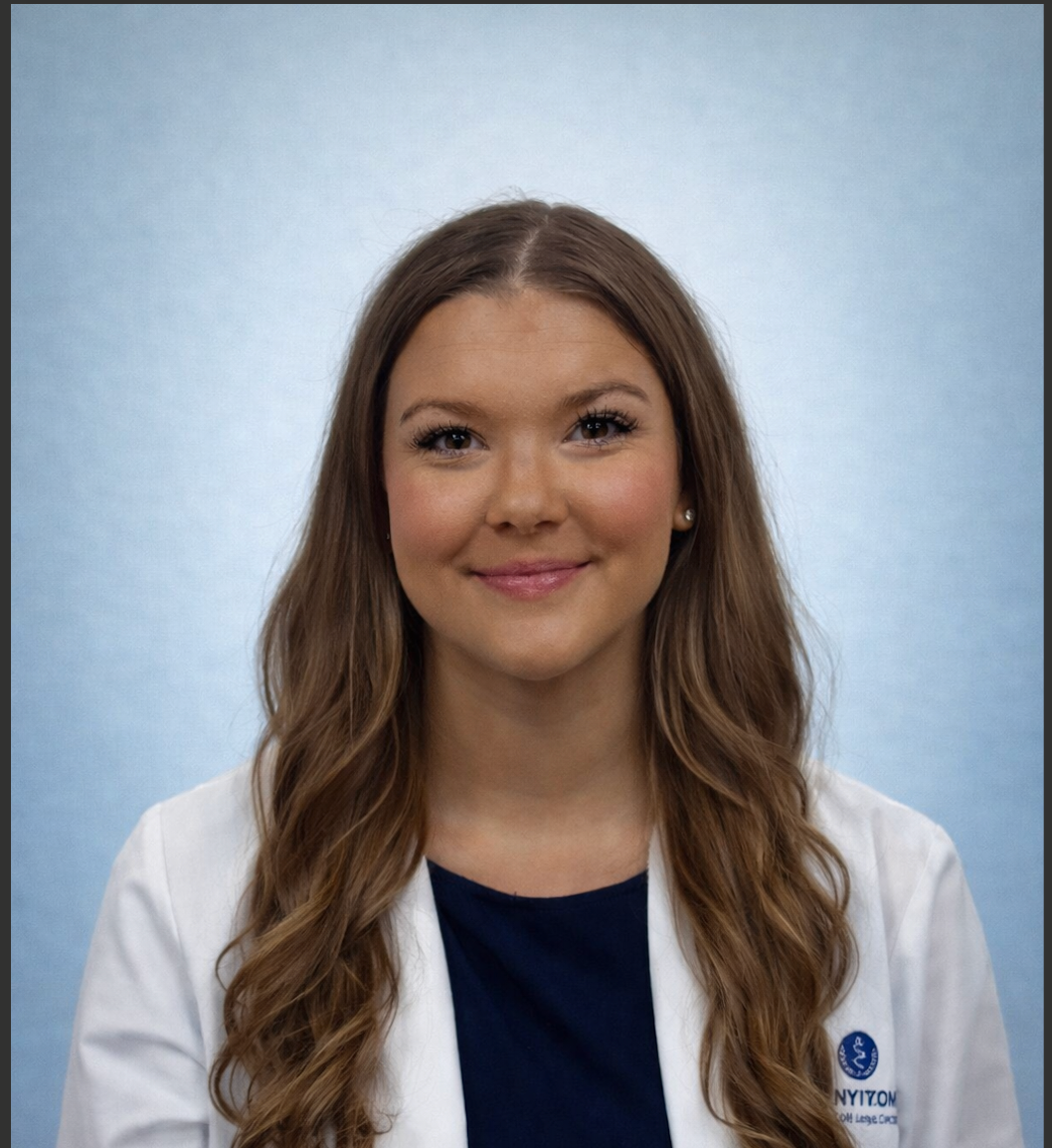
Macie Garner
Macie Garner is a second-year medical student with an interest in dermatology, particularly the psychodermatological interface between skin and mental health. Her work explores perception, communication and the lived experiences of patients within clinical encounters. See more of her work on The Science of Skin — and What It Means to Live In It.
