
When I first read Joseph Zarconi's poem American Sonnet for an Addict, I thought it was asking many of the same questions that concerned me while writing my essay Re: Interesting Case. Both seemed interested in the uneasy space between a person's experience and the clinical language used to describe it. But I kept returning to the way the poem begins: "The doctor drags his learning flock into my room."
Read moreWaking Without Her in the World: Remembering activist and writer Elena Schwolsky by Mario de la Cruz
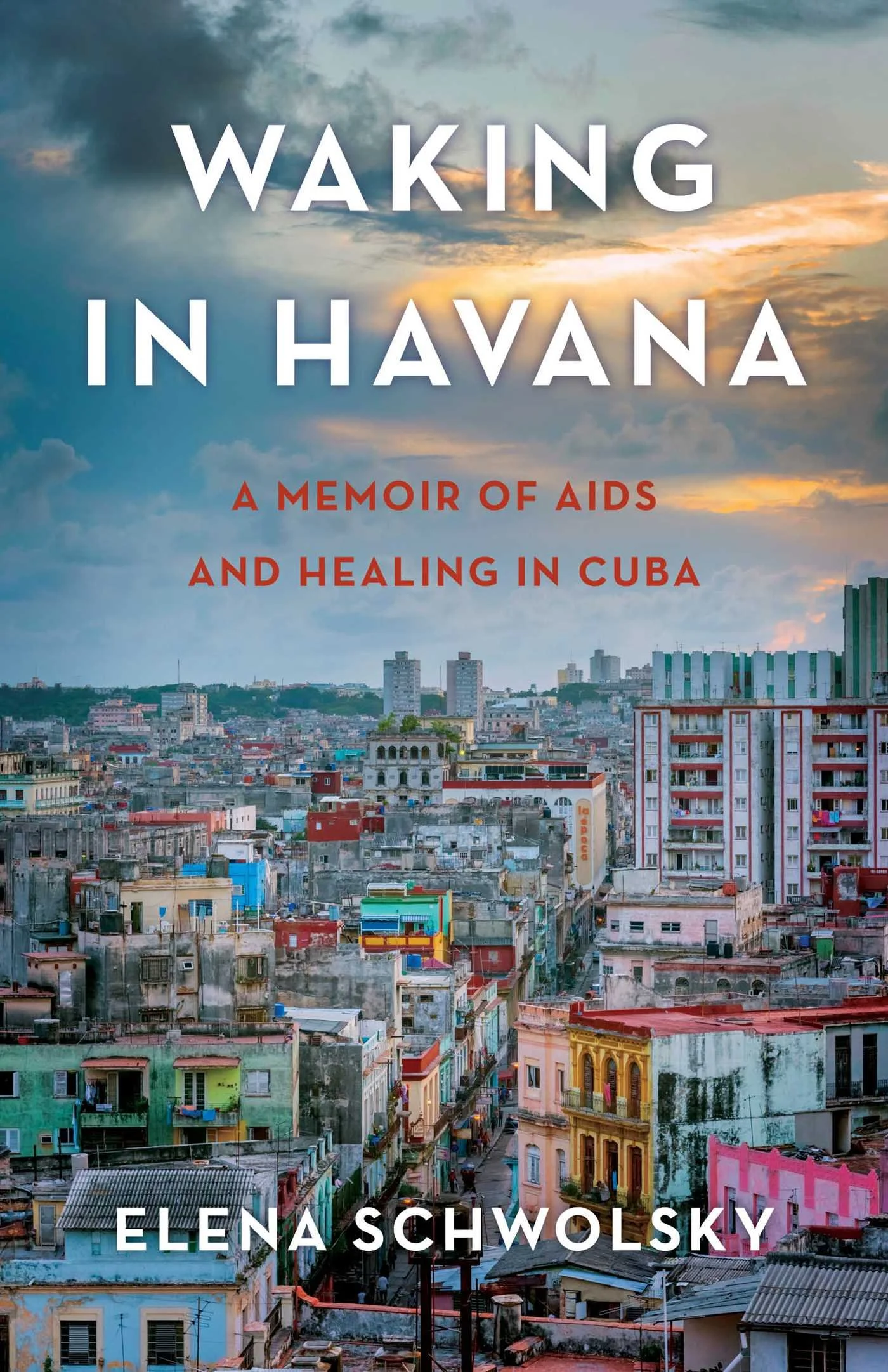
It has been a difficult time for many as of late — we've been witness to recent multiple losses of creative trailblazers, artists, activists and humanitarians. Some of them have been well-known, like Dolly Parton, Gloria Steinem and Cassandra Wilson, who we may have looked up to, learned from, aspired to be like and occasionally, had the chance to know personally, or call a friend. While she was not as easily recognizable to the public as the aforementioned women, Elena Schwolsky was a trailblazer, artist, activist, healer and humanitarian who inspired many and created vehicles for communication and connection. Elena left a deep impression on me.
Read moreWhat We Hear at the Dinner Table: A reflection by poet Jamie L. Smith about immigrant parents, their children, mental health and conversations we rarely have
Ellen Chang’s animated short, The Dinner Table (Spring 2026 Intima), beautifully illustrates intergenerational mistranslation, and the difficulty of bridging the divide between first-generation immigrants and their children when it comes to discussions of mental health. As the animation moves between Korean and English, what the daughter intends versus what the father hears, and what the father communicates versus what he means, the dining table at the center of the short lengthens and contracts, the distance between them widening and narrowing as they grapple for understanding.
Read moreThe Body Holds It All: Love, Labor, and the Weight of Care by Mildred Galvez
With the same hands that now hold and annotate my textbooks, I once read and reread my mother’s biopsy results. With those same hands, I helped her rise from her chair when the chemotherapy was too strong, and with those same hands, I now care for my patients.
Read moreWhen the Script Is Not Enough: A reflection about clinical interviews by medical student Macie Garner
In physician Chloe Nazra Lee’s essay “’I Love You’ in Cantonese,” a psychiatry trainee worries she has failed at interviewing. Instead of correcting her technique, her attending offers unexpected advice: Stop worrying about the checklist and just talk to the patient. Clinical interviews, he suggests, are not only about completion but about making room for connection. In that space, conversation itself can become therapeutic, not only for the patient but also for the clinician.
Read moreLiving Alongside Loss: A reflection on grief, rituals, and gratitude by Diego R. Hijano

© Womb by Johanna Glaser. Acrylic paints, linocut prints, tissue paper and pens.
“I made this collage as a gift for a pregnant friend using a mixture of acrylic paints, linocut prints, tissue paper and pens. It is inspired by and directly draws upon elements from a portrait of a young dead woman by Egon Schiele. At the time, I was in the middle of a palliative care fellowship and personally recovering from a severe IBD flare. It is a meditation on birth, illness, joy, pain and death; an expression of awe as to how humans can simultaneously be wounded, age, heal, celebrate and create throughout the seasons of our lives.”
Johanna Glaser’s collage “Womb” (Fall-Winter 2025-26 Intima) challenges the idea that life unfolds in emotional stages. Instead, it holds simultaneity:
Birth beside illness.
Joy beside grief.
Healing beside wounding.
Presence beside absence.
That duality emerges in writer and educator Valk Fisher’s Field Notes essay “Diary of a Plunge Year” (Spring-Summer 2025 Intima) and my short story “The Other Son” (Spring-Summer 2026 Intima). Both explore how rituals, whether running beside the ocean or gathering around a table, allow people to live alongside loss without being entirely consumed by it.
Read moreMeet Your First Patient: A Reflection on Medical School’s Anatomy Lab by Pallavi Kenkare
Anatomy lab is a medical school rite of passage. Every year, as summer cools into fall, thousands of naïve, eager First Years across the country meet their very first patient. Facing one’s donor is an emotional moment for many. It can be a carousel of apprehension, fear, gratitude and peace, but there is also an inevitable feeling of loss as the semester progresses and those poignant aches settle into a cooler, business-like approach.
Our donors are our first patient, our teachers—and they can also be our loved ones, our family, our friends, ourselves.
Read moreOn Laughing Through the Pain by Albert Einstein College of Medicine medical student Moshe Gordon
Perusing Intima's last issue, I noticed some overlapping themes between two very different pieces: my own fictional piece “Sweet Dreams,” and “Humor As (Narrative) Medicine,” an autoethnographic study by Alyse Keller Johnson, an associate professor of communication studies at CUNY Kingsborough Community College in Brooklyn.
Read moreWhat Do Doctors Get From Name-Calling? A reflection about our reaction to ‘difficult patients’ by nephrologist and educator Joseph Zarconi
Palo Alto neurologist Kendra Peterson's poem “Difficult Patient” (Fall 2017 Intima: A Journal of Narrative Medicine), and the patient who inspired my “American Sonnet for an Addict” (Fall-Winter 2025-26 Intima) are prototypical victims of name-calling – a ubiquitous clinical behavior taught exclusively in the so-called hidden curriculum of medical education. These patients are our albatrosses, another name we ascribe, recalling the curse that befell the entire ship’s crew of Samuel Taylor Coleridge’s famous mariner following his killing of an albatross in the poem, “The Rime of the Ancient Mariner.” They curse us. They burden and encumber us.
Read moreWhy are patients hesitant to tell the truth? A reflection on communication by public health scientist and activist Mariana Mcdonald
Communication. Open and forthright—what we want as patients and what providers require of us. But that can be difficult, as reflected in my short story “The Vent,” (Intima Fall 2025), where I explore a seriously injured man’s thoughts in the ICU. He complains: “Every time I went in to the clinic, they started asking the exercise question, no matter what I was there for. Got the flu, feverish and coughing, and there they are quizzing me about exercise.” His frustrations lead him to respond dishonestly to his providers’ questions: “It got so I would tell them what I thought they wanted to hear just to get them off my back. Said I took a walk every day, hardly ever drank... All lies, or fibs...”
Read moreWhere Fear About Living and Dying is Held: A reflection by UC San Diego internal medicine resident Tulsi Patel
When I read the Field Notes essay “Letter to My Oncologist” (Fall 2025 Intima), I was struck by how the writer, psychologist Julia Dobner-Pereira, watches her physician for the smallest fracture of a moment in composure—and how the physician watches her for the same. Their exchanges sit on a narrow ledge—two people trying to hold each other’s fear without admitting how much weight they’re carrying. I recognized that terrain immediately. As a clinician, I’ve felt patients monitor my breathing, my pauses, my half-smiles.
Read moreIn Story Lies the Cure by MD Ron Turker
“Young doctors are young for a blink, and they age with their patients. My advice to my young colleagues: knock first and then, most importantly, listen for the response. Listen for their story. In story lies the cure.”
Read moreReaching Across Death: A letter to my grandmother by Stanford medical student Madison Palmer
“In this reflection, I explore the barriers between understanding grief and communicating with ancestors beyond life…. I particularly focus on what it means to ‘reach’ out for an ancestor across the barrier of their death.”
Read moreThe Narrative Medicine Promise: Why It Pays to Listen. A reflection by McGill University researcher Homa Fathi
“I believe educators should remain steadfast in integrating the humanities into health professions education. There are many—particularly systemic—barriers to such efforts, but the outcomes can be deeply rewarding.”
Read moreOn Inter-Pathology Envy: A reflection by writer and neurologist Ann Bebensee
“I have found that [breast and colorectal cancer patients] share the same labyrinth and my new, uncertain life is not quite as frightening. The blue of a colon cancer ribbon is lovely. So is pink.”
Read more"Who knew that time was the biggest factor in compassion?" A reflection about effective clinical care by writer Lisa Simone Kingstone
“The center was my rest stop in my trek through cancer. It shimmers through my own understanding of how to care for people…But over a decade later, what I remember most is a feeling of restoration. … Being a patient makes you feel like a baby in a basket floating down a river with rapids.”
Read moreListening to Ordinary Things Can Get You Through the Day by cancer advocate and writer Robert McEachern
“Godfrey’s piece … reminds me how stories get told and re-told in many ways, in many layers. Like medicine in a glass bottle, sometimes our stories stay inside us, waiting to be opened, waiting for the words.”
Read moreThe Scars of Our Silence: Medicine’s Discomfort with Dying by palliative care physician Lindsey Ulin
“Years later, I still wonder what story the family of my patient carries of that death. The one thing they most needed to hear—that their loved one was dying—remained unsaid.”
Read moreRemembering in the Rain: A reflection on anxiety and OCD by Cynthia Miller, MD, MPH
“Psychologist and writer Faith Galliano Desai provides a solution, but it isn’t an easy one. She instructs us to remember that anxiety is energy that must move. If we let it pass through us, it will lose its power.”
Read moreThe Language of Endurance by educator and patient advocate Mark E. Paull
“For fifty-eight years, I've lived with Type 1 Diabetes. My body speaks in tremors, in metallic tastes, in sudden collapses that look like laziness to people who don't know better…I've spent decades translating myself for others—apologizing for leaving early, for needing to sit, for being tired when I looked fine.”
Read more
Quisque iaculis facilisis lacinia. Mauris euismod pellentesque tellus sit amet mollis.