
With the same hands that now hold and annotate my textbooks, I once read and reread my mother’s biopsy results. With those same hands, I helped her rise from her chair when the chemotherapy was too strong, and with those same hands, I now care for my patients.
Long before I began my medical training, I had already become familiar with illness and the way it changes the lives of those who stand beside it. This understanding is reflected in both my poem “The Body” (Intima, Spring-Summer 2026) and Cathy Beres’ moving piece “A Caregiver’s Dilemma” (Intima, Spring-Summer 2025). In this nonfiction story, Beres brings us into the daily routine she shares with her husband after his brain tumor diagnosis. She reflects on the caregiver’s dilemma: the impossible choices caregivers face when honesty, comfort and dignity come into conflict. Her story portrays the caregiver as the voice for a loved one’s wishes, the extra arm that allows two bodies to move “as one, amoeba-like,” and the steady presence that absorbs the demands of a life reshaped by illness.
Over the course of my training, I have come to see a parallel between caregiving and medicine. As in Beres’ story, we become the voice for someone else’s needs, step in when care is called for, and often navigate difficult choices when there is no clear answer. In both, the day can be shaped by the needs of others before our own. Caregiving and medicine ask much of us, yet over time, we adapt. These adaptations often leave an imprint on our bodies as we learn to carry “what was never meant for one body alone,” as I write in my poem. They take shape in the hands “that both study and steady,” the chest “that learns to breathe for more than one,” and the strength our bodies gather for others.
As a daughter and medical student, I have come to understand the body as something layered: a record of love, sacrifice, exhaustion and endurance. Many of us enter medicine hoping to lessen the weight of illness. But over time, we learn that suffering is not always something we can fix. Sometimes, we can only sit beside it, make room for it, or carry part of it for someone else.
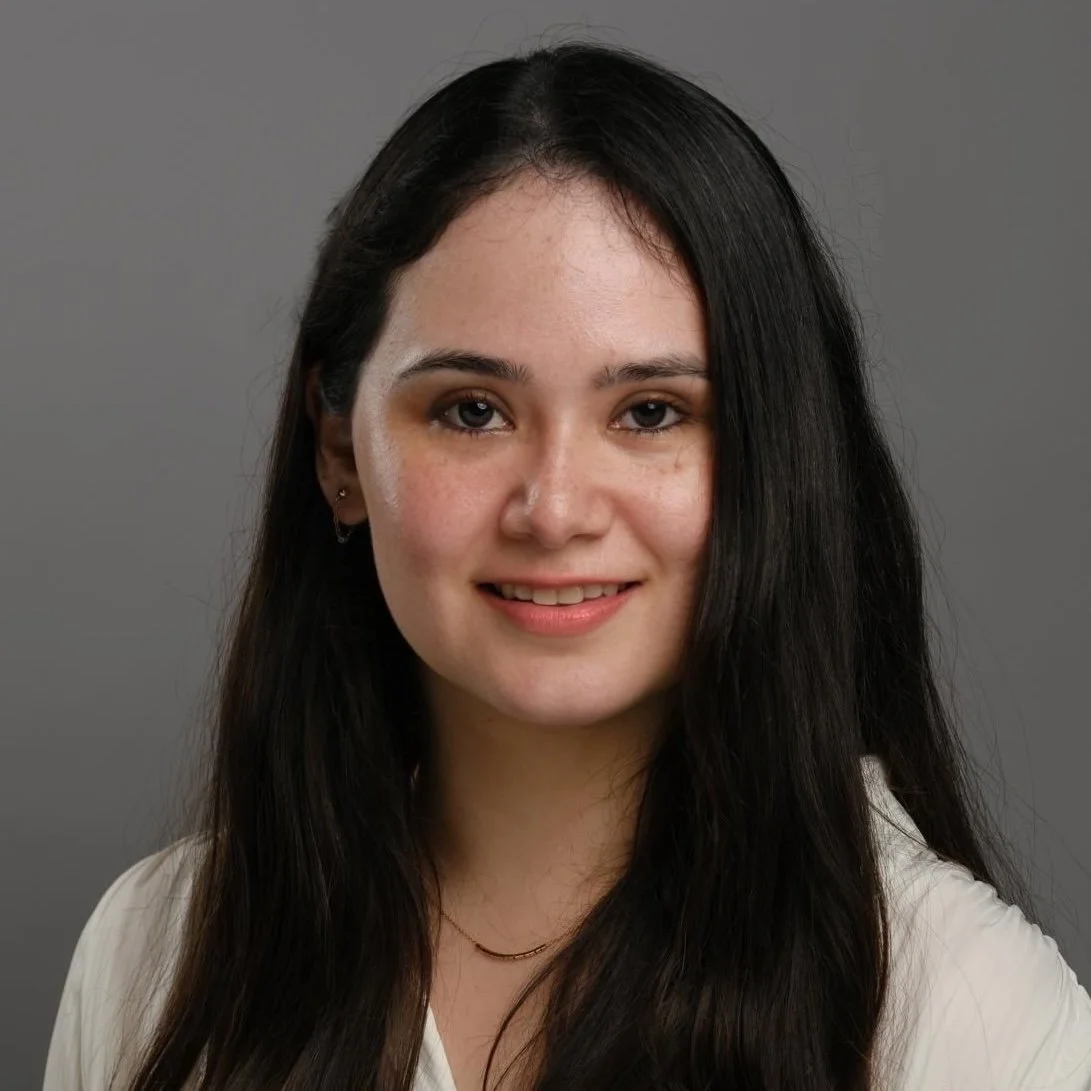
Mildred Galvez
Mildred Galvez is an MD/PhD student at the David Geffen School of Medicine at UCLA and the Charles R. Drew University of Medicine and Science. Her writing explores illness, identity, and the spaces patients and families inhabit within medicine, drawing from both her clinical training and personal experience.
