
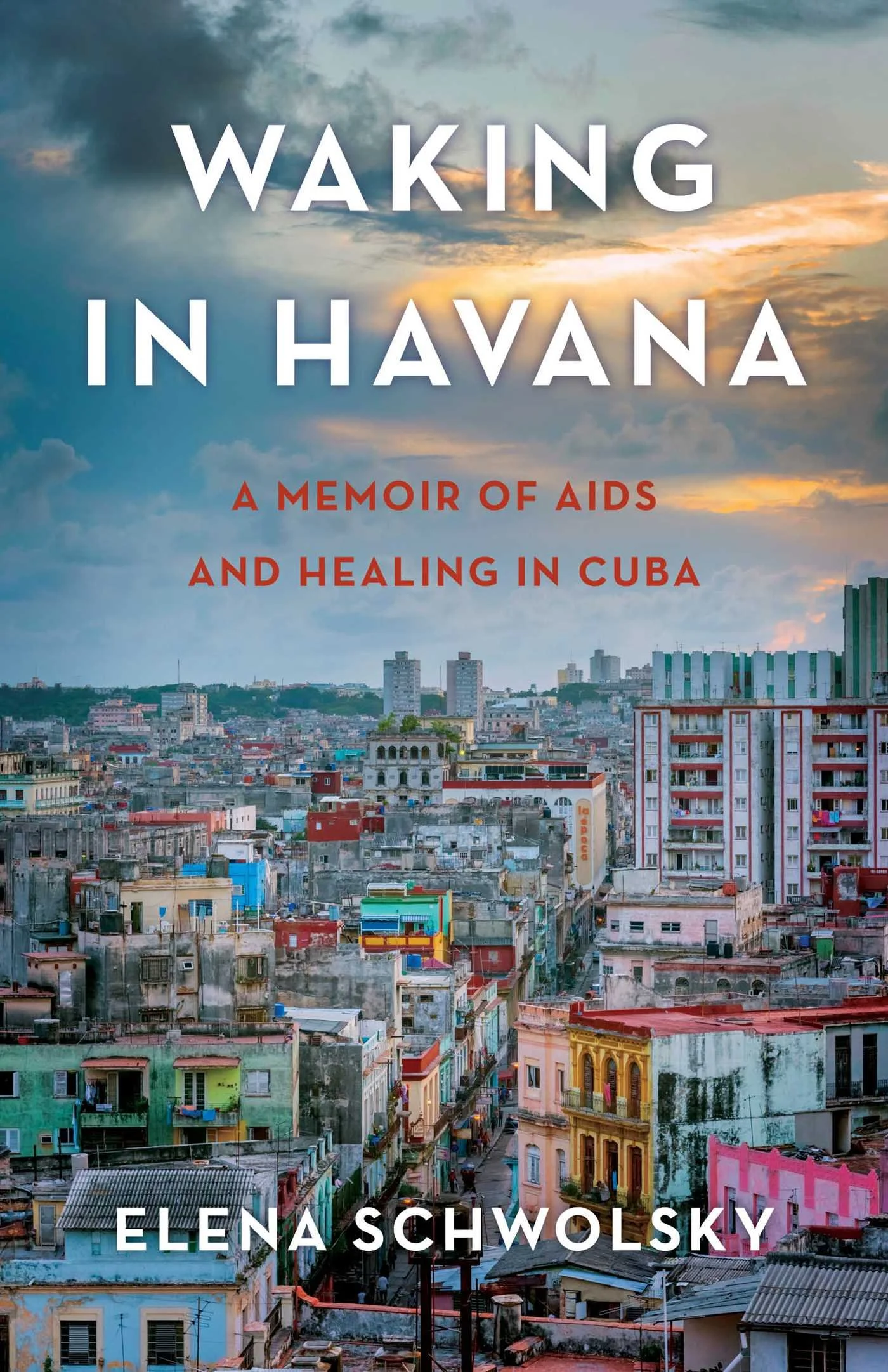
It has been a difficult time for many as of late — we've been witness to recent multiple losses of creative trailblazers, artists, activists and humanitarians. Some of them have been well-known, like Dolly Parton, Gloria Steinem and Cassandra Wilson, who we may have looked up to, learned from, aspired to be like and occasionally, had the chance to know personally, or call a friend. While she was not as easily recognizable to the public as the aforementioned women, Elena Schwolsky was a trailblazer, artist, activist, healer and humanitarian who inspired many and created vehicles for communication and connection. Elena left a deep impression on me.
Read moreLiving Alongside Loss: A reflection on grief, rituals, and gratitude by Diego R. Hijano

© Womb by Johanna Glaser. Acrylic paints, linocut prints, tissue paper and pens.
“I made this collage as a gift for a pregnant friend using a mixture of acrylic paints, linocut prints, tissue paper and pens. It is inspired by and directly draws upon elements from a portrait of a young dead woman by Egon Schiele. At the time, I was in the middle of a palliative care fellowship and personally recovering from a severe IBD flare. It is a meditation on birth, illness, joy, pain and death; an expression of awe as to how humans can simultaneously be wounded, age, heal, celebrate and create throughout the seasons of our lives.”
Johanna Glaser’s collage “Womb” (Fall-Winter 2025-26 Intima) challenges the idea that life unfolds in emotional stages. Instead, it holds simultaneity:
Birth beside illness.
Joy beside grief.
Healing beside wounding.
Presence beside absence.
That duality emerges in writer and educator Valk Fisher’s Field Notes essay “Diary of a Plunge Year” (Spring-Summer 2025 Intima) and my short story “The Other Son” (Spring-Summer 2026 Intima). Both explore how rituals, whether running beside the ocean or gathering around a table, allow people to live alongside loss without being entirely consumed by it.
Read moreThe Evolution of Anecdote to Story and Beyond by Angus Woodward
My father was a raconteur, and as his dementia advanced, he often got caught in anecdotal loops. In the middle of a familiar story, he would forget that he had told the beginning, repeat it, then charge through the middle before backtracking again, cycling through the tale until some kind of interruption saved him and his listeners.
Reading Samantha Stewart’s poem “Stingray” (Spring 2022 Intima) made me think about how experiences can become anecdotes, which may turn into stories, which may evolve into legends. And I saw how personal legends connect the dying to the living.
Read moreWhere Fear About Living and Dying is Held: A reflection by UC San Diego internal medicine resident Tulsi Patel
When I read the Field Notes essay “Letter to My Oncologist” (Fall 2025 Intima), I was struck by how the writer, psychologist Julia Dobner-Pereira, watches her physician for the smallest fracture of a moment in composure—and how the physician watches her for the same. Their exchanges sit on a narrow ledge—two people trying to hold each other’s fear without admitting how much weight they’re carrying. I recognized that terrain immediately. As a clinician, I’ve felt patients monitor my breathing, my pauses, my half-smiles.
Read moreThe Discordant Note of the Estranged Daughter from California. A reflection about medically-assisted death by Amanda Le Rougetel
The “estranged daughter from California” is an expression used by MAiD practitioners to describe that relative who shows up to rail against the dying person’s wishes to end their life.
Read moreGetting to Say Goodbye: A reflection by patient advocate Holly Cantley
“There is bravery in enduring. There is bravery in leaving.”
Read moreReflecting on the courageous who have left imprints on our soul by Miki Simic
We carry them in our thoughts and in our prayers. It is the unspoken in the medical field. The hesitation you feel, to show at times, you hurt for them, with them, through them. The patient unaware that emotion is viable and present when treating, caring, or guiding steps to an end, no matter what that may be. Their physical bodies are present at the appointments, but their souls are searching elsewhere for meaning. The “why” of illness.
Read moreFear of Loss: A reflection by medical student and Intima editor, Grace Yi
In “Mathematical Fix | ation” (Fall 2023 Intima), Laura Pinto describes the slow decline of her father’s ability to communicate. She tries her best to accompany him along his inward spiral of dementia, in which he has become completely fixated on arithmetic and logic, to the point that she calls him “Professor” rather than father. I am struck by the small joys she discovers in his lucid moments at the end of his life, such as when he calls her by name, only once, in the way he did when she was young. Putting myself in her shoes, I wonder if I would have the grace and openness of heart to delight in similar moments, as untethered as I imagine I might be in the face of impending loss.
Read more
Quisque iaculis facilisis lacinia. Mauris euismod pellentesque tellus sit amet mollis.