
When I read the Field Notes essay “Letter to My Oncologist” (Fall 2025 Intima), I was struck by how the writer, psychologist Jules D. Pereira, watches her physician for the smallest fracture of a moment in composure—and how the physician watches her for the same. Their exchanges sit on a narrow ledge—two people trying to hold each other’s fear without admitting how much weight they’re carrying. I recognized that terrain immediately. As a clinician, I’ve felt patients monitor my breathing, my pauses, my half-smiles.
That hyper-attunement made me think about the questions patients ask—not the literal ones, but the questions underneath. In the essay, the writer tests her doctor with what no one can answer: Will I live? Will you grieve me? She isn’t seeking information; she’s studying whether her doctor can bear her terror without looking away. I’ve seen that same interrogation of presence. Once, a patient told me, with unnerving steadiness, “I feel like I’m dying today. I can tell, I know it. I’m right, aren’t I?” It wasn’t a clinical query. It was a dare: Will you stand beside me and stare death down today? Or will you retreat? I realized his question was also mine—could I stay long enough to acknowledge what he already knew? Patients offer fears that have no clean answers; as clinicians we take them in and validate them.
What lingered for me while reading “Letter to My Oncologist,” which begins with “Dear Doctor____,” was how the essay reveals the cyclical nature of fear and reassurance in illness. It brought me back to my poem, “Persephone’s Cancer” (Fall 2025 Intima) where remission offers real light but never erases the knowledge of what waits underground — the possibility of relapse. In the poem, the family greets her with tulips each spring, celebrating her return even as they brace for the next disappearance. That tension—hope held beside dread—feels familiar. Patients want to believe in safety; clinicians want to provide it; but clinicians also know how quickly the ground can shift, because we’ve watched it give way countless times. That’s why I write in my poem “But I know what shadows lie beneath the soil, what hands are already reaching” when a patient is in remission. The fragility lies in supporting a patient’s relief while quietly holding our own knowledge of recurrence. And the difficulty, always, is learning how to conceal the shape of our fear so theirs can briefly rest, while also being transparent.
As both patients and clinicians bring their fears, worries, and doubts, each interaction becomes high stakes. Trust doesn’t come from certainty; it comes from the willingness to stay present when the room fills with questions no one can solve. That willingness, on both sides, is what holds the encounter together. When the oncologist tells her, “You are OK. You are going to survive this,” the patient believes her. What stays with me is not just the oncologist’s promise but the conditions that made belief possible. Reassurance only works when both people have already risked honesty—one by naming what terrifies her, the other by staying present long enough to receive it — both playing a role in that fragile, honest, and brave encounter. That is the quiet labor of caregiving. It doesn’t cure, and it doesn’t solve. But it makes the unendurable shareable—and sometimes that is enough.
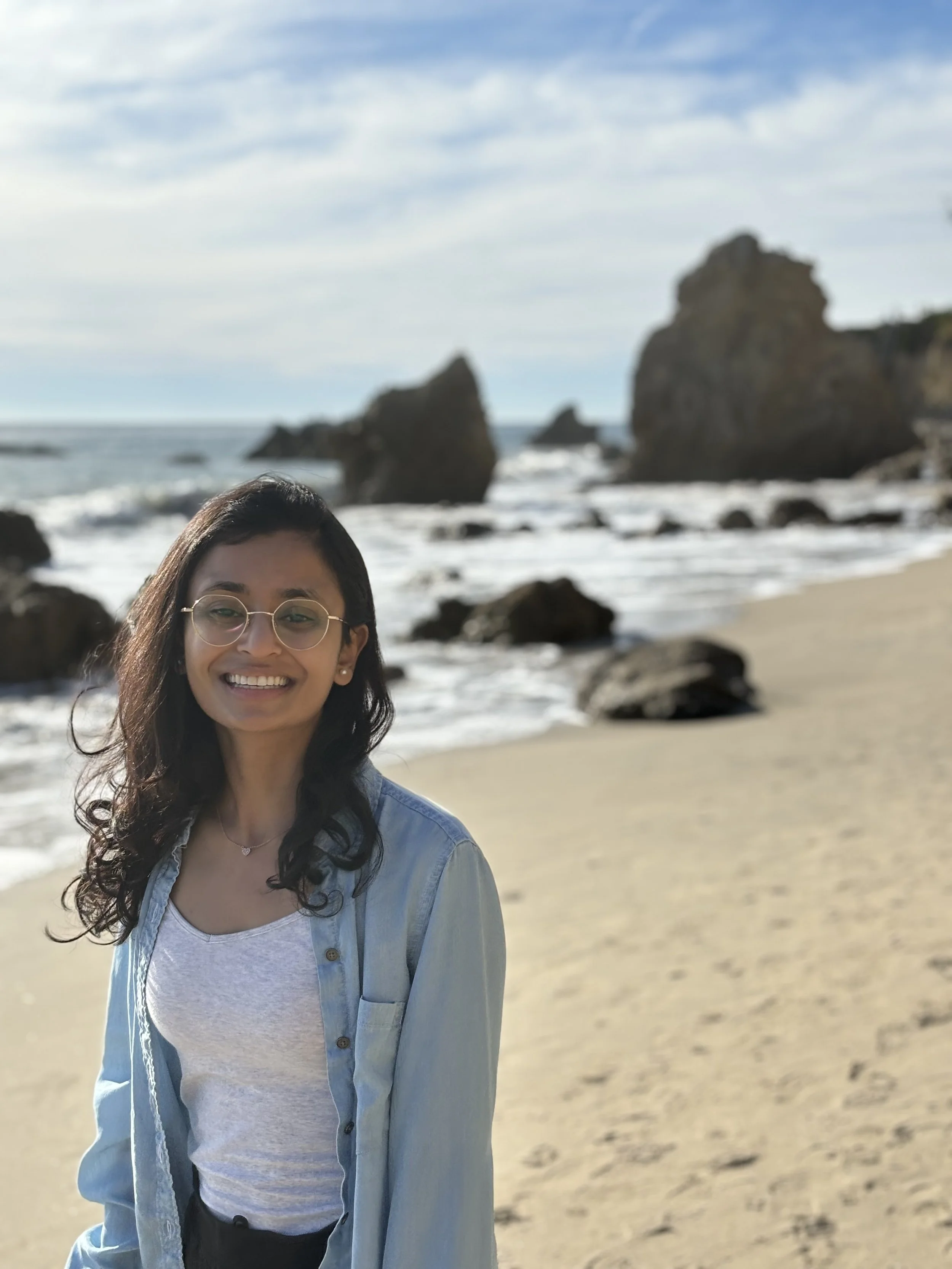
Tulsi Patel
Tulsi Patel is an internal medicine resident at the University of California, San Diego. Born and raised in Chicago, Patel ventured to the East Coast for college and received a degree from Columbia University, where she developed an appreciation for both poetry and humanistic care. She enjoys hiking with friends, staring at art, and raising her cat.
