• Mission and Vision
    • The Editors
    • Advisory Board
    • Contact
    • Contributors
    • Fiction
    • Field Notes
    • Non-Fiction
    • Poetry
    • Studio Art Spring 2026
    • Audio and Videos
    • Studio Art Fall 2025
    • Academic
    • SPRING-SUMMER 2026 INTIMA
    • CONTRIBUTORS SPRING 2026
  • CROSSROADS
    • WHERE IT HURTS: DISPATCHES FROM THE EMOTIONAL FRONTLINES OF MEDICINE
    • BOOK REVIEWS
    • Submit a Book Review
    • ARCHIVES UPDATE
    • Academic - A-L
    • Academic - M-Z
    • Fiction - A-L
    • Fiction - M-Z
    • Field Notes - A-L
    • Field Notes - M-Z
    • Multimedia
    • Multimedia Fall 2015
    • Multimedia Fall 2016
    • Non-fiction A-L
    • Non-Fiction M-Z
    • Poetry - A-F
    • Poetry G-L
    • Poetry - M-Z
    • Studio Art Spring 2025
    • Studio Art Fall 2024
    • Studio Art Spring 2024 Fall 2023
    • Studio Art Spring 2023
    • Studio Art Fall 2022
    • Studio Art Spring 2022
    • Studio Art Spring 2021
    • Studio Art Fall 2020
    • Studio Art to 2013
    • Studio Art Spring 2015
    • Studio Art - Fall 2015
    • Studio Art Spring 2016
    • Studio Art Fall 2016
    • Studio Art Spring 2017
    • Studio Art Fall 2017
    • Studio Art + Multimedia Spring 2018
    • Studio Art Fall 2018
    • Studio Art Spring 2019
    • Studio Art -Fall 2019
    • Studio Art Spring 2020
    • Contributors
    • Contributors SPRING 2015
    • Contributors FALL 2015
    • Contributors Fall 2016
    • Contributors Fall 2017
    • Contributors Fall 2018
    • Contributors Fall 2019 Intima
    • Contributors Spring 2020 Intima
    • Contributors Fall 2020 Intima
    • THE ESSAY CONTEST
    • Submission Guidelines
Menu

Intima

Street Address
City, State, Zip
Phone Number
A Journal of Narrative Medicine

Your Custom Text Here

Intima

  • About
    • Mission and Vision
    • The Editors
    • Advisory Board
    • Contact
    • Contributors
  • OUR CURRENT ISSUE
    • Fiction
    • Field Notes
    • Non-Fiction
    • Poetry
    • Studio Art Spring 2026
    • Audio and Videos
    • Studio Art Fall 2025
    • Academic
    • SPRING-SUMMER 2026 INTIMA
    • CONTRIBUTORS SPRING 2026
  • CROSSROADS
  • BOOKS
    • WHERE IT HURTS: DISPATCHES FROM THE EMOTIONAL FRONTLINES OF MEDICINE
    • BOOK REVIEWS
    • Submit a Book Review
  • Archives
    • ARCHIVES UPDATE
    • Academic - A-L
    • Academic - M-Z
    • Fiction - A-L
    • Fiction - M-Z
    • Field Notes - A-L
    • Field Notes - M-Z
    • Multimedia
    • Multimedia Fall 2015
    • Multimedia Fall 2016
    • Non-fiction A-L
    • Non-Fiction M-Z
    • Poetry - A-F
    • Poetry G-L
    • Poetry - M-Z
    • Studio Art Spring 2025
    • Studio Art Fall 2024
    • Studio Art Spring 2024 Fall 2023
    • Studio Art Spring 2023
    • Studio Art Fall 2022
    • Studio Art Spring 2022
    • Studio Art Spring 2021
    • Studio Art Fall 2020
    • Studio Art to 2013
    • Studio Art Spring 2015
    • Studio Art - Fall 2015
    • Studio Art Spring 2016
    • Studio Art Fall 2016
    • Studio Art Spring 2017
    • Studio Art Fall 2017
    • Studio Art + Multimedia Spring 2018
    • Studio Art Fall 2018
    • Studio Art Spring 2019
    • Studio Art -Fall 2019
    • Studio Art Spring 2020
    • Contributors
    • Contributors SPRING 2015
    • Contributors FALL 2015
    • Contributors Fall 2016
    • Contributors Fall 2017
    • Contributors Fall 2018
    • Contributors Fall 2019 Intima
    • Contributors Spring 2020 Intima
    • Contributors Fall 2020 Intima
    • THE ESSAY CONTEST
  • Submissions
    • Submission Guidelines

Initiating a Dialogue with Patients: The Power of Asking, Not Telling by Victoria Yuan

August 28, 2026 Intima: A Journal of Narrative Medicine

© Chronos Mind Heart. Mariana Ndrio. Fall 2025 Intima

In Mariana Ndrio’s “Chronos: Mind and Heart” (Spring 2025 Intima), crimson and white wires coil together, capturing the intricate relationship between thought and feeling. This symbiosis reminds me of the patients who informed my artwork titled “Pericardial Mnemosyne” (Fall 2024 Intima). Patients sometime delay treatment for their metastatic breast cancer because the diagnosis exhumes memories of family or friends who had complex experiences with breast cancer treatment and those who hadn’t survived. Without treatment, however, cancer cells can secret fluid into the sac around the heart – an effusion that swells and stifles the heart from pumping. During hospital stays, the treatment team not only drains the effusion but also opens up the conversation about treating cancer.

We walk through the basic mechanisms and mechanics of treatment — advancements in breast cancer treatment, its adverse effects, the logical evidence and statistics supporting it — and what to expect if the patient choses not to pursue therapy. We then ask the patient both what did she think and how did she feel? What did this new data mean for her comfort, for her fear of cancer itself and the side effects of treatment, for her risk of another effusion, for her persistent pain, for her day-to-day independence? We elucidate the ebb of unprocessed information, the flow of unfiltered emotions.

Like the feedback loop of Ndrio’s “Chronos: Mind and Heart,” we navigate the symbiosis between logic and feeling. About her piece, Ndrio, a psychiatry resident, commented: The work invites viewers to contemplate the interplay of time, thought, and emotion— a continuous dialogue between logic and feeling — illustrating how the inner workings of the mind and heart are both interconnected and in constant motion."

For me, there is the hope that each new byte of information opens the dialogue between a patient and our care team as providers. Each new byte of information revealed a different lens to see through, kindled a new emotion to give form to. As we help our patients understand the science of medicine, they clarify for us the importance of patient independence and their fear of burdening family members. Just as medical information shifts perspective, our patients’ outlook gave form to the statistics and science shared with them. As the perception of the disease and options became fuller, our patients find solace in their decision. 

Our conversations were a nuanced interplay between numbers and narrative, each aspect molding the other. I appreciated then the necessity of contextualizing objective data with a patient’s experiences and values, giving it color and dimension. Medicine lies at this ever-lasting dialogue between reason and emotion, between human physiology and human impact. 
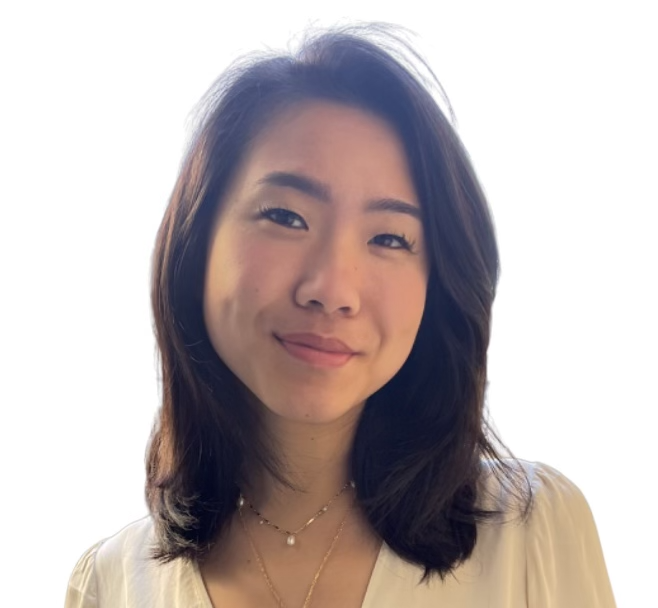

Victoria Yuan

Victoria Yuan is a third-year medical student at UCLA’s David Geffen School of medicine. She graduated from Stanford University, where she earned a BS in Biomedical Computation, produced podcasts with the Stanford Storytelling Project, and served as the editor-in-chief for Herodotus, the university’s history research journal. Her mixed media painting of organic acid on copper, “Her Thyroid Storm,” was selected as a finalist in Stanford’s Art of Science Exhibition and Competition. In medical school, Yuan has been an editor for the BEAT, UCLA’s visual arts and literary journal. Her pastel works have been featured in Intima’s Fall 2024 (“Pericardial Mnemosyne”) and Fall 2025 (“Thyroid Cocoon”) issues.

In breast cancer, doctors, empathy, medical ethics, medical school, medical students Tags patient narrative, breast cancer
A Reflection on Fathers and Daughters by Dixie L. King →
Summary Block
This block is invalid. Please check the block settings and try again.
Featured
Aenean eu leo Quam
Aenean eu leo Quam

Quisque iaculis facilisis lacinia. Mauris euismod pellentesque tellus sit amet mollis.

Read more →

Intima: A Journal of Narrative Medicine
Copyright ©2026
ISSN 2766-628X