
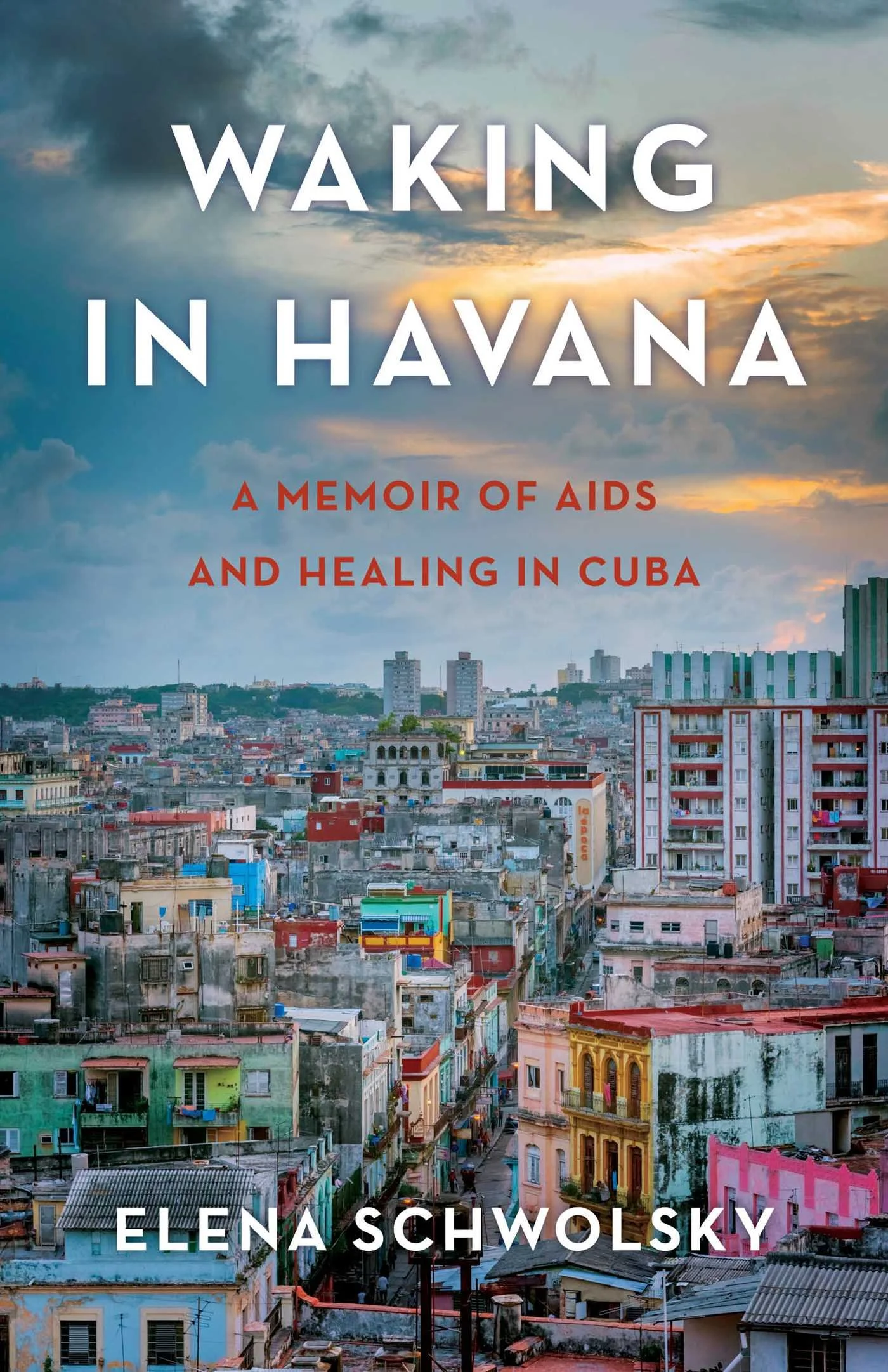
It has been a difficult time for many as of late — we've been witness to recent multiple losses of creative trailblazers, artists, activists and humanitarians. Some of them have been well-known, like Dolly Parton, Gloria Steinem and Cassandra Wilson, who we may have looked up to, learned from, aspired to be like and occasionally, had the chance to know personally, or call a friend. While she was not as easily recognizable to the public as the aforementioned women, Elena Schwolsky was a trailblazer, artist, activist, healer and humanitarian who inspired many and created vehicles for communication and connection. Elena left a deep impression on me.
Read moreLiving Alongside Loss: A reflection on grief, rituals, and gratitude by Diego R. Hijano

© Womb by Johanna Glaser. Acrylic paints, linocut prints, tissue paper and pens.
“I made this collage as a gift for a pregnant friend using a mixture of acrylic paints, linocut prints, tissue paper and pens. It is inspired by and directly draws upon elements from a portrait of a young dead woman by Egon Schiele. At the time, I was in the middle of a palliative care fellowship and personally recovering from a severe IBD flare. It is a meditation on birth, illness, joy, pain and death; an expression of awe as to how humans can simultaneously be wounded, age, heal, celebrate and create throughout the seasons of our lives.”
Johanna Glaser’s collage “Womb” (Fall-Winter 2025-26 Intima) challenges the idea that life unfolds in emotional stages. Instead, it holds simultaneity:
Birth beside illness.
Joy beside grief.
Healing beside wounding.
Presence beside absence.
That duality emerges in writer and educator Valk Fisher’s Field Notes essay “Diary of a Plunge Year” (Spring-Summer 2025 Intima) and my short story “The Other Son” (Spring-Summer 2026 Intima). Both explore how rituals, whether running beside the ocean or gathering around a table, allow people to live alongside loss without being entirely consumed by it.
Read moreThe Evolution of Anecdote to Story and Beyond by Angus Woodward
My father was a raconteur, and as his dementia advanced, he often got caught in anecdotal loops. In the middle of a familiar story, he would forget that he had told the beginning, repeat it, then charge through the middle before backtracking again, cycling through the tale until some kind of interruption saved him and his listeners.
Reading Samantha Stewart’s poem “Stingray” (Spring 2022 Intima) made me think about how experiences can become anecdotes, which may turn into stories, which may evolve into legends. And I saw how personal legends connect the dying to the living.
Read moreOn Laughing Through the Pain by Albert Einstein College of Medicine medical student Moshe Gordon
Perusing Intima's last issue, I noticed some overlapping themes between two very different pieces: my own fictional piece “Sweet Dreams,” and “Humor As (Narrative) Medicine,” an autoethnographic study by Alyse Keller Johnson, an associate professor of communication studies at CUNY Kingsborough Community College in Brooklyn.
Read moreWhat is Grief-Sight? Writer and researcher Valk Fisher reflects on what prompts it.
I began to see grief everywhere.
A diagnosis started it, though I didn’t know, exactly, what I was seeing. I had no words for the gnawing inside my gut, the tightness beneath my sternum, the exhales that were just that much heavier. Grief was everywhere, but nameless. It became larger and louder until I could sense it, name it, be with it, speak about it. Only then did I begin to smile – really smile – again.
Grief will require it be Seen.
Read moreHow Art Inspires: Looking at “The Wish” by primary care physician Megan Gerber. A reflection by Colleen Cavanaugh

© The Wish. Megan Gerber. Mixed-Media: Acrylic, ink and tissue paper on canvas. Spring 2025 Intima
Although many of my non-fiction stories dwell on loss, there is always a lesson to be learned or an inspiration which somehow has evolved into compassion. In “The Lingerie Shop” (Spring 2025 Intima), I recall my adolescent years when I learned about my mother’s breast cancer. I was haunted by her embarrassment and loneliness. The emotions were part of my upbringing and I lived side by side with them. It must have changed me. I attended medical school and became a gynecologist, caring for many women with breast cancer. My loss had metamorphosed into strength and compassion. My loss made me a better doctor.
Read moreTwo Doctors, Two Cancer Diagnoses by Susan Schuerman Murphy
I met my husband, Kim, on a bone marrow transplant unit in a cosmic display of foreshadowing ten years before the happenings in my piece “Suffer the Little Beagles.” I was First Lieutenant Schuerman serving as a bone marrow transplant nurse. He was a Captain who had ventured up four floors to place his pathology report in a patient’s chart. Over the next decade we married, I became an attorney, we became civilians, I gave birth to our daughter, and we bought a big house. He told me about his deep bruises and enlarged spleen the night we lay exhausted on our bed after having received our household goods.
Read moreHow to Have Empathy for Others As Well as Ourselves: A Reflection by clinician Jennifer Anderson
As I read Sarah Gundle’s essay “I Can’t Remember His Name” (Intima, Spring 2023), I recognized a young and eager clinician who felt both moved by someone’s story and inept at affecting change, a dissonance that can reverberate throughout decades of practice. I, too, remembered my earliest encounters, when my own therapeutic skin was most supple and soft, vulnerable to the bruising weights of trauma, addiction and injustice. I recognized the writer’s spontaneous tears – and the impulse to minimize and dismiss them in accordance with the guidelines of rational detachment and therapeutic rapport.
Read moreRituals of Care: How We All Possess More Agency in the World Than We Think: A reflection by doctor Gaetan Sgro
There is a tendency in times of upheaval to overestimate the agency of certain individuals. Anxieties engender a cast of heroes and villains making games of global events. But the kernels of truth in these conceptions obscure the relatively small influence such figures exert on our daily lives. Still, there is comfort in the notion that somebody, somewhere, is in charge; perhaps because it suggests that we, ourselves, possess more agency than we perceive and are not, as so often seems, simply adrift on the currents of fate.
Read moreGiving Up Metaphors: A reflection about how we talk about illness by poet physician Ronald Lands
In both the literary world and in the clinical world, metaphors take hold of our relationship to illness and health.
“Giving Up the Fight,” by Rebeca Stanfel (Spring 2023 Intima) is a first-person account of her struggle with sarcoidosis and the metaphors that complicated her ability to deal with it. Well-meaning friends and family assailed her with encouragement that depicted chronic illness as a battle to be won or lost.
Read moreFinding the Human in Humanity. A reflection by Zoran Naumovski
I have been practicing medicine since completing my residency in June 2000. It baffles me that to this day I still hear comments from patients, families and loved ones that we physicians often cannot relate to their concerns, their health struggles and their ailments because we are doctors, because we harbor medical knowledge, because “we are not human.”
Read moreAt the End of a Call Shift, Who Gets to Go Home? A reflection by Angela Tang-Tan
Every now and then, at the end of a call shift, I leave the hospital with aching feet and heavy eyelids. And then I remember: I am the lucky one. I am the one who gets to go home. My patients – the grandfather whose kidneys are failing, the ten-year-old with meningitis – are not so lucky. They will not go home tonight. They may never go home again.
Read moreSearching for the Nugget of Connection by Kristin Graziano, DO, MPH, FAAFP
During the 10 years my mother spent in her nursing home two states away, I struggled with feelings of guilt and remorse. She suffered from dementia, requiring 24/7 care, and I couldn’t provide it to her. Yet there was always the plaguing thought that I should. I knew it wasn’t realistic. Still, I felt inadequate and like I abandoned her, even though I visited every few months.
Read moreThe Unexpected Labor of Caregiving by Ann E. Green
The poem titled, “To the Woman at My Mother’s Funeral Who Thought It Was So Lovely that My Mother Died at Home” by Kathryn Paul (Spring 2022 Intima, Poetry), circles around my mind days after reading it. Paul’s poem eloquently speaks back to the assumption that it is always good to die at home, that home deaths are always peaceful. The literal hands-on work of caregiving—the cleaning of blood, mucus, urine and feces — is unspoken and generally done by women, whether paid or unpaid, and the writer, who in her bio calls herself “a survivor of many things” captures this in her poem.
Read moreMissing Someone: A Reflection on Loss and Yearning by Shruti Koti
My short story “The Waiting Room” (Spring 2024 Intima) was inspired by recent legislation that threatens women’s rights and health. In the story, a young couple is troubled by a decision they made to terminate a pregnancy – they are scared of persecution and legal action, but they are also emotionally and spiritually haunted by their choice.
The story ends as they drive away from the reproductive clinic, but it is evident they will think about that afternoon for months, and years, to come.
Can one miss something that was barely there?
Read moreSelf-Examinations and the Burdens of Being Sick by Amanda Ford
Being sick takes work. There is the pain and exhaustion, the adaptation, the cognitive load required to keep moving forward when my body holds me back. There’s also the business of being a patient: sitting in waiting rooms, standing in line at the pharmacy, being on hold with the insurance company.
Read moreDoes one honor or diminish an elderly parent by insisting on the truth? A reflection by Davida Pines
Kristin Graziano’s “Contents Have Shifted” considers how best to respond to a parent’s dementia-inflected reality. “For years,” Graziano observes about her mother, “I felt compelled to refute her falsehoods. I felt that by correcting her, I could yank her back to The Truth, to the real world. When I did this, sharp words with resentful tones followed, leaving us both frustrated and silent.”
Read moreWe Wait….a reflection by writer Nancy Lewis
During my many years with chronic illnesses, I’ve spent far more time waiting for healthcare than actually receiving it. It’s always nerve-wracking. I never know how long I’ll be hanging around; it could be anywhere from minutes to hours. I fret over whether to go to the bathroom before or after an appointment, afraid I’ll miss my turn if I’m not there when they call me in. And of course, I worry about what I’ll hear when I finally get attended to; I’ve received lots of bad news over the years.
Read moreMoving into Compassion, One Small Moment at a Time by anesthesiologist Molly McCormick
I think about time a lot now. My days are ruled by schedules and cases and meetings, and I spend much of my day reacting to the pressures of the unrelenting sweep of the second hand as it moves around turning into minutes and hours, never slow enough for me to accomplish everything I need to do.
Read moreIt’s Happening to Me, Too: Reflections on Interconnectedness, Interdependence, and Independence in Caregiving Relationships by Leena Ambady
“Every thought begins with I. This is happening to him, I try to say,
not happening to me. But it is, too. This is my place to tell it.”
The above is an excerpt from Kristin Camitta Zimet’s “A Dialysis Diary,” (Intima, Fall 2023). In this beautiful essay, Camitta Zimet writes about her husband’s end-stage kidney disease, the initiation of dialysis, and the impact that his chronic condition and the treatment it required had both on her and her relationship.
Read more
Quisque iaculis facilisis lacinia. Mauris euismod pellentesque tellus sit amet mollis.