
It has been a difficult time for many as of late — we've been witness to recent multiple losses of creative trailblazers, artists, activists and humanitarians. Some of them have been well-known, like Dolly Parton, Gloria Steinem and Cassandra Wilson, who we may have looked up to, learned from, aspired to be like and occasionally, had the chance to know personally, or call a friend. While she was not as easily recognizable to the public as the aforementioned women, Elena Schwolsky was a trailblazer, artist, activist, healer and humanitarian who inspired many and created vehicles for communication and connection. Elena left a deep impression on me.
I was fortunate to meet Elena when we were both at crossroads in our lives and, and whiledeciding what to do next, we were volunteers for the New York Writers Coalition. Facilitating creative writing workshops in community settings for free, often for participants who were marginalized or discouraged from sharing their personal stories of hardship and resilience. To those who may not have perceived themselves as being privileged enough to identify as authors or writers, we introduced tools to help them push their voices onto the page and share the work they produced with pride.
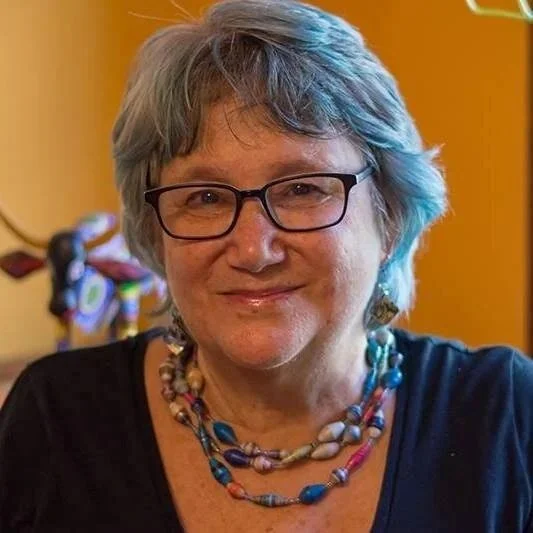
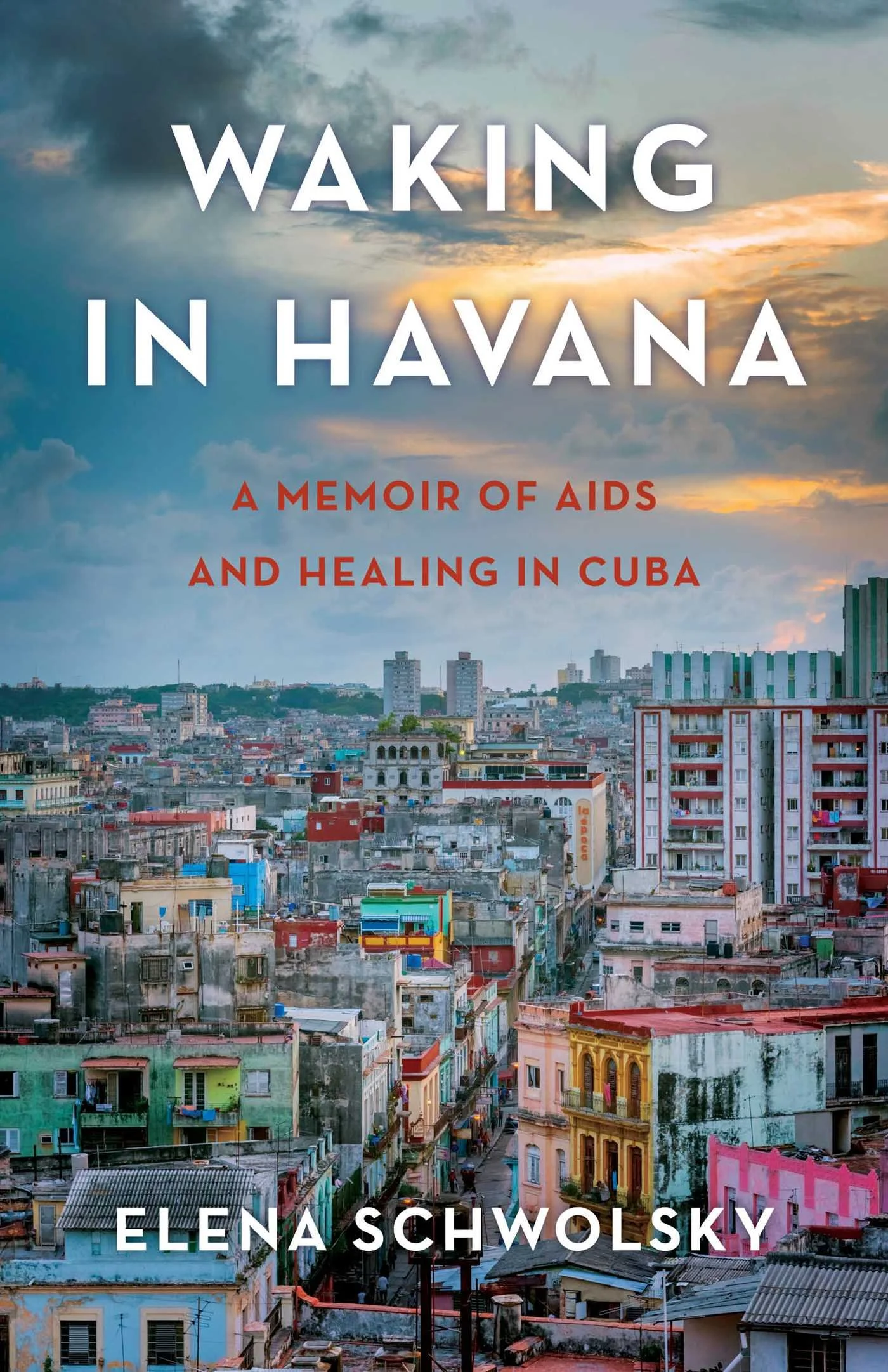
Elena Schwolsky, RN, MPH was a nurse, community health educator, activist and writer who spent a decade as a pediatric nurse at the height of the AIDS epidemic. She trained AIDS educators in Cuba and Tanzania, and taught community health workers in diverse urban neighborhoods in New York City. Her groundbreaking book Waking in Havana: A Memoir of AIDs and Healing was published by She Writes Press in 2019 and remains relevant today.
Schwolsky’s work has appeared in The American Journal of Nursing, Intima: A Journal of Narrative Medicine and The Veteran and been included in the anthologies Storied Dishes: What Our Family Recipes Tell Us About Who We Are and Where We’ve Been and Reflections on Nursing: 80 inspiring stories on the art and science of nursing. A chapter she cowrote appears in the textbook Children, Families and AIDS: Psychosocial and Therapeutic Issues. Schwolsky received an award from the Barbara Deming Money for Women Fund and was proud to be recognized as the madrina (godmother) of Proyecto Memorias, the Cuban AIDS Quilt project.
This was one of the many things Elena was so skilled at, and strived to do often: Help others authentically tell their own stories.
After our initial connection, we remained friends ,even though we didn't get to work together often. Through the years we stayed in touch and in 2019 she reached out to inform me she was getting ready to publish her memoir. I was ecstatic to hear that her own writing and her very important singular story was going to be in print and available for others to know and appreciate. She asked if I would write a blurb for the book, which I did, and invited me to her official book launch. It was a joy and unforgettable memory to see her speak about her life, her work, her story, and her book in front of an audience, surrounded by friends and family to celebrate her achievement.
Elena had lived many different chapters in her life, as a nurse, as a public health student, as a health advocate, as a community activist, as a mother, as a wife, as an educator, as a patient, as a writer, and as a friend. Her time in Cuba and her work in the early years of the AIDS epidemic there earned her the name madrina, or godmother, of Proyecto Memories, a project inspired by the AIDS Memorial Quilt in the United States, which helped to found and grow, as she describes in her memoir, Waking in Havana: A Memoir of AIDS and Healing in Cuba. The initial programming she helped to develop there influenced how people living with AIDS in Cuba would be treated and cared for in the decades that followed. The book became a vehicle for Elena to speak about her life, her works and her values at various universities, hospitals, conferences, and public memorials for World AIDS Day.
Shortly after it was published, I asked Elena if she would be alright with me adding the book to the required reading list for a course I was creating on health advocacy and community organizing. She generously said yes and then further shared her amazing spirit by agreeing to come to my class to guest lecture to the students and answer questions. Many of them were young and eager pre-professionals hoping to go to medical school, and others were pursuing careers in healthcare or health policy-related fields where the firsthand knowledge she imparted to them about her own experiences as a clinician, advocate, activist and changemaker, would be invaluable sources of inspiration they to lean on and think through complex situations in their future roles. She answered every question asked, gave away copies of her book, inscribed personal notes in them to each student that stayed after class. She offered to be available for more discussion over email. She came back and did the same thing four times, every fall, for each new cohort of students.
A few months after her first visit to our class, she had a short story titled “Window on the World” published in the Fiction section of the Fall 2020 Intima. In it, the main character, Sarah, a nurse who was providing care during the early years of the still ongoing HIV epidemic, reflects on the way her fellow health professionals are being treated during the early days of the COVID-19 pandemic:
"I was essential once, Sarah thought as she rang her bell, but nobody paid much attention to us. Just the opposite in fact...Now they were recognizing the sacrifices the nurses were making—calling them heroes. But back then, in Sarah’s time, they had been pariahs––caring for the contaminated, the throwaways, the ones with the disease whose name no one wanted to say out loud."
Elena understood the importance of representation, naming and providing care to anyone and everyone who needed it, with or without recognition, and highlighted the value of respecting the vulnerability and selflessness that is essential to caring for others.
Less than a year after that story was published, Elena was diagnosed with advanced stage ovarian cancer. In between treatment cycles, and other life events and challenges, she stayed in touch with updates on her health, and with the news she was working on her poetry. Eventually, she shared that she had resumed working on her first novel. There was never any mention of anything Elena couldn't do; she reminded me of all that she was continuing to do.
In an interview with editor, writer and podcaster Deborah Kalb, about her work on her novel, she said, "What if? I kept pondering. What was I thinking? What if something worse had happened?...It’s the first time I have ever written fiction and it’s exciting and fun to see where my characters will lead me." While she had so often been the leader in most instances throughout her life, she was intrigued by the prospect of being led by her creativity.
In one of her last visits to our classroom, she shared a poem she had recently finished, “Sweeping the Floor,” which was later published in the medical humanities journal, Pulse. She once said of the piece, “I wrote this poem after a recurrence of my cancer, midway through a second cycle of chemotherapy that weakened my body and sapped my energy. The act of sweeping the floor took on a special and hopeful meaning as I struggled to recover." The students were moved by her ability to share an intimate passages about her personal healing in such a creative and evocative form.
This summer I planned to reach out to Elena once again, to invite her back to our classroom, to hear her words of wisdom and her stories of struggle and triumph in affecting the lives of others through her work. When I learned she had transitioned from our shared physical world, I was saddened not only by the loss of a kind and sincere friend, but by the awareness that the incoming students wouldn't have the benefit and blessing of her presence in real time. I was encouraged knowing, with certainty, that her words, her spirit, and her impact would still be felt by them when we read her book together again. Her life and her work will continue to inspire for years to come and we are the grateful recipients of her generosity. Thank you Elena, for all that you gifted to so many. — Mario de la Cruz, Creative Director, Intima: A Journal of Narrative Medicine
